Instruments & practice
Music is a universal language, but speaking it fluently requires more than just raw passion. It demands a deep understanding of your chosen instrument and a highly strategic approach to practice. Whether you are navigating the intricate fretboard of a classical guitar, managing the precise breath support required for a wind instrument, or exploring the infinite sonic depths of a synthesizer, the path to mastery is paved with deliberate, mindful routines. Mastering an instrument is not merely about accumulating hours in the practice room; it is about optimizing how the mind and body interact with the physical—or digital—materials at hand.
Many musicians hit a plateau, often around intermediate levels, where pure enthusiasm is no longer enough to drive progress. Pushing through these barriers requires shifting focus from simply playing through songs to dissecting the very mechanics of your performance. In this comprehensive resource, we will break down the foundational pillars of instrumental mastery. From the biomechanics of playing without tension to the subtle arts of ensemble listening, rhythm internalization, and instrument maintenance, these core principles apply across the entire musical spectrum.
The Science of Effective Practice: Working Smarter, Not Harder
The difference between an amateur and a professional often lies entirely in their practice methodology. Playing for hours without a plan is a recipe for ingrained mistakes and eventual frustration. True progress is rooted in deliberate practice, a highly focused state where quality heavily outweighs quantity.
Isolating the Problem and Deliberate Repetition
One of the most common pitfalls for musicians is playing a piece from beginning to end, stumbling over a difficult measure, and simply starting over from the top. This approach relies on hope rather than strategy. To truly fix errors, you must isolate the problem. By extracting the specific difficult passage—sometimes just two or three notes—you can analyze what is failing biomechanically. Taking the time to apply the « brutalmirror » of self-recording allows you to hear discrepancies that your brain glosses over in real-time.
To structure a highly efficient practice session, consider implementing the following steps:
- Identify the specific technical hurdle (e.g., a challenging string crossing or a wide vocal slide).
- Reduce the tempo drastically. Playing at 50% speed is often 200% more effective because it gives your brain the necessary bandwidth to monitor every micro-movement.
- Repeat the isolated segment until it feels effortless, not just until you get it right once.
- Integrate the fixed measure back into the larger musical phrase.
Optimizing Cognitive Load with the Pomodoro Technique
Motor learning is an intensive cognitive process. Research in neuroplasticity suggests that the brain consolidates physical skills during periods of rest, not just during active repetition. Utilizing structured rest intervals, such as the Pomodoro technique—practicing intensely for 25 minutes followed by a 5-minute break—prevents mental fatigue. This structured pacing ensures that you maintain high concentration and allows your nervous system to process complex finger coordination or breath control exercises efficiently.
Body Mechanics: Playing Without Pain or Tension
Your body is the primary instrument; the guitar, cello, or drum kit is merely an amplifier for your physical movements. Ignoring ergonomics and biomechanics inevitably leads to sloppy rhythm, decreased speed, and, worst of all, chronic injuries like tendonitis.
Releasing Tension for Speed and Endurance
There is a persistent myth that « feelingtheburn » means you are building necessary stamina. In instrumental practice, physical burning or pain is actually a warning sign of excessive tension. Clenching your jaw, holding your breath, or gripping a fretboard with excessive force acts as a physical handbrake. Relaxing your grip is the counter-intuitive secret to playing faster. Speed is a byproduct of accuracy and economy of motion, not sheer muscular force.
To minimize tension, pay attention to these critical areas:
- Posture: Whether sitting or standing, ensure your spine supports your weight naturally. Slouching compresses the lungs, instantly killing tone on wind instruments and causing back pain for guitarists.
- Economy of motion: Analyze your finger movements. Flailing fingers that lift too far away from the keys or strings waste valuable fractions of a second. Minimal movement is the hallmark of a virtuoso.
- Warm-ups: Never start a session at maximum speed. A dedicated five-minute warm-up focusing on slow, deliberate movements increases blood flow and prepares the tendons for rigorous activity.
Mastering Rhythm and the Internal Clock
A beautiful tone means very little if it is delivered out of time. Developing a rock-solid internal clock is what separates bedroom players from highly sought-after session musicians. Rhythm is not just about math; it is about feeling the physical groove.
The Metronome as a Truth Teller
Many players resist practicing with a click track, feeling it makes their playing sterile. However, the metronome is an invaluable diagnostic tool. It highlights exactly where you tend to rush (often during slow, spacious ballads) or drag (usually during complex, dense passages). To truly test your internal clock, try silencing the metronome for a few bars and see if you still land precisely on the downbeat when the click returns.
Micro-Timing: Playing in the Pocket
Once you can play perfectly on the grid, the next step is learning how to manipulate it. « Thepocket » refers to that magical rhythmic space where a groove feels irresistible. Depending on the genre, being slightly « late » or playing behind the beat can add a relaxed, heavy texture to the music. Mastering this requires deep physical internalization—if you cannot tap your foot or physically move to the groove, you cannot convincingly play it.
From Technique to Musicality: Finding Your Voice
Scales, arpeggios, and finger drills are the vocabulary of music, but they are not the poetry. Transitioning from a technical player to a compelling artist involves learning how to translate human emotion directly through your instrument.
The Art of Phrasing and Nuance
Every instrument has its unique method for shaping a note after it has been struck. For string players, utilizing bow weight can create a « sighing » effect, while varying the speed and width of vibrato instantly colors a note with sadness or joy. Wind players rely heavily on masterful airflow control; creating a dynamic swell through a phrase without going sharp requires immense core support.
When approaching improvisation or interpreting a repertoire piece, keep these principles in mind:
- Sing your solo: If you cannot hum the melody you are about to improvise, your fingers are merely running patterns. Connecting your vocal cords to your musical imagination ensures lyrical, meaningful lines.
- Embrace silence: Space is music. Leaving intentional gaps makes the notes you do play matter infinitely more.
- Target notes: Understanding the underlying harmony allows you to land confidently on the vital notes of a chord, outlining the emotional contour of the song.
The Dynamics of Ensemble Playing
Playing alone in a practice room is a controlled environment. Stepping onto a stage with a band or orchestra introduces an entirely new set of variables. Ensemble playing teaches vital skills that simply cannot be learned in isolation.
Blending, Listening, and Reacting
In a group setting, your volume and tone must constantly adjust to serve the collective sound. Knowing when to step forward and lead with a soaring melody, and when to switch hats to provide supportive, rhythmic comping is the essence of musical maturity. Visual communication is just as vital as acoustic listening; mastering « thenodandthelook » allows a band to navigate tempo changes and execute tight endings without overtly counting out loud.
Furthermore, ensemble playing enforces the critical « keepgoing » rule. In a live setting, stopping to fix a wrong note destroys the musical illusion for the audience. Learning to recover gracefully from mistakes is a vital performance skill.
Understanding and Maintaining Your Instrument
A musician’s relationship with their instrument extends beyond just playing it; understanding its physics and maintenance is crucial for optimal tone production. Neglecting your gear creates unnecessary technical hurdles.
Acoustic Physics and Traditional Craftsmanship
Acoustic instruments are living entities that respond to their environment. Changes in humidity and winter heating can drastically alter the wood of a cello or acoustic guitar, leading to cracks or tuning instability. Knowing how to maintain your instrument directly impacts your sound.
Key maintenance considerations include:
- String intonation and action: Finding the sweet spot between low action (for playability) and high action (for maximum tonal projection) is a delicate balance. Adjusting a bridge by merely a millimeter can resolve chronic tuning issues.
- Material management: For string players, understanding how much rosin dust is optimal for tone production is essential. Too little yields a weak sound, while too much creates a harsh, scratchy attack.
- Reed and mouthpiece care: Woodwind players must obsess over their reeds. Traditional instruments like the Japanese Hichiriki or Shō demand extreme preparation, sometimes even requiring the instrument to be carefully roasted over heat to function correctly.
Demystifying the Electronic Frontier
For those venturing into synthesizers, understanding the underlying technology opens up vast creative possibilities. Whether you are exploring the warm imperfections of analog circuits, the pristine precision of digital wavetables, or the complex, metallic textures of Frequency Modulation (FM) synthesis, knowledge of carriers, modulators, and signal flow is your technical foundation. While a monophonic analog synthesizer may not play chords, its raw power for lead lines makes it an indispensable tool for the modern musician.
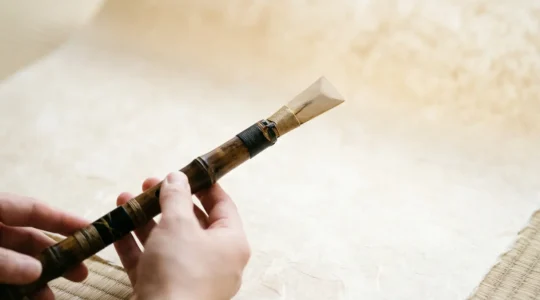
The Hichiriki: How a Tiny Flute Unleashes a Piercing, Haunting Voice
Many assume the hichiriki is just a primitive Japanese oboe. This is a profound misunderstanding. The key to its soul-piercing sound isn’t just its shape, but its philosophy: it is a physical vessel for the human voice. Its unusually wide…
Lire la suite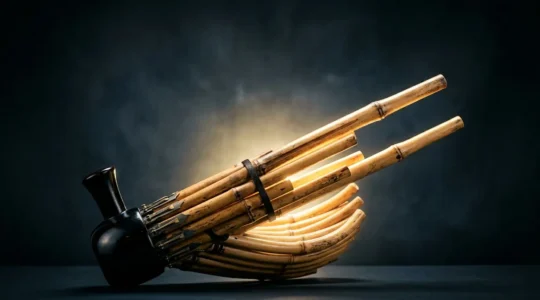
The Shō: The sound of heavenly light in Japanese music
The ethereal sound of the Shō is not magic; it is a masterpiece of sonic architecture. This article reveals how its ancient design, from the seasoned bamboo to the pre-heating ritual, constitutes a deliberate system for generating harmony. We will…
Lire la suite
Mastering Classical Guitar: Beyond Technique to Tonal and Traditional Discipline
True mastery of the classical guitar lies not in simply learning techniques, but in embracing a series of disciplined rituals. From the microscopic shaping of your fingernails to the ergonomic choices that protect your spine, every detail is a conscious…
Lire la suite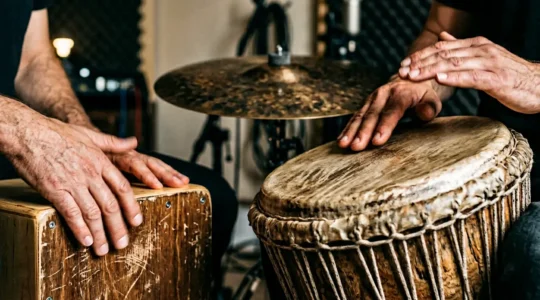
Why percussion is more than just keeping time: texture and color
Many musicians see percussion as a simple time-keeping utility. This article shatters that myth, reframing the percussionist’s role from a metronome to an artist. We explore the idea that percussion is not about marking time but about sculpting sound. By…
Lire la suite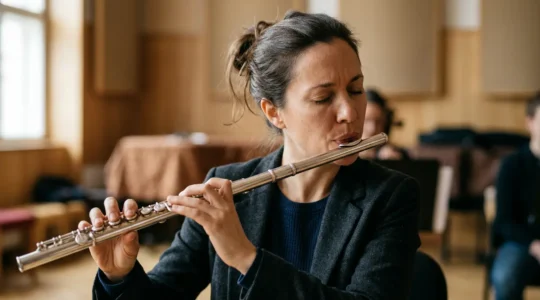
Mastering Airflow: Shaping Phrases and Dynamics on Wind Instruments
Many players believe dynamics are about pushing more or less air. The truth is far more subtle. True musical control comes not from brute force, but from sculpting the speed, shape, and focus of the air column itself. This guide…
Lire la suite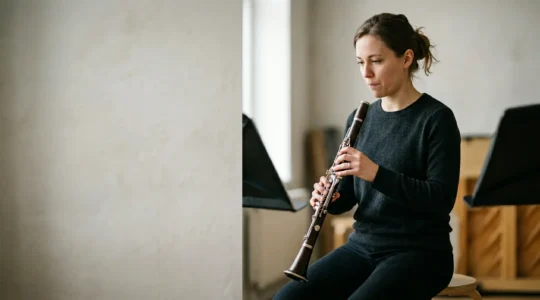
Why breath support is the foundation of tone for all wind instruments
A weak or inconsistent tone is not a fault of your instrument or embouchure; it’s a direct result of an undeveloped physical « core engine » for your air. True breath support is a 360-degree expansion of the torso, not just « belly…
Lire la suite
Demystifying Synthesizers: A Beginner’s Guide to Analog, Digital & FM
Choosing your first synthesizer is less about its sound and more about the creative workflow it inspires. Analog & Virtual Analog (VA) synths encourage a hands-on, sculptural approach to sound design, perfect for intuitive exploration. Wavetable & FM synths offer…
Lire la suite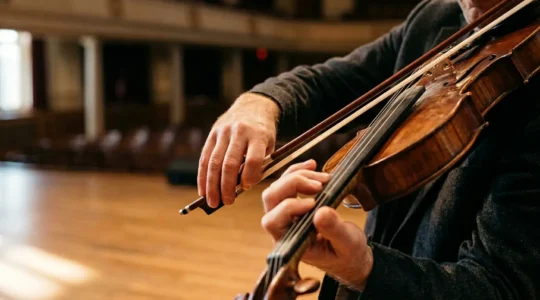
Your Instrument is Your Voice: Translating Emotion into Bowing and Fretting Nuances
Contrary to common belief, emotional playing isn’t about ‘feeling more’; it’s about mastering a physical vocabulary that translates human expression directly into sound. True expressivity comes from treating your instrument as an extension of your voice, using bowing and fretting…
Lire la suite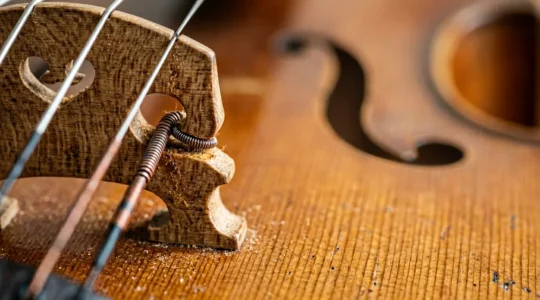
Understanding the Physics and Maintenance of String Instruments for Better Tone
Achieving superior tone from a string instrument goes far beyond routine maintenance; it requires a deep appreciation for its underlying physics. This guide moves past surface-level tips to explore how the hygroscopic nature of wood, the mechanics of string vibration…
Lire la suite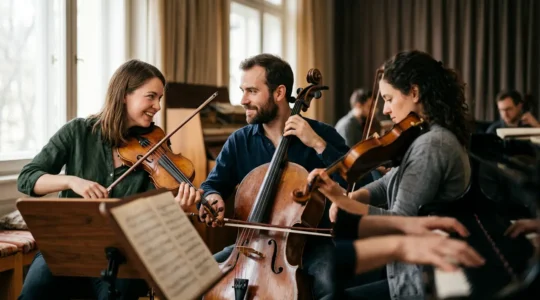
Why Playing in Ensembles Teaches Skills You Can’t Learn Alone
For the solo musician, the transition to group playing often feels frustrating. The issue isn’t a lack of technical skill, but a missing collaborative mindset. Playing in an ensemble requires a fundamental shift from a ‘me’ perspective to a ‘we’…
Lire la suite