Reading music
Reading music is often compared to learning a new language, but it is actually more akin to decoding a map. While many beginners view the score as a simple instruction manual telling them which button to push and when, true music literacy goes far deeper. It is the bridge between a composer’s intent and your instrument, allowing you to interpret emotion, timing, and nuance without needing to hear the piece first. Whether you are picking up an instrument later in life or looking to refine your skills, understanding notation is the key to musical independence.
This resource page explores the essential components of reading music, moving beyond simple note identification. We will cover the structural foundations of the staff, the vital importance of rhythm, the psychological aspects of sight-reading, and how to breathe life into the dots through dynamics and expression. The goal is to transform the score from a static page into a living, breathing soundscape.
Demystifying the Staff and Key Signatures
The Grand Staff can look intimidating to the untrained eye, resembling a complex grid of lines and symbols. However, it is simply a coordinate system where vertical position represents pitch and horizontal space represents time. Understanding reference points, such as Middle C, helps bridge the gap between the treble and bass clefs, creating a unified picture rather than two separate worlds.
One of the most common hurdles in reading music is navigating key signatures. Instead of memorizing every sharp or flat individually, efficient readers use tools like the Circle of Fifths. This concept acts as a compass, allowing musicians to instantly recognize the tonal center of a piece. Mastering these fundamentals includes:
- Pattern Recognition: Learning to see scales and arpeggios as single units (formulas) rather than strings of individual notes.
- Interval Recognition: Reading the distance between notes is often faster and more reliable than naming every note, especially when reading ledger lines above or below the staff.
- Key Identification: Using visual shortcuts, such as looking at the last sharp or the second-to-last flat, to identify the key in seconds.
Rhythm: The Backbone of Sight-Reading
It is a common misconception that pitch is the most important part of reading music. In reality, a wrong note is a momentary dissonance, but a wrong rhythm can derail the entire performance. Rhythm provides the structure upon which melody hangs. Understanding the relationship between quarter notes and eighth notes is not just a mathematical exercise; it is about feeling the pulse of the music before you even play a sound.
Visual Spacing and Timing
Modern engraving rules often space notes on the page according to their duration, providing a visual cue for timing. Learning to read this horizontal distance helps in anticipating the speed of a passage. Furthermore, understanding the concept of the « barlinereset »—knowing exactly when an accidental carries through or is cancelled—is crucial for harmonic accuracy.
Strategies for Fluent Sight-Reading
Sight-reading is a specific skill that differs from learning a piece for a recital. The objective is continuity, not perfection. Many musicians sabotage their own growth by stopping to correct mistakes, which breaks the flow and trains the brain to stutter. Building reading reflexes requires consistency over duration; short, daily sessions are far more effective than marathon practices.
To improve sight-reading without feeling overwhelmed, consider these techniques:
- Look Ahead: Just as you read a sentence by scanning ahead of the word you are speaking, your eyes should always be a measure or two ahead of your hands.
- Guideposts: Use reference notes on the staff to anchor your vision, preventing you from getting lost in dense passages.
- Prioritize Rhythm: If you miss a pitch, keep the rhythm going. The beat must remain steady to maintain the musical structure.
The Inner Ear: Solfège and Audiation
Reading music is not just a visual task; it is an auditory one. Audiation is the ability to hear the music in your head by looking at the score, even in silence. Tools like Solfège (Do-Re-Mi) are incredibly powerful for connecting the brain to the page. By associating syllables with pitch relationships, you can fix intonation issues and « sing » the music internally before playing it.
This connection is vital for:
- Transcription: Moving from brain to paper becomes easier when you can categorize what you hear using a system like Solfège.
- Intonation: Singing a passage helps internalize the pitch, ensuring that your fingers produce the note you intend to hear.
- Emotional Connection: Hearing the mood difference between scales, such as Dorian versus Aeolian, allows for a more expressive performance.
Dynamics and Expression: The « 3DDimension »
Notes and rhythm provide the skeleton of the music, but dynamics and articulation provide the flesh and blood. A score is filled with markings that indicate the character of the note—staccato dots for shortness, tenuto lines for weight, and dynamic markings for volume. Understanding the relative nature of volume (for example, that mf or mezzo-forte is context-dependent) transforms a robotic reading into a musical one.
Advanced reading involves interpreting the « invisible » instructions. For instance, in Baroque scores, specific volume markings are rare, requiring the performer to understand the style of « terraceddynamics » (changing levels like steps, not slopes). Conversely, Romantic music relies heavily on the swell to create motion in long notes. Recognizing these stylistic differences allows the reader to interpret the composer’s true intent.
Ultimately, reading music is about literacy. It opens the door to musical communication, allowing you to write down your own ideas with pen and paper or understand the complex interactions of a full orchestra by reading vertically. By mastering these elements, you move from deciphering code to speaking the language of music fluently.

Dynamics: The « 3D Dimension » of Musical Performance
For musicians who play every note correctly but still sound flat, the problem isn’t technique—it’s a lack of emotional dimension. This guide reframes dynamics not as simple volume changes, but as the art of sculpting musical tension and narrative. You…
Lire la suite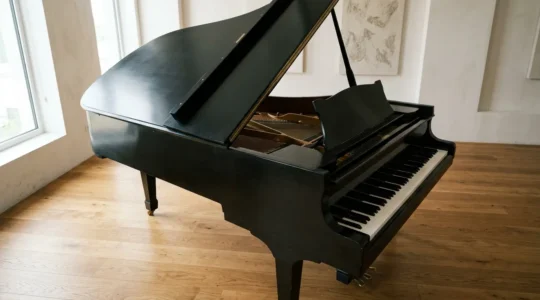
Demystifying the Grand Staff: A Visual Guide for Pianists
The secret to mastering the grand staff isn’t memorizing more notes; it’s changing your perspective to see it as a single, unified system. Middle C isn’t just a note, it’s the symmetrical center of a larger, historical 11-line staff. Key…
Lire la suite
Music Notation Is a Language: Here’s How to Become Fluent
True musical literacy isn’t about memorizing rules; it’s about mastering a powerful communication tool to express and understand musical ideas with total clarity. Effective notation focuses on reducing the performer’s « cognitive load, » making the music easier to play. Different notation…
Lire la suite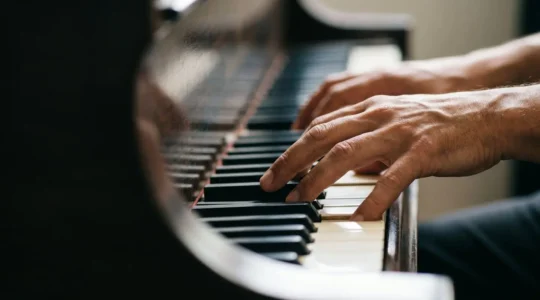
How to Master Scales as Musical Tools, Not Just Technical Exercises
Knowing more scale shapes won’t make your solos more musical; it often just creates more confusion. True musicality comes from understanding the unique emotional flavor of each note within a scale, not just its fretboard position. Focusing on fewer, more…
Lire la suite
How to Read Scores Not Just for Notes, But for Musical Intent?
The greatest challenge for a musician isn’t playing the correct notes, but uncovering the emotional and structural narrative the composer embedded within them. True interpretation moves beyond decoding symbols to a forensic analysis of the score’s form, harmony, and historical…
Lire la suite
Why mastering solfège (Do-Re-Mi) improves your instrument playing?
Contrary to popular belief, solfège isn’t just for singers or reading sheet music; it’s a physical training system to calibrate your internal ear, making your instrument an extension of your voice. It directly corrects your intonation by forcing you to…
Lire la suite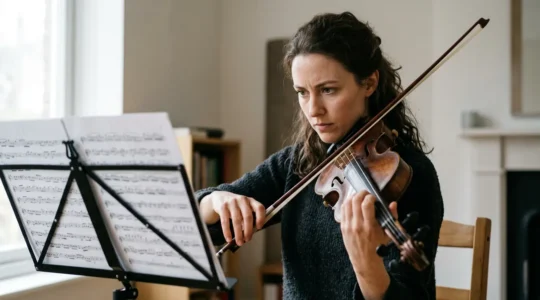
How to Improve Sight-Reading Without the Overwhelm: A Systematic Approach
The common belief that sight-reading demands note-perfect accuracy from the start is the very thing holding you back. True fluency comes from prioritizing an unbroken rhythmic pulse over chasing individual correct pitches. Short, consistent practice sessions build reflexive skills far…
Lire la suite
Why Learning Music Theory at 30+ Unlocks Your Creativity Faster
Contrary to the popular fear that it kills creativity, music theory for adults is a powerful accelerator. It’s not about memorizing dry rules, but about understanding the ‘why’ behind the emotional impact of music. This guide demystifies core concepts, transforming…
Lire la suite