Musical culture
Music operates as a universal language, yet truly understanding its vocabulary requires venturing far beyond merely playing the right notes on a page. Developing a profound musical culture involves intertwining the physical mechanics of sound with deep emotional intelligence and historical awareness. From internalizing the narrative arc of Western harmony to feeling the complex polyrhythms of Afro-Cuban traditions, a well-rounded musician listens with both their ears and their cultural intuition.
This comprehensive resource explores the vital pillars of musicality. Whether you are analyzing a dense audio mix, struggling to escape predictable chord loops, or seeking to understand the raw power of international genres, expanding your cultural knowledge is the key to authentic expression. By dissecting these traditions and techniques, you will develop the tools needed to hear, feel, and perform with genuine depth.
The Foundation of Musicality Beyond the Notes
Developing true musicality is a process of transitioning from passive hearing to active, analytical listening. While mastering an instrument requires technical repetition, capturing the essence of a piece demands a highly refined sensory awareness and a deep connection to rhythm.
Developing Active Listening and Ear Training
A common misconception among modern learners is that achieving a perfect score on an ear-training app directly translates to real-world transcription abilities. In reality, developing « bigears » requires dissecting complex audio environments. For instance, analyzing a dense mix while commuting teaches the brain to isolate specific frequencies, such as distinguishing the distinct timbres of an oboe versus a clarinet in a crowded orchestral arrangement. Furthermore, training oneself to hear subtle production elements, like the decay of reverb or the squeeze of dynamic compression, bridges the gap between a casual listener and a seasoned producer. Establishing a feedback loop—connecting the vocal cords to the instrument—allows musicians to internalize melodies before their fingers even touch the keys or strings.
The Anatomy of Groove and Rhythm
Rhythm is often reduced to basic mathematics, but feeling the downbeat and establishing a pocket goes far beyond counting beats. Cultivating a genuine groove requires a physical internalization of time. Whether it is understanding why sixteenth notes on a shaker are rarely played perfectly straight, or feeling the underlying pulse of an Afro-Cuban clave, rhythm is deeply physical. Playing with authentic « soul » often means accepting a certain level of dirt or grit in the performance. Perfection can sound sterile, whereas slight deviations in timing and safe vocal distortion breathe life into a track. Furthermore, mastering dynamics—using the power of a whisper or a sudden drop in volume—allows performers to tell a compelling story rather than just executing a mechanical sequence of sounds.
Demystifying Harmony and Emotional Expression
Harmony serves as the emotional landscape of any composition. Understanding how chords interact provides the necessary tools to escape the predictable four-chord loop trap and build compelling musical narratives that captivate the listener.
The Narrative Arc of Chord Progressions
Every chord progression tells a story of departing from a safe home, venturing into uncharted territory, and resolving the resulting tension. Recognizing the emotional signature of chords—understanding why a major triad evokes a different feeling than a minor or diminished chord—is crucial for composers and improvisers alike. Hearing the « color » of scale degrees, such as distinguishing the bright stability of a perfect fifth from the emotional nuance of a major third, allows musicians to paint with a broader sonic palette. Listening closely to the bassline often reveals the true nature of a chord progression, acting as the anchor that dictates the overall harmonic movement.
Advanced Techniques for Smooth Transitions
When chord changes sound clunky, the issue often lies in a lack of voice leading or stagnant bass movement. Introducing specific harmonic tools can elevate a basic progression into a sophisticated arrangement:
- Slash Chords: Changing the bass note underneath a static chord to create smooth, stepwise downward or upward movement.
- Secondary Dominants (The V of V): Temporarily treating a diatonic chord as a new tonic to add a dramatic « lift » or pull toward the chorus.
- Key Changes: Strategically modulating to a new tonal center to lift the overall energy for a final section or climatic outro.
By internalizing these structures, memorizing even a complex three-minute piece securely becomes an exercise in understanding harmonic logic rather than relying exclusively on rote muscle memory.
Flamenco: The Raw Emotion of Southern Spain
To appreciate musical nuances in genres outside of one’s typical repertoire, one must look at localized traditions. Flamenco, far beyond the simplified tourist clichés, is a highly sophisticated art form driven by passion, technical complexity, and strict rhythmic cycles.
The Inseparable Trinity and The 12-Beat Cycle
The foundation of Flamenco rests on three inseparable pillars: Cante (song), Baile (dance), and Toque (guitar playing). Unlike Western pop music, which heavily relies on straightforward time signatures, Flamenco is often governed by a complex 12-beat cycle (compás). This cycle dictates the accents and phrasing, making it notoriously difficult for Western-trained musicians to naturally feel. The mood and region of a song are instantly identifiable to aficionados; for example, distinguishing the solemn, tragic weight of a Soleá from the upbeat, rhythmic joy of an Alegrías. Singers adapt their verses, known as Letras, to the energy of the moment, locking in tightly with the percussive footwork of the dancer.
Cante Jondo and the Spirit of Duende
At the heart of Flamenco is the concept of Duende, an untranslatable spirit of authentic, raw performance that evokes a visceral physical response from the audience. This is most evident in Cante Jondo (deep song), the profound vocal style that carries the historical weight of the art form. Techniques like the Quejío—a guttural cry used to release deep emotional pain—and the microtonal « Ay » sung between the standard notes, are designed to break the listener’s heart. Pioneers like Paco de Lucía revolutionized this tradition by introducing jazz harmonies and global instrumentation, fundamentally changing how Flamenco interacts with the broader musical world.
The Polyrhythmic Heartbeat of Brazil: From Roots to Carnival
Brazilian music represents a masterclass in polyrhythmic joy, blending indigenous sounds, European influences, and deep African roots into an incredibly diverse and energetic musical ecosystem.
Ancestral Rhythms and Syncopated Innovations
Tracing the African roots in Brazilian music reveals a direct lineage from sacred Candomblé ceremonies to modern Samba. Religious rhythms, originally serving as Toques for the Orixás, eventually morphed into the foundation of Brazilian pop music. This heritage is also evident in Capoeira, where the one-string bow, known as the Berimbau, dictates the pace and aggression of the fight-dance circle. Historically, the fusion of European Polka with African syncopation birthed early genres like Choro, demonstrating immense instrumental virtuosity long before Bossa Nova gained global popularity. In marginalized communities, Quilombo drums historically served as powerful tools for both physical freedom and cultural identity preservation.
The Engineering of Rio Carnival Parades
Beyond the colorful feathers and elaborate floats, the Rio Carnival is a marvel of musical engineering and acoustic logistics. Managing a bateria of over 300 drummers requires immense precision. Key elements include:
- The Heartbeat: The deep Surdo drums that control the overall pacing and anchor the massive parade.
- The Apito: The specialized whistle used by the director to signal breaks, tempo changes, and section entries over deafening noise.
- The Virado: The signature flip technique on the snare drums that defines the irresistible, driving swing of the Samba.
Amplifying a tiny stringed instrument like the Cavaquinho over hundreds of percussionists requires highly specialized audio technology on the avenue. Furthermore, performing continuously for an 80-minute parade is an act of sheer athleticism, deeply rooted in the favela communities, proving that Carnival is an intense, culturally vital competition. Judges meticulously score the harmony, rhythmic evolution, and how well the music tells the story of the parade’s specific theme.
Gagaku and the Aesthetics of Japanese Traditional Music
Providing a stark contrast to Western harmonic density and Brazilian polyrhythms, Japanese Gagaku stands as the world’s oldest continuous orchestral tradition. Kept alive as « LivingTreasures » by the Imperial Household, this revered art form is deeply tied to Shinto shrines and music performed for the gods.
The Power of Silence and Structure
Gagaku challenges Western listening habits by emphasizing completely different aesthetic priorities. The structure of time in traditional Japanese music often follows the concept of Jo-ha-kyū—roughly translated to a slow introduction, a breaking of the pace, and a rapid conclusion. Crucially, the concept of Ma (empty space) dictates that the silence between the notes is just as important, if not more so, than the sound itself. Additionally, the use of non-Western tuning systems and scales often makes this ancient music sound slightly « outoftune » to unaccustomed ears. However, cultivating an open musical ear allows listeners to appreciate these delicate microtonal nuances and the deliberate, meditative pacing that defines this profound orchestral tradition.
Developing a robust musical culture is a continuous, lifelong journey of expanding one’s sonic horizons. From internalizing the structural rules of Western harmony to feeling the emotional depth of Flamenco’s Duende, every tradition offers unique lessons in expression. By cultivating active listening skills and embracing the historical contexts of global genres—whether it is the polyrhythmic athleticism of a Samba parade or the sacred silence of Japanese Gagaku—musicians and enthusiasts alike can unlock a much deeper, more authentic connection to the universal art of sound.
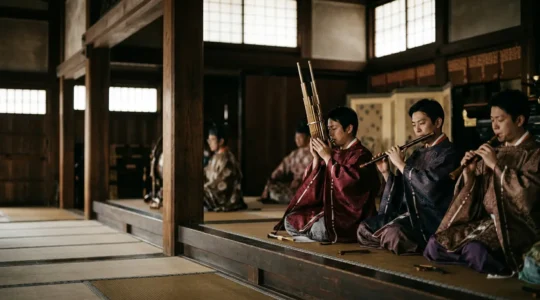
Gagaku: The Sacred Heartbeat of Japan’s Imperial Court Music
Many hear Gagaku as merely slow, strange, or ‘out-of-tune’ music. This perception misses its true essence. Gagaku is not a performance to be passively heard, but a ritual to be experienced—a profound meditation on the flow of time (Jo-ha-kyū) and…
Lire la suite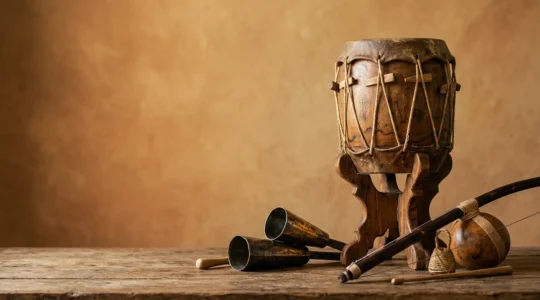
Tracing the African Roots in Brazilian Music: From Candomblé to Samba
The vibrant, complex soundscape of Brazil is often superficially described as a syncretic mix of European, Indigenous, and African contributions. While not inaccurate, this « melting pot » narrative fails to capture the dynamic and often defiant process through which African musical…
Lire la suite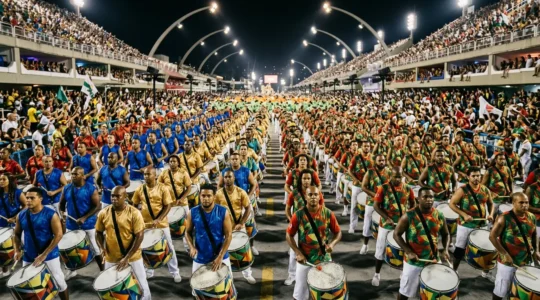
Beyond the feathers: The musical engineering of Rio Carnival
Rio Carnival’s iconic sound is no accident; it’s a meticulously engineered system of music, technology, and human endurance designed for sonic perfection. The parade is judged on microscopic details, where a single group singing out of sync can cost a…
Lire la suite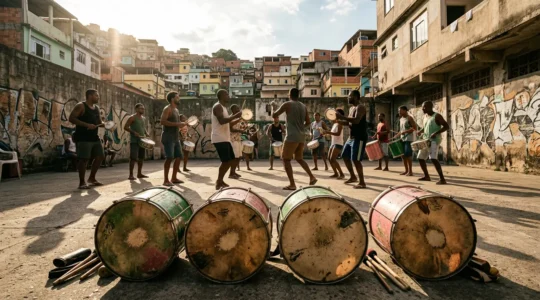
Samba: The heartbeat of Brazil and its polyrhythmic joy
Most people think Samba is a simple, happy 2/4 party beat. They are wrong. Samba’s infectious energy is not accidental; it is a meticulously engineered system of rhythmic tension and release. This is not just music, it is a science…
Lire la suite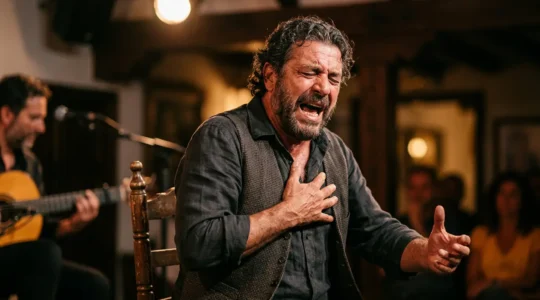
The raw power of Cante Jondo: Understanding the voice of Flamenco
Flamenco singing is not about producing beautiful notes; it is a precise, physical craft of sculpting sound into raw, unfiltered emotion. The iconic vocal « grit » is a controlled technique using the false vocal folds, not a sign of throat damage….
Lire la suite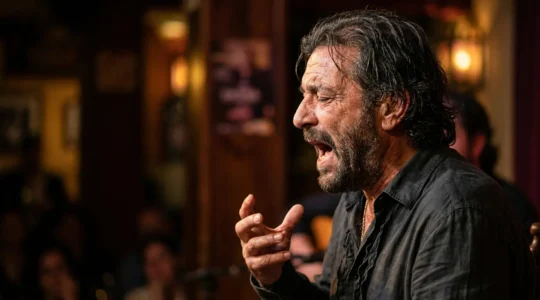
Understanding the Soul of Flamenco: A Deep Dive Beyond the Tourist Clichés
Many perceive flamenco as simply passionate Spanish music. This view misses the point entirely. The art’s true soul lies not in generalized emotion, but in a sophisticated cultural language built on complex rhythmic cycles, specific harmonic structures, and an untranslatable…
Lire la suite
How to Cultivate a Musical Ear and Appreciate Any Genre (Even the Ones You Don’t Play)
The key to appreciating new music isn’t « listening more »—it’s learning to hear what’s hidden. Identify the unique « timbral fingerprint » of each instrument and production choice. Uncover the « rhythmic DNA » that forms the backbone of genres like Afro-Cuban music. Recommendation: Start…
Lire la suite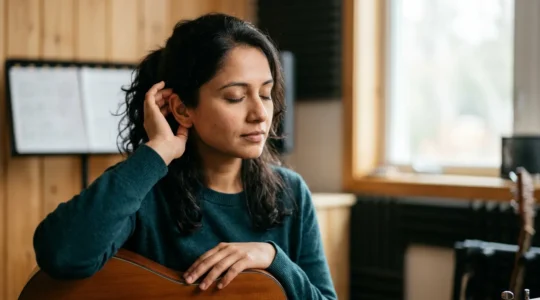
How to Develop « Big Ears » and Finally Hear Chords and Melodies by Instinct
In summary: Developing your ear is less about drilling isolated sounds and more about learning to hear the function and emotional role of each note. Your most powerful tools are your own voice and the bassline; they provide the context…
Lire la suite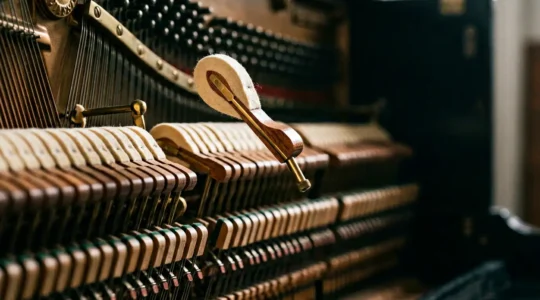
Understanding the Basics of Harmony to Escape the « 4-Chord Loop » Trap
Most musicians believe escaping the four-chord loop requires learning more complex chords. This is a myth. The real key to sophisticated songwriting isn’t adding more chords, but understanding the job each chord does within a « harmonic narrative. » By thinking of…
Lire la suite
How to Develop Core Musical Skills Beyond Just Playing the Notes?
Most musicians believe the path to greater musicality is paved with more hours of technical practice. This is a myth. The real transformation happens not by playing more notes, but by fundamentally changing your internal perception of rhythm, dynamics, and…
Lire la suite