Creating music
Creating music in today’s digital landscape offers unprecedented creative freedom, yet this limitless potential can often feel paralyzing. Whether you are building a budget-friendly bedroom studio or looking to refine your final mix for streaming platforms, understanding the core principles of music production is essential for any modern artist.
This comprehensive resource explores the entire musical journey. From drafting your first lyric and overcoming writer’s block to hitting the export button on a professionally mixed track, mastering these interconnected techniques will help you transform raw, unpolished ideas into release-ready songs.
Setting Up Your Creative Space and Tools
The foundation of great music production begins with your environment and your digital tools. Many beginners fall into the Gear Acquisition Syndrome (GAS) trap, believing that a new plugin or an expensive microphone will magically fix a poor mix. In reality, maximizing minimal gear often yields the best results.
Optimizing the Bedroom Studio
You do not need an elite acoustic facility to produce professional tracks. Treating your room properly is far more critical than upgrading your audio interface. Simple, cost-effective solutions can drastically improve your listening environment:
- Acoustic Blankets: Often more effective than cheap foam panels for absorbing mid-to-high frequency reflections.
- Strategic Placement: Positioning your monitors away from corners to avoid bass buildup.
- Reference Tracks: Using professionally mixed songs to understand how your room colors the sound.
Navigating Digital Audio Workstations
Choosing the right DAW—whether it is Logic Pro, Ableton Live, or FL Studio—depends entirely on how your creative brain works. Some producers thrive in a loop-based environment, thinking in patterns and clips, while others prefer a linear timeline for traditional recording.
Regardless of the software, optimizing your workflow is paramount. Relying on stock plugins, like a native compressor, is usually more than enough to achieve a professional sound. Furthermore, learning keyboard shortcuts can literally double your production speed, allowing your hands to keep up with your musical ideas.
Songwriting Strategies and Breaking Writer’s Block
Staring at a blank project template is a surefire way to kill inspiration. The most effective songwriting techniques often rely on intentionally restricting your options to force melodic and lyrical innovation.
The Power of Intentional Limitations
When inspiration runs dry, imposing strict boundaries can trigger creative breakthroughs. Consider these proven strategies for overcoming creative blocks:
- The 10-Minute Rule: Purposefully write terrible music for ten minutes. Removing the pressure of perfection often unlocks your best ideas.
- Track Limitations: Limit your session to only four tracks. This forces you to focus on the core song structure rather than hiding weak melodies behind lush production.
- One-Chord Composition: Write an entire section using only a single chord. This shifts your focus entirely to rhythm and melodic phrasing.
Crafting Authentic and Engaging Lyrics
Writing lyrics that connect deeply requires specificity. Instead of writing about abstract sadness, utilize object writing: describe the cold morning coffee or the specific sound of a door closing. This grounds your emotional venting into universal art.
Additionally, the rhythm of your words must match the rhythm of your music. Aligning the stressed syllables of your lyrics with the strong beats of your melody prevents the vocal line from feeling awkward. Moving beyond simple rhyme schemes by incorporating internal rhymes will also create a much smoother, rhythmic flow.
Arrangement Techniques for Clarity and Impact
A great mix is born from a great arrangement. If every instrument is fighting for the same frequency range, no amount of equalization will save the song. Arrangement is about carving out distinct sonic spaces for each element.
Creating Dialogue and Sonic Space
Think of your arrangement as a dinner party: if everyone shouts at once, nobody is heard. Establishing a clear hierarchy is vital. For instance, the bass and the kick drum must negotiate who owns the sub-frequencies. Usually, one must be punchy and short while the other provides sustained warmth.
Similarly, create a musical conversation between your lead vocal and secondary instruments, like a guitar or a violin. When the vocalist sings, the guitar should leave space; when the vocal pauses, the guitar can play a melodic fill. Surprisingly, muting 30% of your tracks often makes the chorus sound significantly bigger by reducing clutter.
Structuring for Streaming Platforms
Modern listening habits require strategic song structures. To keep listeners engaged, consider introducing your main hook within the first 30 seconds. This is not selling out; it is smart structuring for an impatient audience.
Visualizing your track’s intensity before producing can serve as a roadmap. Use tools like sweeps and risers to subconsciously signal section changes, and leverage a stripped-down bridge to act as a ‘reset button,’ making your final chorus hit with maximum impact.
Sound Design and the Art of Sampling
Relying solely on presets can make your music sound generic. Developing a unique sonic identity involves exploring sound design from the ground up and utilizing unconventional audio sources.
Moving Beyond Presets
Sculpting your own synthesizer sounds does not have to be intimidating. By understanding the fundamentals, you can recreate famous vintage leads by ear. A basic bass patch can be built in three steps:
- Select a primary oscillator waveform (like a saw or square wave).
- Apply a low-pass filter to remove harsh high frequencies.
- Use an envelope to shape the volume and filter movement, adding life to a static patch.
Curating Unique Sample Libraries
Endless digital libraries often lead to decision fatigue. Creating a dedicated ‘Favorites’ folder with only five trusted kick drums forces you to make decisions quickly. For truly unique percussion, try sampling your kitchen—pots, pans, and household objects can be transformed into incredible drum kits.
Furthermore, blending organic sounds with digital synthesis bridges the gap between acoustic warmth and electronic power. Layering Foley recordings over a digital synth pad, or micro-sampling a tiny vocal chop to create a lush texture, adds an undeniable human element to your tracks.
Demystifying the Mixing and Mastering Process
Many producers mistakenly believe that mixing requires an engineering degree. In reality, a clear mix is achieved through balance, critical listening, and restraint. The golden rule is simple: do not mix while you arrange. Wearing the composer hat and the mixer hat simultaneously instantly kills your flow state.
Achieving Balance Without Over-Engineering
Before touching an equalizer, execute a fader-only mix. Establishing the correct volume balance between tracks solves most mixing issues. From there, employ LCR mixing techniques—panning elements strictly left, center, or right—to create massive stereo width.
When dealing with muddy mixes, the problem is rarely the bass itself. Often, cutting the low-end frequencies on your guitars and keyboards clears the necessary room for the bass and kick to sit perfectly.
Finalizing for the Real World
Knowing when a mix is ready for release requires testing across multiple playback systems. A mix might sound flawless on expensive studio monitors but fall apart in a standard car stereo. It is also crucial to check for phase cancellation, which can cause wide synth pads to completely disappear when played in mono on a smartphone speaker.
When preparing for mastering, leave at least -6dB of headroom. Do not fall into the trap of crushing your dynamic range just to be the loudest track on Spotify; streaming platforms penalize heavily compressed masters by turning them down. Target a dynamic, punchy mix over sheer volume.
Productivity Workflows and Professional Collaboration
Creating music is only half the battle; finishing and releasing it is where many artists struggle. Streamlining your process is essential if you want to consistently share your art with the world.
Finishing Tracks Consistently
Applying Parkinson’s Law to music production—giving yourself a strict three-hour deadline to finish a track—forces decisive action. Additionally, committing to your sounds by rendering MIDI clips to audio (freezing tracks) prevents endless tweaking and keeps the project moving forward.
Finally, implement a strict naming convention for your files. Avoiding the dreaded ‘Final_Final_V3’ nightmare will save your sanity and ensure your project archives remain organized for future revisions or collaborations.
Directing Session Musicians
Sometimes, elevating your track requires hiring professional session musicians. Platforms connect you with incredible talent worldwide, but directing them requires clear communication. Always provide reference tracks to explain subjective terms like ‘sad cello.’
Understand the difference between a work-for-hire agreement and giving away publishing points to ensure you maintain proper ownership of your compositions. Knowing when to play a simple shaker yourself versus when to hire a master percussionist is a vital skill for any modern producer.

Drowning in Samples? How to Explore Sound Libraries Without Getting Lost
The solution to a bloated sample library isn’t better organization, but a radical shift in mindset from collector to creator. Endless browsing stems from a « librarian » mentality; the key is to become a « sonic alchemist » who transforms existing sounds. Techniques…
Lire la suite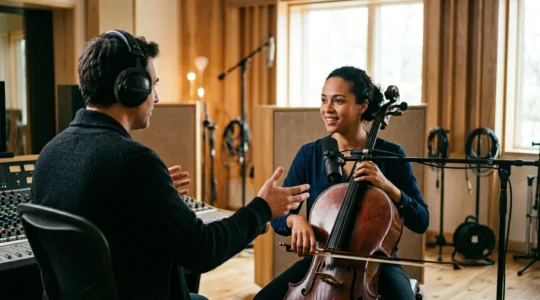
How to hire and direct session musicians to elevate your track?
Hiring session musicians feels intimidating and expensive, but the secret isn’t finding the cheapest player—it’s mastering the role of a creative director. Translate vague emotional concepts like « sad cello » into precise, actionable direction that professionals understand. Grasp the critical business…
Lire la suite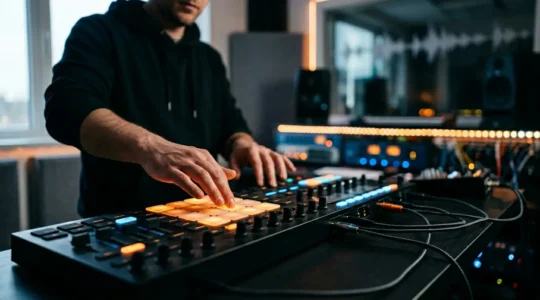
Logic vs Ableton vs FL Studio: Which DAW Matches Your Creative Brain?
The endless debate over the « best » DAW is a distraction; your choice should be guided by your cognitive workflow, not a feature list. Your creative process—whether you build music from loops or compose along a timeline—is the single most important…
Lire la suite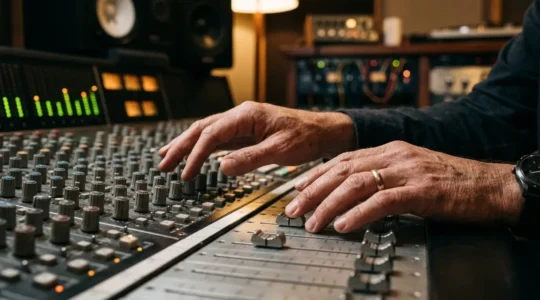
How to know when a mix is professional enough to release?
A professional mix isn’t about hitting a specific LUFS target; it’s about ensuring your music translates predictably and powerfully on every system. Solid mono compatibility is non-negotiable for ensuring your mix holds up on phones, laptops, and club systems. Preserving…
Lire la suite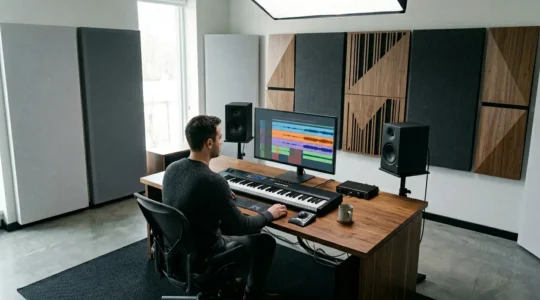
How to Structure Your Tracks to Keep Listeners Hooked on Streaming Platforms
The secret to streaming success isn’t just writing a great hook; it’s engineering your song’s entire structure to manage listener dopamine and satisfy platform algorithms. The first 30 seconds are not for you, they are for the algorithm. Hooking the…
Lire la suite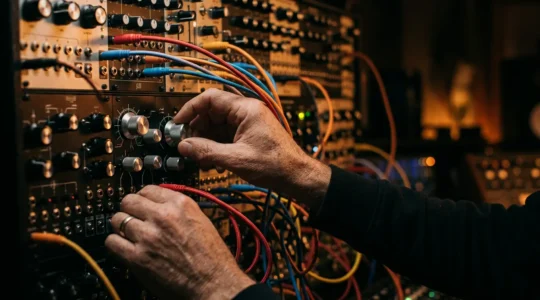
How to Design Your Own Sounds Instead of Relying on Presets
In summary: True sound design is about intentional experimentation, not just knowing theory or tweaking presets. Start with fundamental building blocks like oscillators and filters to sculpt basic tones before adding complexity. Embrace sonic alchemy by blending digital precision with…
Lire la suite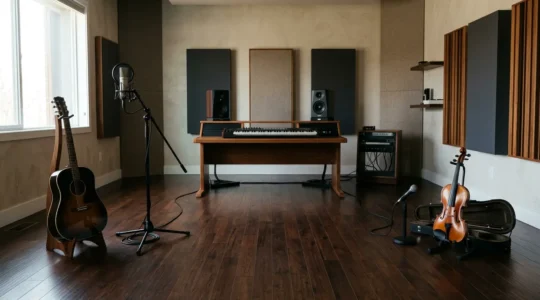
How to arrange music: Give every instrument space and impact
The secret to a clean, powerful arrangement isn’t adding more effects; it’s choreographing a musical conversation where every instrument knows its role. Clarity comes from subtraction, not addition. Muting redundant parts makes the remaining ones sound bigger. Define a clear…
Lire la suite
How to Achieve a Clear Mix Without Being an Audio Engineer?
In summary: A clear mix starts with volume and panning; these two tools solve 80% of your problems before you even touch an EQ. Create sonic space by strategically cutting low frequencies from instruments that aren’t the bass or kick…
Lire la suite
How to write lyrics that connect deeply without being cliché?
Deeply resonant lyrics aren’t born from simply « being authentic, » but from mastering the physical craft of language. Trade abstract emotion for sensory specificity—describe the coffee, not the sadness. Align your melody with the natural rhythm of speech (prosody) to make…
Lire la suite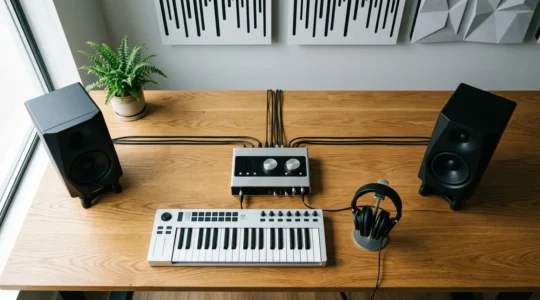
How to Streamline Your Music Production Process to Release Songs Monthly
Releasing music consistently isn’t about raw talent or expensive gear; it’s about adopting a ruthless project manager’s mindset. Separate production into non-negotiable phases (e.g., arranging, mixing) to avoid context-switching that kills momentum. Commit to creative decisions by rendering MIDI to…
Lire la suite