Hiring session musicians feels intimidating and expensive, but the secret isn’t finding the cheapest player—it’s mastering the role of a creative director.
- Translate vague emotional concepts like « sad cello » into precise, actionable direction that professionals understand.
- Grasp the critical business difference between a « Work for Hire » fee and offering « points » to protect your ownership and budget.
Recommendation: Start viewing session musicians not as an expense, but as a strategic investment in the authenticity and quality that elevates your music from a demo to a professional release.
As a solo producer, you’ve hit a wall. That MIDI string patch sounds thin, the programmed drums lack human groove, and you know, deep down, that a real instrument is the missing ingredient. But the thought of hiring a professional session musician is paralyzing. How much does it cost? How do you explain the sound in your head without sounding like an amateur? What if you spend the money and they deliver something you can’t use?
Most advice tells you to just « be clear » or « use reference tracks, » but that barely scratches the surface. The internet is full of platforms, but which one is right for finding a soulful saxophone player versus a technically perfect string quartet? This fear of miscommunication and wasted budget keeps countless producers stuck in the digital box, their tracks never reaching their full potential.
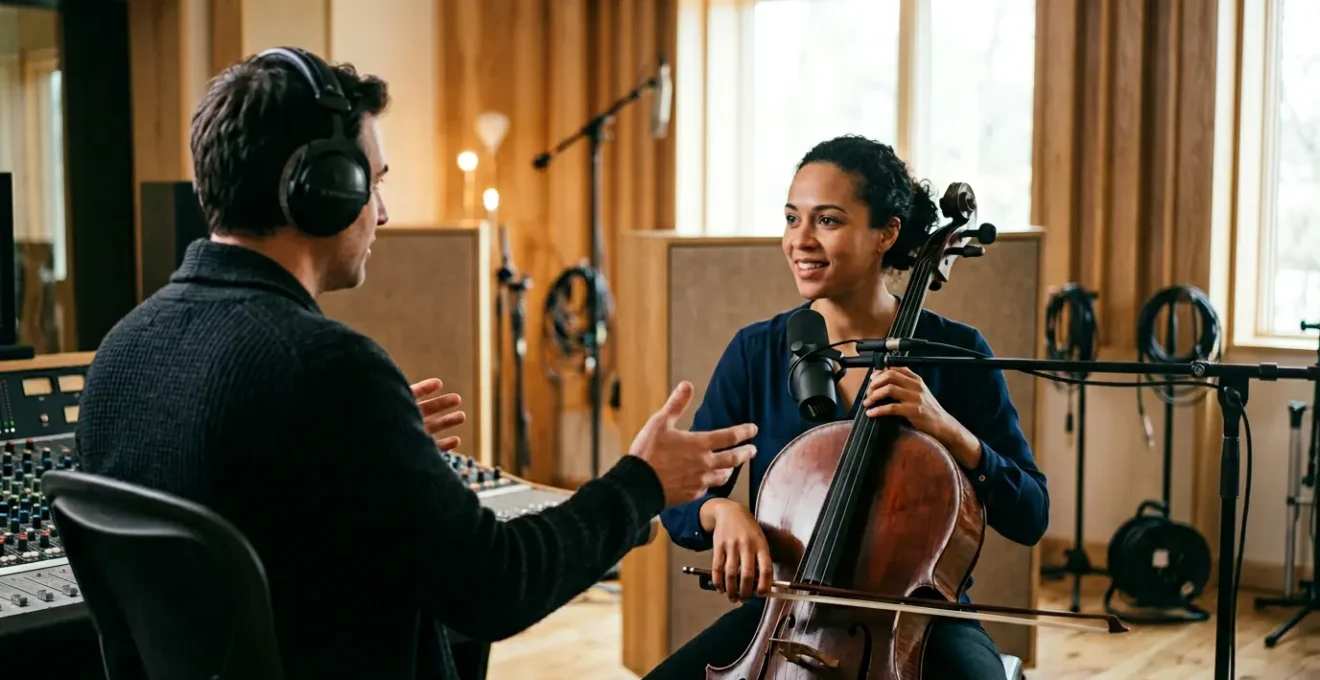
But what if the entire framework is wrong? The key isn’t just to hire a player; it’s to learn how to direct creative talent. This is a shift in mindset: you are not just a customer buying a service, but a producer and a director leading a collaboration. It’s about understanding the business, speaking the language, and building a process that makes professionals excited to work with you. This is an investment in your art, not just an expense line on a spreadsheet.
This guide will walk you through that transformation. We’ll deconstruct the entire process, from choosing the right platform for your needs and translating your artistic vision into technical direction, to navigating the business side of ownership and becoming the kind of prepared, professional director that A-list players want to work with again and again.
Summary: How to hire and direct session musicians to elevate your track?
- Fiverr vs SoundBetter: Where to Find Pro Saxophone Players?
- Using Reference Tracks to Explain « Sad Cello » to a Pro
- How Much Editing Is Too Much Before You Offend the Player?
- When to Play the Shaker Yourself vs Hiring a Percussionist
- Work for Hire vs Points: Who Owns the Bassline?
- Being on Time and Prepared: Respecting the Group’s Time
- What Are They and Why Do You Need Them for Royalty Collection?
- Why playing in ensembles teaches you skills you can’t learn alone?
Fiverr vs SoundBetter: Where to Find Pro Saxophone Players?
The first hurdle is finding the right talent, and not all platforms are created equal. The choice between a general marketplace like Fiverr and a music-specific one like SoundBetter isn’t about which is « better, » but which is strategically right for your project. Think of it as choosing between a fast-food restaurant and a fine-dining establishment; both serve food, but the experience, cost, and quality are fundamentally different.
Fiverr is built for speed and volume. It’s an excellent choice for well-defined, simple parts where you need a quick turnaround and your budget is the primary constraint. If you have a fully written-out saxophone line and just need it performed competently, you can find great players on Fiverr. However, the sheer volume of providers means you’ll spend more time vetting portfolios and reviews to separate the pros from the hobbyists.
SoundBetter, owned by Spotify, is a curated platform exclusively for music professionals. The vetting process is stricter, and the talent pool often consists of Grammy-winning artists and seasoned session players. This is where you go for collaborative partnerships and complex arrangements. It’s the place to find a cellist who can co-create a part with you, not just execute a MIDI file. The investment is higher, but you’re paying for expertise, taste, and a higher likelihood of getting a truly exceptional performance. Deciding between them requires you to first define your goal: do you need an executor or a collaborator?
This breakdown shows the key differences you should consider before posting your project. Analyze your specific needs—budget, complexity, and desired level of creative input—to make the right strategic choice.
| Criteria | Fiverr | SoundBetter |
|---|---|---|
| Platform Focus | General freelance marketplace (all industries) | 100% music industry professionals |
| Best For | Budget-conscious projects, quick turnaround, simple parts | Complex arrangements, collaborative partnerships, genre expertise |
| Vetting Process | Review-based system only | Stricter vetting process for professionals |
| Portfolio Features | Basic audio samples | High-quality samples, credit display, licensing options |
Using Reference Tracks to Explain « Sad Cello » to a Pro
Once you’ve found your player, the next challenge is communication. Saying you want a « sad cello » part is artistically honest but technically useless. The musician’s « sad » might be slow and mournful, while your « sad » is tense and anxious. This ambiguity is where projects go off the rails. The art of creative direction lies in translating your emotional intent into a language the musician can execute. This is where reference tracks become your most powerful tool, but only if used with precision.
Don’t just send one song and say, « make it sound like this. » A professional producer deconstructs their vision. Send one track for tone (« I love the woody, breathy texture of the cello in this track »), another for phrasing (« Notice the long, connected legato notes here »), and a third for dynamics (« I want our part to build with the same intensity as the solo at 2:15 »). This multi-reference approach provides a crystal-clear blueprint. Even more powerful is using « negative references » to define boundaries: « This reference is too polished and bright; I’m aiming for something much rawer. »
As Professor David Beckett notes in a study for the Abbey Road Institute, « using the right metaphors can be beneficial in driving the recording forward. However, choosing them poorly can cause frustration. » Translating « sad » into « slow vibrato, focus on lower registers, and minimal bow noise » is moving from a vague emotion to an executable instruction. This isn’t about stifling creativity; it’s about providing clear guardrails so the musician’s creativity is channeled effectively toward your vision.
Your Action Plan: The Reference Track Communication Framework
- Deconstruct Your Vision: Select multiple reference tracks, each for a specific quality: one for TONE (e.g., ‘woody, breathy’), one for ARTICULATION (e.g., ‘legato phrasing’), and one for DYNAMICS (e.g., ‘build from soft to powerful’).
- Create a Lexicon: Translate emotional words into technical terms. ‘Sad’ becomes ‘slow vibrato, focus on lower registers’. ‘Epic’ becomes ‘wide vibrato, full bow strokes, build from mezzo-forte to fortissimo’. Write this down.
- Use Negative References: Provide an example of what you DON’T want. State clearly, « This cello is too polished; I need something rawer. » This clarifies boundaries and prevents misinterpretation.
- Timestamp Your Requests: Be specific. Don’t just send a track, send a timestamp. « Listen to the cello phrase from 2:15-2:45 for the dynamic build I’m imagining. » This shows respect for their time.
- Consolidate Your Feedback: After receiving the first take, gather all your notes into a single, timestamped document or Loom video. Avoid a stream of disorganized messages. This makes revisions faster and more accurate.
How Much Editing Is Too Much Before You Offend the Player?
You’ve received the files. The performance is fantastic, but a few notes are slightly off the grid, and one phrase could be tighter. Now you face a delicate question: how much can you edit before you disrespect the musician you just paid? The answer lies in understanding the unspoken contract between producer and player. They expect you to make their performance shine; they do not expect you to erase their humanity from the track.
There’s a clear hierarchy of editing. Comping—creating a composite take from the best moments of several performances—is always acceptable. It’s standard practice and shows you’ve listened carefully to honor their best work. Minor timing adjustments, or nudging, to lock a part into the groove are also generally fine and expected. This is part of a producer’s job.
The danger zone begins with aggressive editing. Hard quantizing every note to the grid can be insulting because it erases the natural « feel » and micro-timings that define a musician’s style. You hired a human for their groove, not a machine for its perfection. The most sensitive area is aggressive pitch correction. Slapping an auto-tune plugin on a string or vocal performance can imply their intonation was poor. It’s a tool to be used surgically, not as a blanket fix. A good rule of thumb is the 80/20 editing rule: spend 80% of your time on thoughtful comping and only 20% on micro-edits. This preserves the very human element you paid for.

The best way to avoid any offense is a pre-flight conversation. Before they even play a note, mention your editing philosophy. A simple, « For context, I usually do some light timing edits to make sure everything sits perfectly in the pocket. Are you comfortable with that? » builds trust and sets clear expectations. This single piece of communication can prevent misunderstandings and ensure a smooth, professional relationship.
When to Play the Shaker Yourself vs Hiring a Percussionist
« It’s just a shaker part, I can do that myself. » Every solo producer has had this thought. And sometimes, you’re right. For a simple, straight-eighth-note shaker in a pop track, grabbing a shaker (or even a sample) is efficient. But this thinking overlooks a crucial strategic concept: the Authenticity Factor and the opportunity cost of your own time.
For genres where percussion is the cultural and rhythmic heartbeat—salsa, samba, afrobeats, reggae—a shaker is not just a shaker. It’s a complex tapestry of subdivisions, accents, and feel that a professional percussionist has spent a lifetime mastering. Hiring a specialist from that cultural background provides an authenticity that is nearly impossible to program or fake. They don’t just play the instrument; they embody the groove. This is an investment in the soul of your track.
Case Study: The ‘Sonic Palette’ Advantage
In genres like salsa or afrobeats, percussion is the song’s core. A professional percussionist brings more than just a performance; they bring a ‘sonic palette.’ Hiring them isn’t just for one shaker part; it’s for their expertise in layering textures. They know instinctively to add a subtle cabasa for drive, a perfectly placed triangle for sparkle, or a set of congas to lock in the groove. This layering of authentic instruments and cultural knowledge is what separates a sterile-sounding track from one that feels alive and genuine. You’re not hiring a shaker player; you’re hiring an architect of rhythm.
Furthermore, consider the opportunity cost. Could the three hours you spend trying to get a tambourine part to groove just right be better used for mixing, songwriting, or promoting your music? Sometimes, the most business-savvy decision is to delegate. Framing the choice as an investment in efficiency and authenticity, rather than a simple expense, clarifies the decision. If the part is functional background texture, do it yourself. If the part is a core component of the song’s identity and groove, hire a pro. Their expertise is the shortcut to a better-sounding record.

The value a pro brings is not just in their hands, but in their deep understanding of how texture and rhythm define a genre. It’s a level of detail that listeners feel, even if they can’t articulate it.
Work for Hire vs Points: Who Owns the Bassline?
You’ve hired a bassist. They lay down a functional part that supports the song perfectly. That’s a classic « Work for Hire » situation. You pay them a flat fee, and you own 100% of the recording. It’s clean, simple, and the industry standard for most session work.
But what if that bassist creates an iconic, melodic bassline that becomes the central hook of your song? Think of the bassline from Queen’s « Another One Bites the Dust. » That’s not just a supporting part; it’s a core piece of the composition. In this scenario, the musician has become a co-writer, and a simple flat fee might not be fair or legally sound. This is where « points » come in. Offering points means giving the musician a small percentage (typically 2-4%) of the master royalties. It’s a smaller upfront fee in exchange for a share in the song’s potential future success.
This is the most critical business decision you’ll make when collaborating. The « Hook Test » is a good guideline: if the part is functional but not memorable on its own, Work for Hire is appropriate. If the part is so integral it could be hummed by a fan, you should discuss a royalty share. Not doing so can lead to legal challenges down the line if the song becomes a hit. According to an analysis of industry standards by Orphiq, while session players get fees, producers who co-create often negotiate a share of publishing rights, reinforcing the principle that significant creative contribution merits a stake in ownership.
Understanding this distinction is vital. One path leads to a clean transaction, the other to an ongoing business partnership that requires royalty tracking. Choose wisely based on the nature of the creative contribution.
| Aspect | Work for Hire | Points (Royalty Deal) |
|---|---|---|
| Payment Structure | One-time flat fee (e.g., $100-$500 per song) | Smaller upfront fee + 2-4% of master royalties |
| Ownership | Producer/Artist owns 100% of the recording | Shared ownership—musician retains a royalty percentage |
| Best For | Executing pre-written or simple, functional parts | Co-creating central hooks, arrangements, or signature parts |
| Long-term Implications | Clean transaction, no ongoing accounting | Ongoing business relationship, requires royalty tracking |
Being on Time and Prepared: Respecting the Group’s Time
In the world of remote sessions, « being on time » isn’t about showing up to a studio. It’s about delivering a professional, organized, and complete project package before the musician even starts their clock. Nothing frustrates a top-tier player more than wasting paid time downloading disorganized files, deciphering cryptic notes, or dealing with technical issues that should have been solved beforehand. Your level of preparation is a direct reflection of your professionalism.
A truly prepared producer sends more than just a WAV file. They send a « Session-Ready Package. » This includes clearly labeled stems (e.g., ‘Sunset_Drive_120BPM_Aminor_Stems.zip’), a stereo bounce of the track *without* a click so the musician can feel the natural groove, and a simple text file or « session map » that outlines the song structure with timestamps (e.g., ‘Verse 1: 0:15-0:45, Chorus: 0:45-1:15’).
This level of organization does more than save time; it builds confidence. When a musician receives a package like this, it tells them they’re working with a serious producer who respects their time. It eliminates guesswork and allows them to focus 100% of their energy on what you hired them for: a great performance. Conversely, sending a messy folder with unlabeled files and a vague email sends a clear signal that you are an amateur, and you may not get their best work or a chance to hire them again.
Checklist: The Session-Ready Package
- File Naming Convention: Have you labeled your master folder and stems clearly? (e.g., ‘TrackName_BPM_Key_Stems.zip’).
- Clean Stems & Bounces: Have you exported all stems starting from zero, and included a separate bounce without a click track? Are effects printed only if essential to the sound?
- Session Map: Have you created a simple text document with song sections and timestamps for easy navigation?
- Reference Materials: Have you included your reference tracks with specific, timestamped notes on what to listen for?
- Technical Specifications: Have you clearly stated the required sample rate, bit depth, and final deliverable file formats to avoid re-work?
Your goal is to make it as easy as possible for them to give you their best. A little preparation on your end pays massive dividends in the quality of the final performance and the health of your professional relationship.
What Are They and Why Do You Need Them for Royalty Collection?
You’ve navigated the creative and business sides of the collaboration. The track is finished, and it sounds incredible. But how do you ensure that if your song gets played, everyone (including you) gets paid? This is where the alphabet soup of music industry codes comes in, specifically the ISRC and ISWC.
Think of them as the fingerprints and Social Security numbers for your music. An ISRC (International Standard Recording Code) is a unique code embedded in a specific *recording* of a song—your master track. If your song is streamed on Spotify, played on the radio, or used in a TV show, this code is what identifies that specific recording and ensures that master royalties flow to the correct owner(s). If you gave your session player « points, » this code is essential for tracking those royalties.
An ISWC (International Standard Musical Work Code), on the other hand, identifies the underlying *composition*—the melody and lyrics. It’s tied to the song itself, not any single recording of it. This code is used by Performing Rights Organizations (PROs) like ASCAP and BMI to track public performances and pay publishing royalties to the songwriters and publishers. If your bassist co-wrote that hook, their share of the composition would be linked to this ISWC.
For a solo producer, understanding this is non-negotiable. Without correctly assigning these codes to your music before you release it, you are essentially releasing your music into the wild with no way to track it or collect the money it earns. It’s the final, crucial step in transforming from a hobbyist into a professional who runs their music like a business. It’s the administrative follow-through that ensures your creative work can also be a financial asset.
Key Takeaways
- Shift your mindset from a client buying a service to a creative director leading a collaboration. This is the foundation for success.
- Master the art of translating emotional ideas into precise, technical direction using specific, multi-track references.
- Always clarify ownership upfront. Understand the profound difference between a one-time « Work for Hire » fee and offering « points » for co-creative contributions.
Why playing in ensembles teaches you skills you can’t learn alone?
At the end of this process, it’s easy to think you’ve simply purchased a set of notes to plug into your session. But the real value you’ve unlocked is far deeper. When you hire a seasoned professional, you’re not just hiring their technical skill; you’re tapping into thousands of hours of ensemble experience—a skillset that cannot be learned in isolation.
An ensemble player’s greatest skill is listening. They’ve spent their career learning how to fit into a mix, respond to a vocalist’s phrasing, and lock into a drummer’s groove. They instinctively know when *not* to play, understanding that space is often more powerful than a fill. When you ask them, « How would you support the vocal in this section? » you activate this deep well of collaborative experience. You’re no longer just directing one instrument; you are channeling the collective wisdom of every band they’ve ever played in.
This is the ultimate payoff of the « creative director » mindset. As a guide from SoundBetter’s knowledge base suggests, your job is to give direction but leave room. You provide the framework—the tone, the dynamics, the general feel—and then you trust their ensemble-honed instincts to fill in the gaps. It’s a dialogue, not a monologue.
Good session players have ideas. A suggestion from an experienced player may improve the song in ways you did not anticipate. Stay clear on your vision, but leave room for their expertise.
– Orphiq Resource Guide, Hiring Session Musicians for Your Project
By seeing them as a collaborator, you invite them to bring their full artistic selves to the project. You get more than just a performance; you get a partnership that elevates your music in ways you couldn’t have achieved alone. This is the final step in your journey from solo producer to true creative leader.
Now that you’re equipped with the mindset and the strategy, the next step is to start building your network. Begin by exploring a platform, prepare your first « Session-Ready Package, » and hire a professional for a small part. The experience will be the most valuable music production lesson you’ve ever had.