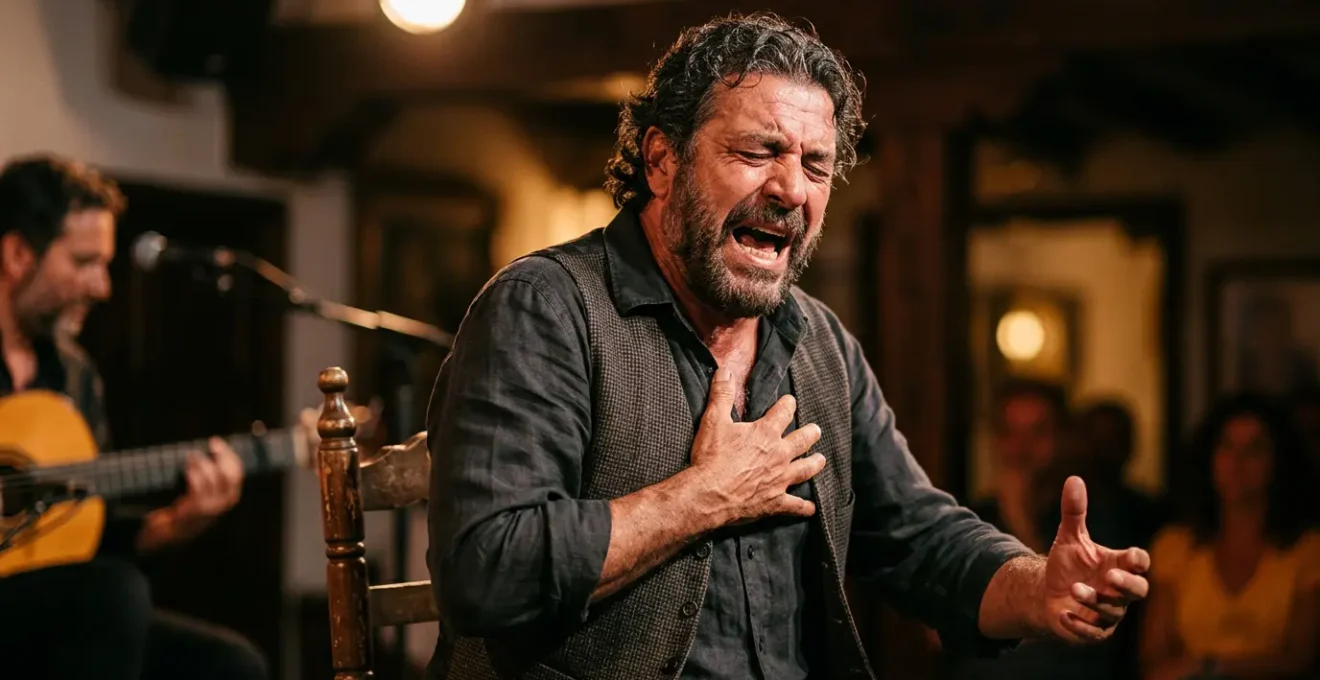
Flamenco singing is not about producing beautiful notes; it is a precise, physical craft of sculpting sound into raw, unfiltered emotion.
- The iconic vocal « grit » is a controlled technique using the false vocal folds, not a sign of throat damage.
- Spontaneous cries like ‘el quejío’ are not random, but are structured emotional releases that serve a narrative purpose.
Recommendation: To truly understand Cante Jondo, listen not for the melody, but for the story being told in the texture, the breath, and the silence between the notes.
The first time you hear it, really hear it, it stops you cold. A voice that sounds like it’s been torn from the earth, full of gravel and honey, rage and sorrow. This is the sound of Cante Jondo, the « deep song » of flamenco. It’s a sound that crawls under your skin and settles in your bones. For those of us who live it, the voice is not just an instrument; it is the physical manifestation of a story, a history, a feeling too big for mere words.
Many outsiders think of flamenco singing as passionate chaos, a series of pained, raspy shouts. They hear the suffering but miss the craft. They are told it’s about emotion, but they aren’t shown how that emotion is meticulously constructed, breath by breath. The common advice is to « sing with feeling, » but this misses the point entirely. The cantaor doesn’t just sing *with* feeling; they use their body as a crucible to forge feeling *into* sound.
The secret is not in what you sing, but in how the sound itself becomes the narrative. This is where the tourist cliché ends and the raw power begins. We’re not here to talk about pretty melodies. We are here to dissect the voice of flamenco, to understand how a simple « Ay » can carry the weight of a lifetime, how distortion becomes a color on the palette, and how the untranslatable spirit of *duende* takes hold. This is a journey into the vocal flesh of flamenco, exploring the techniques that allow a singer to bleed sound and break hearts, safely and with profound intention.
This guide will deconstruct the core vocal elements of Cante Jondo. We will move from the specific, visceral techniques to the cultural soul that gives them meaning, providing a complete picture of this powerful art form.
Summary: The Soul and Science of the Flamenco Voice
- Between the Notes: The « Ay » That Breaks Your Heart
- Distortion without Damage: Singing with Grit Safely
- Letras: How Singers Adapt Verses to the Moment
- Singing with the Feet: Locking in with the Dancer
- The Cry (El Quejío): Releasing Pain Through Sound
- What is Duende? The Untranslatable Spirit of Performance
- The Vocal Slide: connecting Notes Like a Singer for Emotional Impact
- Understanding the passion and complexity of Flamenco beyond the tourist clichés
Between the Notes: The « Ay » That Breaks Your Heart
Before a verse even begins, there is often a sound that hangs in the air, a long, drawn-out sigh that seems to contain worlds of emotion. This is the ‘Ay’. It is not just a warm-up or a random cry; it is a fundamental piece of emotional punctuation. Think of it as the ellipsis in a sentence of pain, or the sharp intake of breath before a difficult truth is spoken. The ‘Ay’ is where the singer gathers the emotional energy for the story they are about to tell. It sets the tone, prepares the audience, and carves out a space in time for the feeling to land.
This vocalization is a tool with immense practical and emotional purpose. As Gran Gala Flamenco explains, this ‘ayeo’ is a moment where the cantaor spontaneously sings ‘ayyyyyyyyyy’, often at the beginning of a song. But its function goes beyond a simple introduction. It serves as a vital rhythmic bridge, allowing the singer to remain perfectly within the *compás* (rhythmic cycle) while the dancer makes their entrance or prepares for a new sequence. It’s a sonic canvas.
The ‘Ay’ as Mood-Setter and Rhythmic Bridge in Performance
The role of the ‘Ay’ is deeply intertwined with the dance. When performed at the start of a song, it gives the *bailaora* (female dancer) the time and sonic space to walk onto the stage and perform the *llamada*—a percussive call with her feet that signals the start of her dance. During the song, these vocalizations act as a bridge, allowing the singer to maintain the rhythmic pulse. According to an analysis of the flamenco voice, this creates a living soundscape over which the dancer’s own footwork can weave intricate patterns, ensuring the performance remains a cohesive, breathing entity.
So, the ‘Ay’ is both a deep, personal expression and a critical piece of the collaborative puzzle. It is the sound of a soul preparing to speak, and the cue that tells everyone on stage, « I am here, and this is what we are about to feel together. »
Distortion without Damage: Singing with Grit Safely
One of the most defining characteristics of Cante Jondo is the *voz afillá*—a hoarse, gritty vocal quality that sounds like it’s been scraped raw. For the uninitiated, it can sound like painful, uncontrolled shouting. But this is a profound misunderstanding. This texture, this sonic scar tissue, is a highly controlled and sophisticated technique. It’s the sound of a life lived, of hardship and resilience, and producing it without causing vocal damage is a mark of a true cantaor.
The key to this sound lies not in the throat, but in a specific part of the larynx that most singers are taught to ignore: the false vocal folds. This safe distortion is achieved when these folds are engaged to vibrate along with the true vocal folds. As Voice Science explains, this combination creates a complex sound wave. The true folds produce the clean, fundamental pitch, while the false folds add a layer of aperiodic noise. The result is what our ears perceive as growl, rasp, or distortion. It’s a controlled « tearing » of the sound, not the flesh.
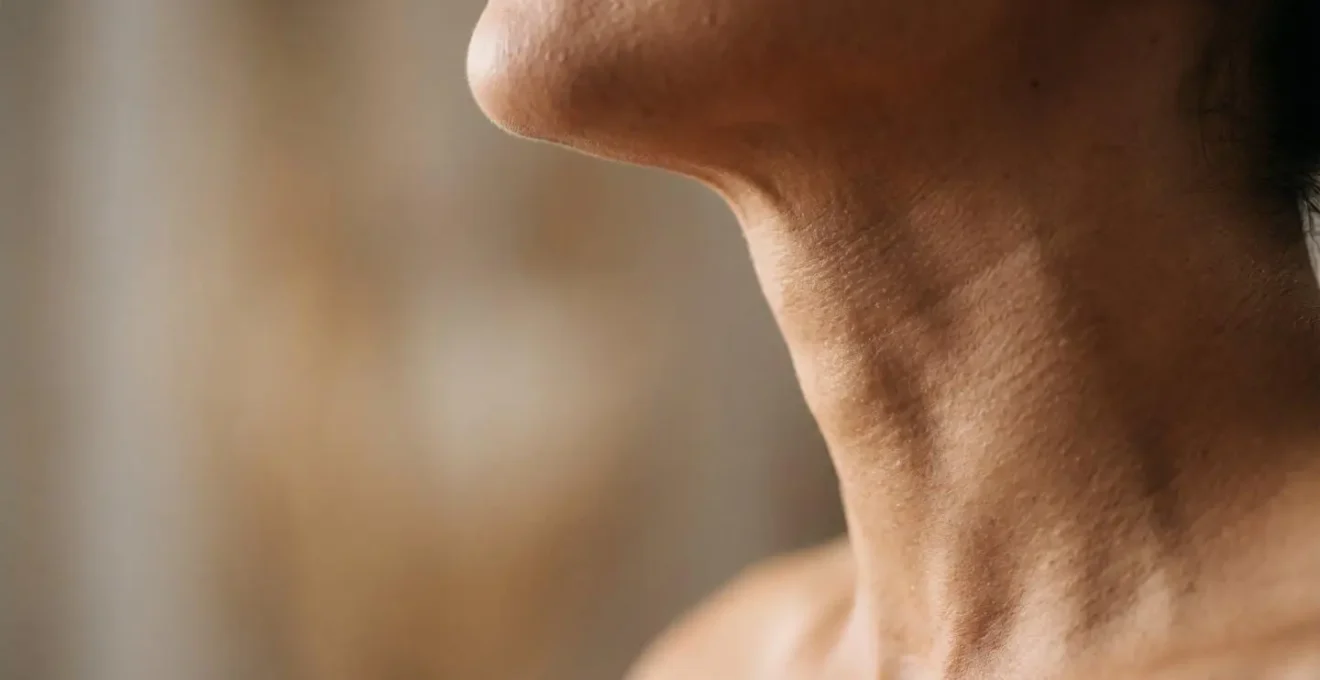
Achieving this requires immense breath support and precise placement of resonance. The power must come from the diaphragm, not from squeezing the throat. The singer learns to « place » the sound in the mask of the face, allowing the grit to emerge as a resonant color rather than a forced strain. It is the difference between a controlled fire and a destructive one. This is why you can hear a 90-year-old Gitano sing with more power and grit than a 20-year-old, because their technique is born of a lifetime of control, not abuse.
Your Action Plan: Finding Your Grit Without the Grind
- Isolate the Feeling: Before making a sound, connect with the physical sensation of a low, guttural sigh or a chuckle. Notice the vibration deep in your chest and lower throat. This is the area you want to activate, not your upper throat.
- Practice on a Breath: Exhale on a whispered, breathy « haaaah » sound. Slowly add a tiny amount of vocal cord vibration, keeping the breathiness. The goal is to feel the air moving *through* the sound, creating a gentle friction.
- Engage on a Low Hum: Start a comfortable, low hum (mmmm). Now, try to add that same « chuckle » or « sigh » sensation on top of the hum. You’re not aiming for loud, but for a new texture layered over the clean pitch.
- Start with Soft Consonants: Practice the technique on gentle, voiced consonants like « V » or « Z ». Try to sustain a « Vvvvv » sound and introduce the gentle grit. This prevents the hard glottal attack that can lead to strain.
- Listen and Rest: Record yourself. If you feel any pain or tickling, stop immediately. True flamenco grit feels powerful and resonant, not painful. This is about control, and it takes time and patience to build.
Letras: How Singers Adapt Verses to the Moment
In flamenco, the lyrics, or *letras*, are not static words on a page. They are a living, breathing part of the performance. A cantaor is a poet of the moment, drawing from a deep well of traditional verses, proverbs, and personal feelings to weave a narrative that is unique to that specific performance. The same singer performing the same *palo* (style) on two different nights will never sing it in exactly the same way. The choice of verses, their sequence, and their emotional delivery are all subject to the feeling of the room, the energy of the audience, and the singer’s own heart.
This improvisational spirit is a core part of the tradition. The singer isn’t reading from a script; they are accessing a lifetime of collected stories. As Casa Triana Flamenco notes, singers historically carried a vast mental anthology of favorite verses to pull from at a moment’s notice. This allows for an incredible level of personal expression and connection with the audience. If the singer feels a wave of sorrow, they might choose a *letra* about loss. If they feel a spark of defiance, they will choose one of strength.
Improvisation in Delivery: Selecting and Sequencing Coplas
While the verses themselves are often traditional, the art lies in their curation and delivery. A singer acts as a live editor, choosing which *coplas* (verses) to sing and in what order. According to an explanation of the cantaor’s role, they might string together two or three short, powerful verses to form a complete song. The true improvisation comes in the delivery: they might stretch a single vowel into a heart-wrenching wail, inject a sudden, sharp ‘Ay’ between lines to punctuate a feeling, or deliver a line with a whisper that commands more attention than a shout. This is how a few simple lines of poetry are transformed into a profound emotional arc.
This is why listening to a recording of flamenco is only half the experience. The true art happens live, in that fleeting moment when the singer looks into the eyes of the dancer or the guitarist, feels the energy of the crowd, and pulls the perfect verse from their soul to articulate that exact, unrepeatable feeling. The letra becomes a living confession.
Singing with the Feet: Locking in with the Dancer
In flamenco, the singer, guitarist, and dancer are not three separate performers. They are three parts of a single, breathing organism. This is an intense, non-verbal conversation, a triangle of communication where each artist is constantly listening, responding, and pushing the others. The singer’s voice is not just an accompaniment to the dance; it is in a dynamic, rhythmic dialogue with the dancer’s feet. This concept of « rhythmic gravity » is what locks the performance together, creating a tension and release that is palpable.
The pauses in the singing are as important as the notes themselves. A singer will hold a note, then cut it off, creating a vacuum of silence. Into this space, the dancer’s *zapateado* (footwork) erupts, becoming the lead percussion. The feet don’t just keep time; they answer the singer’s call, comment on the lyrics, and build the rhythmic intensity. Then, just as the footwork reaches its peak, the dancer will execute a *llamada*—a percussive signal—and the focus shifts back to the singer or guitarist. It’s a constant, fluid exchange of leadership.
The dancer can do a llamada as an Entrada to announce that he/she is going to start dancing now. After the singer finishes a letra, the dancer can do a llamada to announce that he/she is doing a Desplante.
– Mozaico Flamenco, Glossary of Flamenco Terms and Discussion of Letra
This three-way conversation is the engine of the performance. An in-depth look at Cante Jondo reveals that the guitar establishes a « dialogue » with the singer, « responding » to him during the breaths he takes to continue the conversation. These singer’s pauses are not just for breathing; they are deliberately crafted moments of rhythmic tension. They create the sonic canvas for the dancer’s footwork to take center stage, effectively turning the dancer into a percussive instrument that drives the narrative forward. The entire performance is a web of call and response, a shared language spoken through sound and movement.
The Cry (El Quejío): Releasing Pain Through Sound
If the ‘Ay’ is the intake of breath before the pain, *el quejío* is the sound of the wound itself. It is the lament, the moan, the cry that seems to come from a place deeper than the lungs. The *quejío* is perhaps the most iconic and misunderstood element of Cante Jondo. It is not just a sad sound; it is the act of transforming suffering into audible art. It is the moment the voice is allowed to break, not from lack of control, but to let the raw, unfiltered emotion pour out. It is the sound of catharsis.
These lamentations are not random. They are most potent and frequent in the most solemn and tragic *palos*. As noted by All Flamenco, the cry of ‘ay, ay, ay’ is characteristic of styles like the *siguiriya*, the *soleá*, or the *fandango*—forms that deal directly with themes of death, loss, and despair. In these styles, the *quejío* is not an ornament; it is the central event. The verse often serves only as a framework to support these extended, melismatic cries where the story is told not in words, but in pure, unadulterated vocal texture.
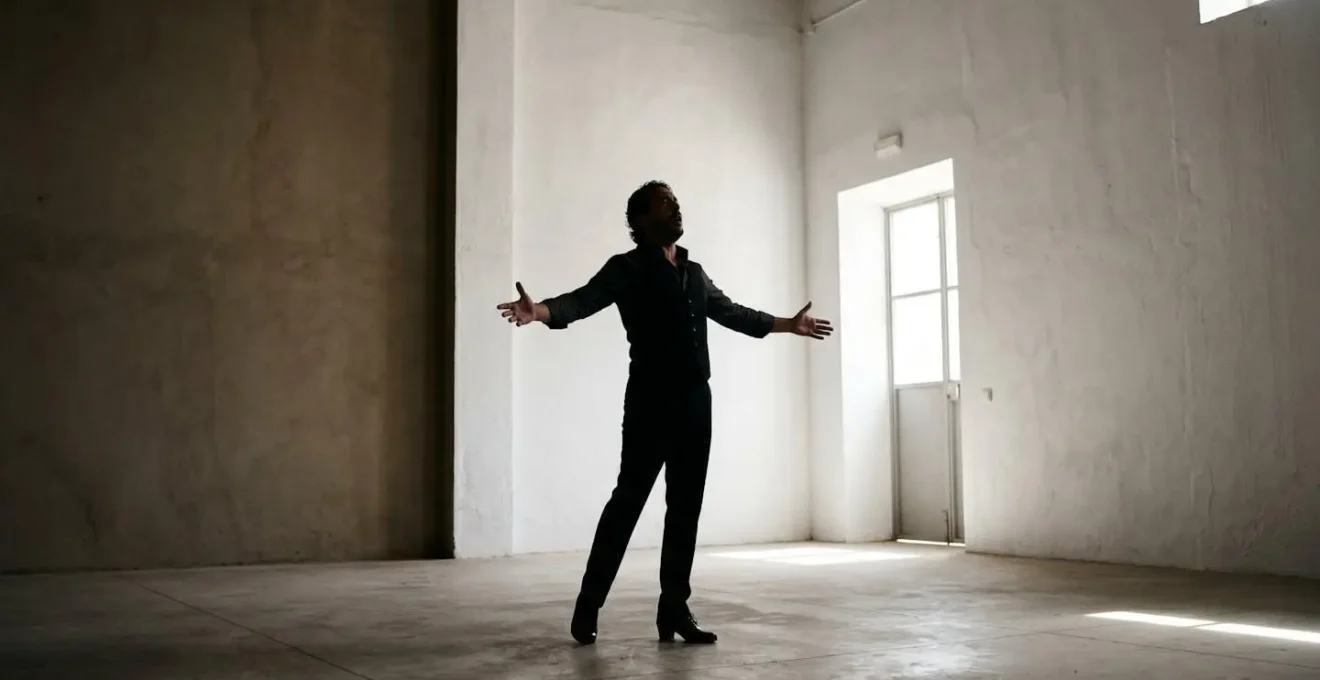
To produce a *quejío* is to be vulnerable. The singer must be willing to let their voice crack, to abandon conventional beauty in favor of brutal honesty. It requires a deep connection to the emotion of the *letra* and the ability to channel that feeling through the body and out into the sound. When a cantaor delivers a true *quejío*, the audience doesn’t just hear it; they feel it in their own gut. It is a shared experience of release, a moment where a personal pain becomes a universal one.
What is Duende? The Untranslatable Spirit of Performance
Duende is a word that resists simple translation. It is not talent, nor is it style. It is a dark, mysterious, and powerful force that can arise during a flamenco performance, a moment of profound, almost supernatural connection between the artist, the art, and the audience. It is a state of heightened emotion and authenticity that is visceral and chilling. You don’t see duende; you feel it. It’s the shiver down your spine when a singer’s voice cracks with an almost unbearable truth.
The poet Federico García Lorca famously described it as a power, not a work, a struggle, not a thought. It is connected to the earth, to the awareness of death, and to the raw, irrational parts of the human spirit. In a performance, duende arrives when the artist stops performing and becomes a conduit. As one academic journal on dance psychotherapy defines it, duende is a mystical force emanating from a performer that completely captivates the audience. It is the moment the technique is forgotten and only the raw, bloody truth remains.
While it sounds like pure magic, scientists have even tried to measure its physical effects. In a fascinating experiment, researchers used thermography to study the body temperature of flamenco dancers.
Neuroscience of Duende: Mirror Neurons and Empathic Stress
Researchers at the University of Granada managed to capture what they called the « thermal imprint » of duende. Their experiments showed that when a dancer truly felt duende, their nose and gluteus temperatures dropped, a physiological marker linked to high emotional empathy and awareness. As an article on the research explains, when subjects watched videos of flamenco, the performances rated highest for duende correlated with cerebral activation in brain areas like the insula, a region strongly associated with empathy. In essence, feeling duende—both as a performer and as an observer—is a measurable neurological event of shared emotional understanding.
Duende cannot be summoned on command. It is a fickle and wild spirit that arrives unannounced. But every cantaor, every dancer, every guitarist dedicates their life to creating the conditions for it to appear—through technical mastery, emotional vulnerability, and a profound respect for the deep, dark river of history from which flamenco flows.
The Vocal Slide: connecting Notes Like a Singer for Emotional Impact
The melody in Cante Jondo is rarely a straight line. It is a winding, emotional path where the voice slides, bends, and twists around the notes. This technique, known as melismatic singing, is fundamental to the expressive power of the style. Instead of singing one note per syllable in a clean, detached way, the cantaor will often stretch a single vowel over a cascade of different notes. This creates a fluid, almost liquid quality to the vocal line, allowing the singer to imbue a single word with a complex range of emotions.
This is not simply about showing off vocal agility. Each slide, each turn, each microtonal shift is a deliberate emotional choice. A slow, heavy slide downwards can convey a sense of deep sorrow or resignation. A quick, upward flick can suggest a fleeting moment of hope or a sharp pang of defiance. It is through these intricate ornamentations that the singer « paints » the emotional landscape of the *letra*. The voice becomes a brush, and the melody is the canvas.
The texture of the voice can also be manipulated during these slides. A singer might begin a phrase with a pure, clear tone and gradually introduce vocal grit as the emotional intensity builds. Conversely, they might release a raw, raspy note into a moment of sudden, clean clarity. This manipulation of vocal texture is a key expressive tool. As described by Casa del Arte Flamenco, ornamentation is added through a variety of effects and vocal noises that give the song its characteristic expressiveness. These resources allow the singer to constantly vary the color and weight of their voice, making every phrase a unique emotional statement.
This is what gives flamenco its raw, conversational feel. It doesn’t sound like a pre-written song being executed perfectly. It sounds like a human heart thinking and feeling in real-time, its rhythm and melody constantly shifting with the tide of emotion.
Key Takeaways
- Flamenco vocal techniques are physical acts of storytelling; the ‘Ay’ is a rhythmic breath, the ‘quejío’ a controlled breaking point.
- The signature vocal ‘grit’ is a safe, advanced technique using the false vocal folds, not a product of vocal strain.
- True flamenco performance is a live, improvisational conversation between the singer’s chosen verses, the dancer’s percussive responses, and the guitarist’s harmonic dialogue.
Understanding the passion and complexity of Flamenco beyond the tourist clichés
To understand why a flamenco singer’s voice sounds the way it does, you cannot just analyze technique. You must look to history. Cante Jondo was not born in a conservatory; it was forged in centuries of poverty, marginalization, and persecution. It is the oral history of the Gitanos (Romani people) of Andalusia, a people who were systematically oppressed for hundreds of years. The voice of flamenco is the sound of a culture fighting to survive, a culture that turned its pain, its defiance, and its unbreakable spirit into art.
This is not a metaphor. Cante Jondo is deeply and inextricably linked to the suffering of the Romani people. Until the laws changed in 1783, Gitanos in Spain faced forced settlement, restrictions on their language and dress, and unimaginable hardship. This history is encoded in the DNA of the music. The sorrow in a *siguiriya*, the pride in a *soleá*, the defiant joy of a *bulería*—these are not just musical moods. They are echoes of a collective memory of struggle and resilience. The grit in the voice is the dust of the road; the cry is the release of generations of unspoken pain.
This art form has also been a space for powerful innovators to codify and expand the tradition, often against social norms. Women, in particular, have played a crucial role in shaping Cante Jondo, even when certain styles were considered the domain of men.
Female Cantaoras as Innovators: La Niña de los Peines
Born Pastora Pavón Cruz in 1890, La Niña de los Peines is considered by many to be the most important and innovative female flamenco singer of all time. At a time when women did not customarily perform the deeply tragic *siguiriyas*, her mastery was so profound that she was frequently requested to sing them. Known for her unparalleled command of rhythm and her unique interpretation of *tangos*, she did not just perform the music; she defined it. She challenged the male-centric view of the art form and codified entire styles, acting as both a supreme interpreter and a foundational creator whose influence is still felt today.
So when you listen to Cante Jondo, you are not just hearing a song. You are hearing the echoes of history, the strength of a people who refused to be silenced, and the voices of masters like La Niña de los Peines who transformed that history into timeless, shattering art. The passion is not a performance; it is a testimony.
Now that you understand the mechanics and the soul behind the sound, the next step is to listen with new ears. Seek out live performances, listen for the conversation between the artists, and allow yourself to feel the story being told not just in the words, but in the very texture of the voice.