Instruments & practice
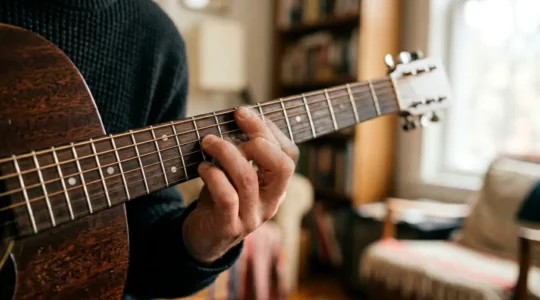
From Scales to Stories: How to Improvise with Meaning
The secret to breaking free from scale-like solos isn’t learning more patterns—it’s learning to ‘speak’ through your instrument. Connect your musical ideas to your inner voice by singing them first. Use silence and small melodic fragments (motifs) to build a…
Lire la suite
How to choose and maintain a repertoire that showcases your strengths?
A successful repertoire is not a list of songs, but a managed system designed to minimize cognitive load and maximize audience impact. Prioritize pieces within 80% of your technical limit to free up mental space for genuine performance. Use a…
Lire la suite
How to Lock In Your Internal Clock and Finally Play in the Pocket
The secret to unshakable rhythm isn’t in your head; it’s in your body. Stop counting and start feeling the pulse physically. Great timekeeping comes from building an internal 16th-note « grid, » not just following a metronome. Connecting rhythm to physical movement—like…
Lire la suite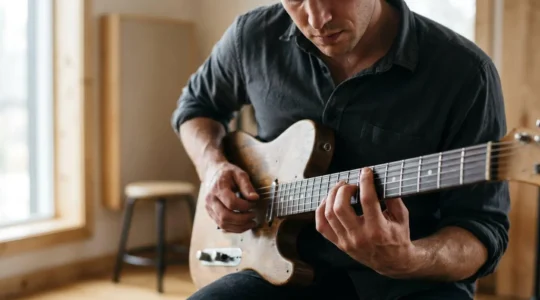
Why Disciplined Drills Are the Unsexy Secret to Musical Freedom
The path to musical freedom isn’t found in aimless jamming; it’s built through the rigorous, unsexy discipline of deliberate practice. This is the non-negotiable truth. Mechanical drills build neurological pathways that aimless playing cannot. The metronome is a truth-teller, not…
Lire la suite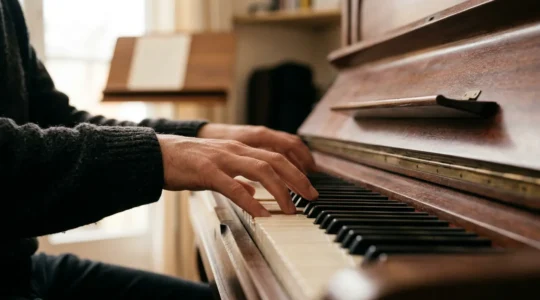
What does it really take to master technique on your instrument?
True instrumental mastery is not a product of more hours, but of superior neurological efficiency and intentional physical control. Brute-force practice leads to plateaus and injury; progress at an elite level depends on rewiring motor pathways, not just muscle memory….
Lire la suite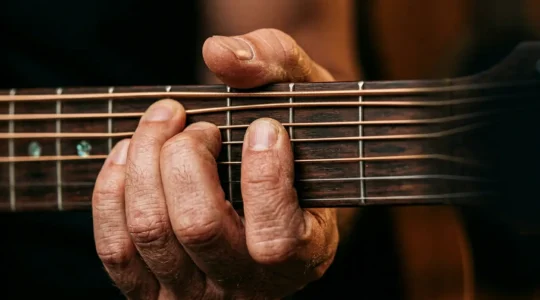
Improving Finger Coordination: The Science of Speed and Accuracy on Your Instrument
Achieving elite finger dexterity is not a matter of muscle strength, but of neuromuscular efficiency and targeted motor control. Speed is a byproduct of relaxation; excess tension in antagonist muscles is the primary limiter of velocity. True finger independence is…
Lire la suite
Maximum Progress, Minimal Time: The Virtuoso’s Guide to Daily Instrumental Practice
Your 45 minutes of daily practice are only effective if you treat them like a surgical intervention, not a jam session. True progress comes from isolating weaknesses and attacking them with slow, deliberate repetition. Systematic rest and self-recording are non-negotiable…
Lire la suite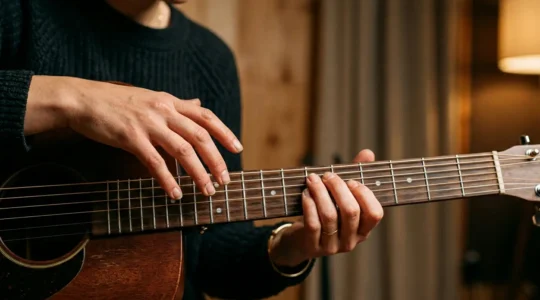
How to Release Hand Tension and Play Faster: A Systemic Approach for Musicians
Contrary to popular belief, hand tension isn’t a hand problem—it’s a full-body system failure. Chronic tension often originates from poor posture, shallow breathing, and even jaw clenching, not just finger pressure. The « no pain, no gain » mindset is destructive; true…
Lire la suite