The secret to unshakable rhythm isn’t in your head; it’s in your body. Stop counting and start feeling the pulse physically.
- Great timekeeping comes from building an internal 16th-note « grid, » not just following a metronome.
- Connecting rhythm to physical movement—like dancing or breathing—transforms the beat from an abstract concept into a full-body pulse.
Recommendation: Shift your practice from pure metronome drills to exercises that test your internal pulse and connect it to physical motion.
We’ve all been there. You’re in the middle of a tune, feeling good, but then you listen back to the recording. That sinking feeling hits: you’re rushing. Or maybe you’re dragging, pulling the energy of the whole band down with you. So you do what everyone tells you to do. You woodshed with a metronome for hours, you count « 1-e-and-a » until you’re blue in the face, and you focus so hard on being ‘on time’ that you forget to make music. You’re trying to *think* your way into a good groove, but it’s just not working. The more you concentrate, the stiffer you sound.
Here’s the truth the best funk and soul players know in their bones: great time isn’t a math problem. It’s a physical reality. The pocket isn’t a pinpoint on a timeline; it’s a deep, gravitational space that you settle into with your whole body. The metronome is a tool, a great one, but it’s just the training wheels. To truly own your time, you need to move beyond the click and build an unshakable internal pulse that lives in your muscles, your breath, and your very core.
But what if the key wasn’t about more counting, but more *feeling*? What if the secret to a rock-solid internal clock wasn’t in your brain, but in your feet, your hips, and your shoulders? This is where we’re going. We’re going to stop treating rhythm like a spreadsheet and start treating it like a dance. This guide will walk you through the physical and mental shifts needed to transform your timekeeping from a source of anxiety into your greatest strength.
This article breaks down the essential techniques to build that deep, physical connection to the beat. We will explore everything from the microscopic grid of 16th notes to the soulful art of playing « late, » all with the goal of turning your body into the ultimate timekeeper. Get ready to lock in.
Summary: The Musician’s Guide to Building a Physical Groove
- Thinking in 16ths: The Secret to Not Rushing Slow Ballads
- The Dilla Feel: When Is Being « Late » Actually Good?
- Silencing the Metronome: Testing If You Keep Time When It Stops
- If You Can’t Dance It, You Can’t Play It: Moving to the Groove
- The Stuff In Between: Adding Percussive Texture to Your Groove
- Feeling the Downbeat: Why Counting Isn’t Enough for Groove
- It’s Harder Than It Looks: Getting a Consistent 16th Note Feel
- Why Percussion Is More Than Just Keeping Time: Texture and Color
Thinking in 16ths: The Secret to Not Rushing Slow Ballads
The number one reason musicians rush is a lack of internal resolution. When the tempo is slow, the space between the main beats (1, 2, 3, 4) feels like a vast, empty desert. Your brain gets anxious and tries to get to the next beat too soon. The antidote isn’t to think « slower »; it’s to think « smaller. » You need to fill that empty space with a fine, mental framework: the 16th-note grid. When you are constantly aware of the « 1-e-and-a, 2-e-and-a » subdivisions, even when you’re not playing them, each beat has a clear internal architecture. There’s no empty space to rush through.
This internal grid acts like a net, catching you before you fall forward into the next beat. At slow tempos, like a ballad, this is your lifeline. Instead of just feeling four big, lumbering beats per measure, you feel a constant, purring engine of sixteen smaller pulses. This mental shift alone can make a world of difference. In fact, some psychological studies have shown that practicing with a focus on subdivision can lead to up to a 50% reduction in tempo variance, especially at slower speeds.
To build this grid, you must practice feeling it. Start by setting your metronome to a slow tempo (say, 60 BPM) and just clap or tap a steady stream of 16th notes. Count them out loud. Feel how they evenly fill the space between each click. Then, start playing just the quarter notes on your instrument, but *keep counting the 16ths in your head*. You’ll immediately feel more grounded and less likely to push ahead. This isn’t just about counting; it’s about internalizing the smallest common denominator of the rhythm so it becomes second nature.
The Dilla Feel: When Is Being « Late » Actually Good?
Alright, so we’ve established the importance of a perfect, even 16th-note grid. It’s the foundation of tight, professional timekeeping. But here’s the twist: once you’ve mastered the rules of perfect time, the real soul comes from knowing when, and how, to break them. The difference between a drum machine and a legendary drummer is in the subtle imperfections—the human element. And nobody understood this better than the late, great hip-hop producer J Dilla.
Dilla’s signature sound, often described as « drunken » or « wonky, » wasn’t sloppy. It was incredibly precise imperfection. He used his MPC sampler to manually nudge drums slightly off the grid, creating a push-and-pull effect that feels loose and deeply human. This is the « Dilla Feel »—a groove that breathes and sways because not everything lands perfectly on the beat. Some kicks might be a few milliseconds early, while the snare lands just a hair behind the beat. This creates a tension and release that is the very definition of a deep pocket. It’s not about being wrong; it’s about being intentionally, musically « late » (or early).
This concept of « micro-timing » is the final frontier of groove. It’s the difference between playing *on* the beat and playing *around* the beat. A straight, perfectly quantized groove can feel sterile. But a groove where the bass player sits just a touch behind the drummer’s kick drum creates a feeling of immense weight and depth. This is an advanced technique. You must first have a flawless internal grid before you can start to manipulate it. Trying to play with a « Dilla feel » without first mastering straight time is like trying to write poetry before you know the alphabet.
Case Study: J Dilla’s MPC3000 and the Redefinition of Timing
J Dilla’s signature rhythmic feel was a product of his masterful use of the Akai MPC3000. Unlike other samplers that applied a global « swing » setting to all elements, the MPC allowed Dilla to apply unique micro-timing shifts to individual sounds. According to analysis of his work, he would often shift kick drums a few milliseconds early and snare drums slightly late, sometimes by as much as 20-30ms. As detailed in retrospective analyses of his technique, he would combine these shifts with irregular swing amounts on hi-hats, creating a complex, layered groove that felt both relaxed and urgent. This technique, studied by musicologists and producers worldwide, proved that the most powerful groove often lives in the tiny spaces on either side of the perfect grid, a concept made possible by the MPC’s time-shift tools. This shows that « perfect » timing isn’t always the most musical timing.
Silencing the Metronome: Testing If You Keep Time When It Stops
The metronome is your best friend in the practice room, but it can become a crutch. Relying on an external click 100% of the time means you’re not truly developing your *internal* pulse. The real test of your timekeeping is what happens when the click goes away. Do you stay steady, or do you immediately start to rush or drag? This is the moment of truth. To bridge the gap between relying on the click and owning your time, you need to practice with silence.
This is where « gap click » training comes in. Using a programmable metronome app, you can set the click to play for a few measures and then mute itself for one or more measures. Your job is to keep playing in perfect time during the silence and land exactly on the downbeat when the click returns. It’s brutally honest and incredibly effective. In the silent bars, you have nothing to lean on but your own internalized sense of the beat. You are forced to generate the pulse from within.
When you start this practice, you’ll likely notice a tendency to rush into the silence or drag as you wait for the click to return. This is valuable feedback. It reveals the weaknesses in your internal clock. By consistently practicing with these silent gaps, you train your mind and body to be the source of the time, not just a follower of it. You’re moving from being a passenger to being the driver. The silence forces you to feel the rhythmic gravity of the groove, the natural pull of the downbeats and backbeats, without an external guide.
Action Plan: Auditing Your Internal Pulse
- Set the Stage: Use a gap click app (like « Time Guru » or « Gap Click »). Set it to play for 4 bars and be silent for 1 bar at a comfortable tempo (e.g., 90 BPM).
- Active Silence: During the silent bar, don’t just hope for the best. Actively sing or « feel » a constant subdivision, like the hi-hat pattern, in your head to maintain the grid.
- Record and Analyze: Record yourself playing through the exercise. Import the audio into a DAW and visually check: does your first note after the silence land before or after the grid line where the click returns?
- Diagnose and Correct: If you’re consistently early, your internal pulse is rushing. Focus on feeling the weight of the downbeat. If you’re late, you’re hesitating. Focus on keeping the 16th-note engine running through the silence.
- Increase the Challenge: Once you’re solid with one bar of silence, increase the gap to 2 bars, then 4. Or, use a random mute feature to make it impossible to predict when the click will disappear. This forces true internalization.
If You Can’t Dance It, You Can’t Play It: Moving to the Groove
Why do some musicians have such an incredible, natural sense of time? It’s not because they are better at math. It’s because they feel rhythm as a physical phenomenon. Their whole body is involved in the timekeeping process. If you watch players like James Brown’s bassist Bootsy Collins or drummer Clyde Stubblefield, they are never perfectly still. There’s a constant, subtle motion—a head nod, a shoulder sway, a foot tap—that connects them to the core of the groove. This isn’t just for show; it’s a fundamental part of their timekeeping mechanism.
The phrase « if you can’t dance it, you can’t play it » is the ultimate truth of groove. If you can’t feel the pulse in your body, you’ll never be able to express it convincingly on your instrument. Your body is the original drum machine. Before you even touch your instrument, put on a track with a deep pocket and just move. Don’t think, just feel. Where is the backbeat (beats 2 and 4)? Does it make your head nod or your shoulders pop? Where is the downbeat? Do you feel it in your feet? This connection is not trivial; it’s everything. In fact, musicians exhibit significantly higher synchronization accuracy in movement tasks compared to non-musicians, proving this deep-seated link between motor control and rhythmic perception.
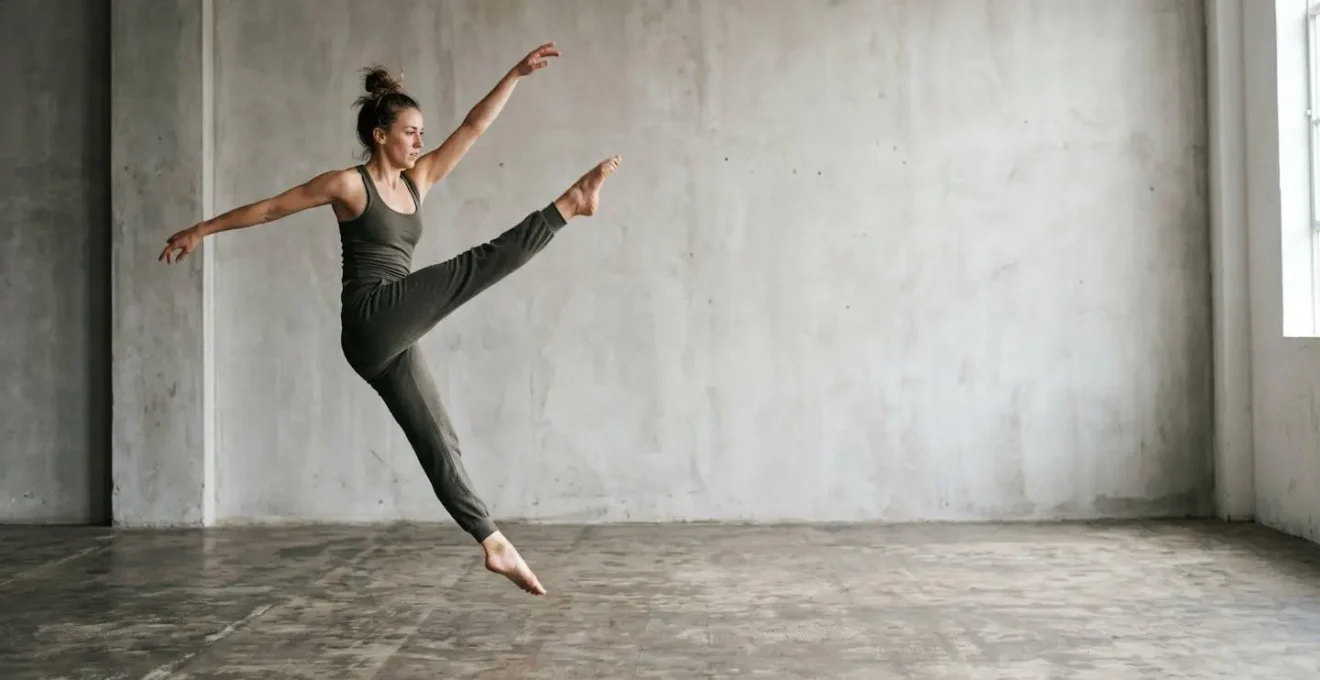
Incorporate this into your practice. While you play, make sure some part of your body is physically marking the pulse. It could be a simple foot tap on all four quarter notes or a slight body rock on 2 and 4. This creates a physical anchor for your internal pulse. When your whole body is locked into the tempo, your hands are free to play the music with more expression and confidence. You stop fighting the time and start flowing with it. The groove is no longer an external thing you’re trying to catch; it’s an internal force that’s moving you.
The Stuff In Between: Adding Percussive Texture to Your Groove
A great groove is more than just the kick and snare. It’s about all the little sounds in between—the « ghost notes » on the snare, the muted « chks » on the guitar, or the percussive thumps on the bass. This is the textural fabric that makes a rhythm feel rich and alive. For rhythm section players, especially bassists and guitarists, your role is not just harmonic; it’s deeply percussive. You have the power to add layers of rhythmic information that support the drummer and deepen the pocket.
Think of your instrument as a drum kit. The pitched notes you play are the kick and snare—the main events. But the muted strings, the fret noises, and the rhythmic « rakes » you can play are the hi-hats and shakers. By maintaining a constant 16th-note motion with your picking or plucking hand, even when muting the strings, you create a shaker-like pulse that fills the space and reinforces the grid for the whole band. This is a technique funk masters live by. It makes the groove feel busy and energetic, even when the main notes are sparse.
These textural elements are not just filler; they are crucial information. They provide a constant rhythmic reference that helps everyone lock in. A guitarist playing tight, muted 16th-note « chika-chikas » gives the drummer a perfect carpet to lay their backbeat on. A bassist adding a percussive « thump » on a muted string before the downbeat creates tension and makes the « one » feel even more powerful when it lands. These are the details that separate a good rhythm section from a legendary one.
- Left-Hand Muting: Mute the strings with your fretting hand while strumming or picking a steady 16th-note pattern to create a constant « shaker » layer.
- The Rake: Drag your pick across two or three muted strings as a percussive pickup leading into a downbeat. It builds anticipation and makes the note more impactful.
- Body Tapping: Use your fingers to tap percussive accents on the body of your guitar or bass, adding a different sonic color to your rhythmic palette.
- Harmonic Percussion: Lightly picking a fretted but muted string can create a percussive sound with a hint of harmonic color, adding depth beyond a simple click.
Feeling the Downbeat: Why Counting Isn’t Enough for Groove
We’ve explored the fine details of 16th notes and the soul of swing, but none of it matters if you lose the most fundamental element of all: the « One. » The downbeat of the measure is the center of rhythmic gravity. It’s the home base, the anchor point from which all other rhythms push and pull. While counting « 1, 2, 3, 4 » is a useful starting point, it’s an intellectual exercise. A truly deep groove requires you to *feel* the « One » as a physical event, not just a number in a sequence.
Relying solely on counting can disconnect you from this physical feeling. It keeps the rhythm in your head, not in your body. To truly internalize the downbeat, you need to connect it to your body’s natural rhythms. One of the most powerful and overlooked techniques is synchronizing your breath. Try exhaling on the strong beats—either beat 1, or the backbeats 2 and 4 in funk and rock. This simple act anchors the pulse deep in your core, making it a part of your physiology. When your breathing is locked with the tempo, your sense of time becomes far more stable and less prone to wavering.
Another powerful method is practicing with a metronome that only clicks on beat 1 of each bar. This forces you to generate beats 2, 3, and 4 internally. You have to feel the length of the measure and land squarely on the next downbeat with the click. This exercise quickly reveals if you’re truly feeling the form or just chasing individual beats. When you can play a whole song with only a click on the « One, » your internal clock has achieved a new level of mastery. You’re no longer just keeping time; you’re creating form. While it might seem counterintuitive, this advanced use of a metronome can lead to as much as a 40% improvement in timing accuracy, because it forces internalization.
It’s Harder Than It Looks: Getting a Consistent 16th Note Feel
So, you understand the concept of the 16th-note grid. You’re thinking in « 1-e-and-a. » That’s the first step. The next, and much harder, step is making that grid physically consistent. It’s one thing to conceptualize sixteen even pulses in a bar; it’s another thing entirely to execute them with your hands or feet with perfect evenness in timing and dynamics. This is where the real work—and the real tightness—begins.
Most players have inherent weak spots in their 16th-note stream. Very often, the « e » (the second 16th) and the « a » (the fourth 16th) are slightly weaker or less precise than the downbeats and the « ands. » To find your weak spots, record yourself playing a simple, single-note line as a continuous stream of 16th notes. Listen back critically or, even better, look at the audio waveform in a DAW. Are all the peaks the same height and the same distance apart? Probably not. This analysis gives you a clear target for your practice: strengthening those weaker subdivisions.
One of the best ways to build this consistency is through stamina drills. Set a metronome to a moderate tempo and play a single note as 16ths for five minutes straight without stopping. Don’t worry about melody or harmony. Your only job is to make every single note sound identical in volume and timing to the one before it. This builds immense muscle memory and control. It trains your hands to produce an absolutely even pulse, turning your conceptual grid into a physical reality. When your 16th-note foundation is this solid, any groove you play on top of it will sound infinitely tighter and more professional.
- Velocity Analysis: Use a MIDI keyboard or audio waveform to visually identify and then target the weaker pulses in your 16th-note stream.
- Single-Note Stamina Drills: Play a continuous stream of 16th notes on one note for an extended period to build muscle memory for evenness.
- Rhythmic Scale Practice: Instead of just running scales up and down, play them in specific 16th-note patterns to integrate rhythmic precision with technique.
Key Takeaways
- A solid internal clock is built on a physical, internalized 16th-note grid, which is your best defense against rushing.
- True groove mastery comes from connecting rhythm to your body through movement, not just from intellectual counting or metronome use.
- Texture is a rhythmic tool; percussive sounds and ghost notes are as important as the main beats for creating a deep pocket.
Why Percussion Is More Than Just Keeping Time: Texture and Color
The ultimate goal is to play « in the pocket, » a place where every instrument in the rhythm section locks into a collective, undeniable groove. And a huge part of achieving that lock is understanding that rhythm is about more than just when the notes happen. It’s also about the texture and color of the sounds that fill the spaces in between. Percussion, in the broadest sense of the word—including the percussive sounds made by bass and guitar—is the glue that holds the groove together.
Think of a great groove as a three-dimensional painting. The kick and snare are the main subjects, providing the bold outlines. But it’s the shakers, hi-hats, congas, and muted guitar strums that provide the shading, the background, and the depth. They create a rich sonic tapestry that the listener’s ear can get lost in. A shaker playing constant 16th notes, for example, provides a high-frequency « wash » that fills the upper register and makes the whole track feel more energetic and complete. It allows the drummer to play a sparser beat, because the listener’s brain uses the shaker’s pulse to fill in the rhythmic gaps.
This interplay is what makes a groove breathe. Each instrument occupies its own rhythmic and sonic space. A classic funk track might have a dry, tight clave pattern defining the absolute center of the beat, while a washy ride cymbal floats over the top, and a bass guitar plays fat, round notes that sit just behind the kick drum. It’s an ecosystem. Every element contributes not just to the « when » but also to the « how » of the rhythm—its feel, its space, and its emotional impact.
Case Study: Orchestrating the Pocket in Classic Groove Tracks
A deep analysis of classic funk and R&B productions reveals a sophisticated orchestration of rhythm and texture. In many iconic tracks, the core timekeeping elements are surprisingly simple. The magic comes from how different percussive layers interact. For instance, a short, dry sound like a clave or a cross-stick on the snare drum can precisely define the rhythmic pocket. In contrast, sustained sounds like open hi-hats or crash cymbals « wash » over the beats, creating a different sense of space and release. As highlighted in studies of groove construction, the interplay between these textures is key. A constant 16th-note shaker pattern allows a drummer to play a much sparser kick and snare pattern, because the listener’s brain subconsciously uses the shaker’s grid to understand the pulse. This proves that texture can define the groove just as powerfully as the primary beats.
Now, take these concepts off the page and into the practice room. Stop thinking so hard and start moving. Feel the grid, anchor the downbeat in your breath, and let your body lead the way. That’s where you’ll find the deep, unshakable groove you’ve been looking for.