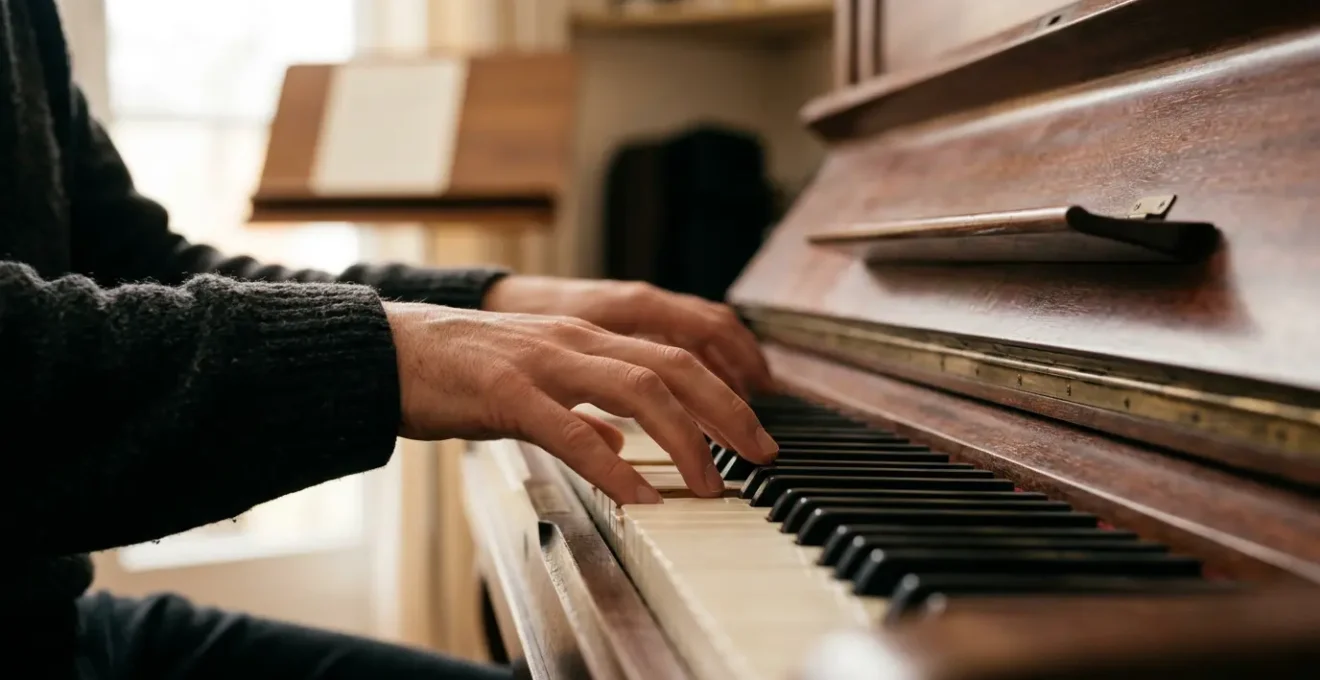
True instrumental mastery is not a product of more hours, but of superior neurological efficiency and intentional physical control.
- Brute-force practice leads to plateaus and injury; progress at an elite level depends on rewiring motor pathways, not just muscle memory.
- Tone and speed are born from proprioceptive feedback and minimal movement, making expensive gear a poor substitute for deep physical awareness.
Recommendation: Shift your focus from accumulating practice time to dissecting every movement, eliminating all physical and mental inefficiency from your playing.
You have reached a point where the standard advice feels hollow. You practice for hours, you use a metronome, you deconstruct difficult passages. You have followed all the rules laid out for diligent students, yet you find yourself on a frustrating plateau. Your peers may be pulling ahead, their playing possessing a certain effortlessness, a depth of tone and a command that still eludes you. You wonder if you’ve hit the ceiling of your natural talent, or if a more expensive instrument is the missing key. The path from accomplished student to true artist seems shrouded in mystery.
Most teaching focuses on the « what »: play your scales, practice arpeggios, learn the repertoire. But it rarely addresses the « how » at a physiological and neurological level. The conventional wisdom of the « 10,000-hour rule » implies a simple, linear relationship between time invested and skill acquired. This is a dangerous oversimplification. For the musician aiming for the conservatory or the concert stage, the game changes entirely. The quantity of practice becomes secondary to its quality—a quality defined by an almost scientific approach to movement, endurance, and mental control.
But what if the key wasn’t simply to practice *harder*, but to fundamentally rewire the connection between your mind and your muscles? This guide dismantles the myths that hold back advanced musicians. We will not rehash beginner advice. Instead, we will explore the principles of motor economy, proprioceptive feedback, and cognitive endurance that separate the merely proficient from the truly virtuosic. This is not about adding more hours to your day; it’s about making every minute of practice an act of profound, intentional rewiring.
This article will guide you through the critical shifts in mindset and method required to break through your current limitations. By understanding these core principles, you will learn to build a practice routine that fosters not just technical accuracy, but genuine, sustainable mastery.
Summary: The Unspoken Path to Virtuosity
- Why You Stop Improving at Grade 8 and How to Push Through
- It’s All in the Fingers: Why Gear Won’t Give You « That » Sound
- Minimal Movement: Why Flailing Fingers Slow You Down
- Playing a 2-Hour Concerto: Endurance Training for Musicians
- The Shaking Bow: Managing Adrenaline in Difficult Passages
- Why Feeling the Burn is Actually destroying Your Technique
- Isolating the Problem: Don’t Play the Whole Song for One Mistake
- How to structure daily instrumental practice for maximum progress in minimal time?
Why You Stop Improving at Grade 8 and How to Push Through
The Grade 8 plateau is not a failure of diligence; it is a failure of methodology. At this level, the gains from sheer repetition diminish drastically because your brain has already automated the foundational motor patterns. Continuing to simply « play through » pieces reinforces existing habits—both good and bad—but does little to forge new, higher-level neural pathways. This is the point where the musician’s path diverges: some remain stuck, while others transcend to a new level of artistry. The difference is the shift from accumulation of hours to deliberate, diagnostic practice.
The « 10,000-hour rule » is perhaps the most misunderstood concept in skill acquisition. It is not a guarantee of expertise. In fact, research shows its limitations, especially among the highly skilled. For instance, a comprehensive meta-analysis revealed that deliberate practice accounts for only 21% of variance in music performance. Once you are in an elite group, everyone has practiced extensively. Progress is no longer about quantity, but about other, more nuanced factors.
Pushing through this barrier requires you to become a scientist of your own playing. It demands a move away from rote repetition and toward what is known as the cognitive-motor threshold. This means every practice session must target a specific, microscopic weakness. It’s not about playing a passage until it’s right; it’s about identifying the single inefficient finger movement, the slight hesitation in shifting, or the subtle tension in the shoulder that causes the imperfection, and then designing a targeted exercise to correct only that.
Once you get to the highly skilled groups, practice stops accounting for the difference. Everyone has practised a lot and other factors are at play in determining who goes on to that super-elite level.
– Brooke Macnamara, Classic FM – Research on 10,000 Hour Rule
The way forward is to treat your instrument not as a task to be completed, but as a laboratory for continuous refinement. This requires intellectual honesty and the willingness to deconstruct your technique, even if it feels like taking a step backward. It is this analytical, problem-solving approach, not more hours, that unlocks the door to true virtuosity.
It’s All in the Fingers: Why Gear Won’t Give You « That » Sound
In the quest for a richer, more expressive tone, many advanced musicians fall into the trap of « gear acquisition syndrome. » The belief that a vintage violin, a custom-shop guitar, or a gold-plated flute will unlock « that sound » is a pervasive and expensive myth. While a quality instrument is certainly a prerequisite for professional work, it is merely a canvas. The true artist, the color, and the expression come from one place and one place only: the physical interface between your body and the instrument.
This connection is governed by proprioceptive feedback—your brain’s intricate, real-time sense of the position and movement of your body. It is the microscopic variations in fingertip pressure, the angle of a bow, or the velocity of air that create the sonic nuances we call « tone. » A superior instrument can make these nuances more audible, but it cannot create them. The source is you. The legendary guitarist Stevie Ray Vaughan was known for using incredibly heavy-gauge strings, making his guitar difficult for others to play. His iconic, fat tone was not a product of the guitar itself, but of the sheer physical strength and control he exerted over the strings.
To cultivate this, your practice must become a sensory exploration. Instead of focusing only on the auditory result (the note), focus on the physical sensation that produces it. Pay attention to the texture of the string or key under your fingertip. Feel the vibration transfer through the wood or metal. Experiment with the absolute minimum pressure required to produce a clean sound, and then explore the tonal changes that occur as you incrementally add weight. This is where your unique voice as a musician is born.
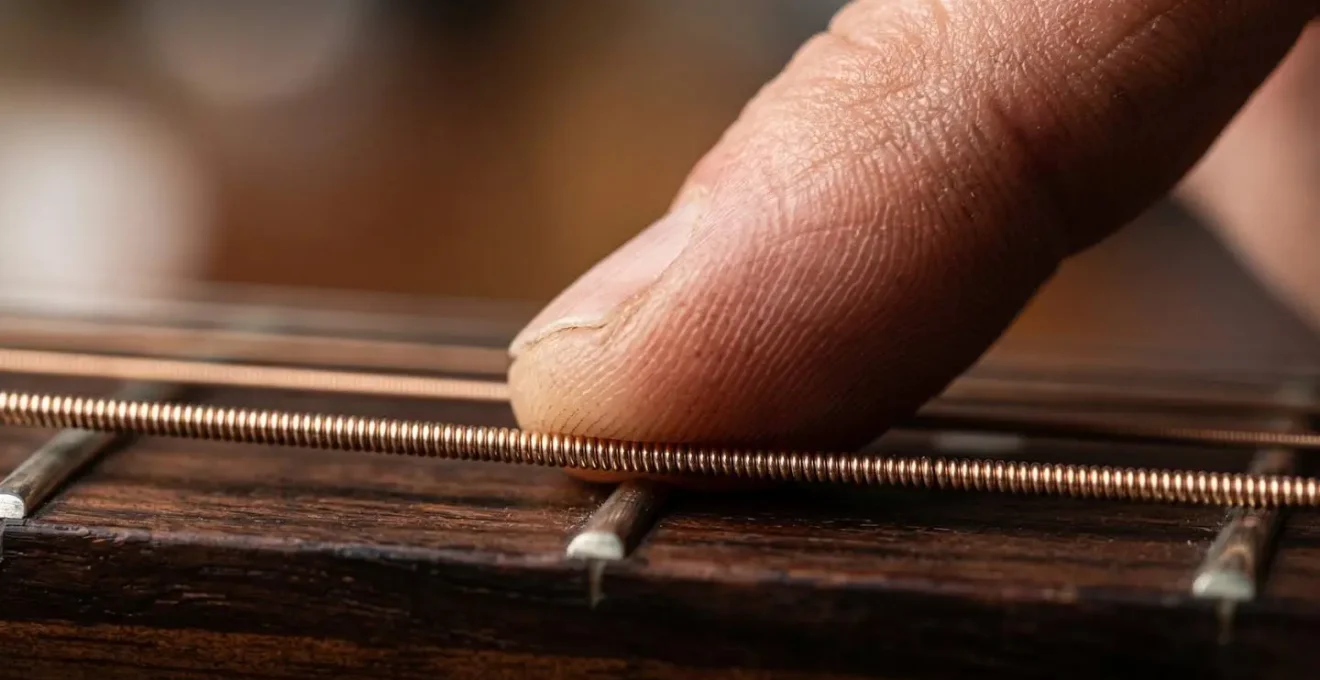
As the image above illustrates, the point of contact is where the magic happens. It is a world of texture, pressure, and minute physical adjustment. No amount of money spent on gear can substitute for the thousands of hours spent developing this profound tactile sensitivity. Your sound is not in your wallet; it is, quite literally, at your fingertips.
Minimal Movement: Why Flailing Fingers Slow You Down
Speed is not a product of moving your fingers faster. It is a product of moving them less. This is the principle of motor economy, a cornerstone of virtuosity that is often counter-intuitive to developing musicians. Watch any master performer—from a concert pianist to an electric guitarist—and you will observe an almost shocking stillness. There is no wasted motion. Fingers lift from the strings or keys by the smallest possible margin, and every movement is precise, direct, and purposeful. This is not a stylistic choice; it is a physical necessity for high-level playing.
Every unnecessary movement, whether it’s lifting a finger too high, an exaggerated wrist motion, or tension in the arm, introduces a delay. These delays are measured in milliseconds, but in a rapid passage, they accumulate, creating a hard ceiling on your maximum tempo. « Flailing fingers » are not just visually distracting; they are a direct indicator of technical inefficiency. They represent a lack of independence in the motor plan, where the command to move one finger inadvertently triggers excess motion in others. True speed is achieved when the brain can send a clean, isolated signal to the exact muscle required, and nothing more.
Mental plans for action become independent of the required movements only at advanced skill levels.
– Caroline Palmer, PubMed – Conceptual and motor learning in music performance
Achieving this level of control requires dedicated practice. One effective method is « fixed-point » or « anchor » practicing. For string players, this might mean keeping all non-playing fingers in light contact with a single string while another finger plays a passage. For pianists, it involves keeping fingers resting on the surface of the keys, training them to move with pressure rather than from a height. This forces your brain to develop the neurological independence required for true efficiency. As a study on motor learning in pianists found, the greatest transfer of skill occurs when the conceptual goal is retained regardless of the specific motor movements, a feat possible only at advanced levels.
Playing a 2-Hour Concerto: Endurance Training for Musicians
The ability to play a single, difficult passage flawlessly is one thing. The ability to maintain that level of precision and musicality through a full-length recital or a demanding concerto is another beast entirely. This is not simply a matter of physical stamina; it is a matter of cognitive-motor endurance. As fatigue sets in, it’s not just the muscles that fail, but the brain’s ability to send clear, precise signals. Concentration wavers, fine motor control degrades, and small errors begin to creep in, which can then cascade into larger mistakes as you try to compensate.
Building this type of endurance is akin to how a marathon runner trains. It’s not about sprinting all the time. It involves a combination of long-duration practice and high-intensity intervals. You must regularly practice for periods longer than your anticipated performance time, even if the quality of playing degrades towards the end. The goal of these sessions is to acclimate your mind and body to functioning under sustained stress. This builds the neurological resilience needed to maintain focus and motor control when you are physically and mentally taxed.
The second component is practicing sections at « super-maximal » intensity. This means taking a passage you need to perform at a certain tempo and practicing it significantly faster, or taking a quiet passage and practicing it much louder. This pushes your cognitive-motor system beyond its normal operating parameters, forcing it to adapt and become more robust.
Case Study: Cognitive-Motor Learning Under Demanding Conditions
A 2024 study at Hanover University provided a compelling look at this process. Researchers examined 86 older participants learning piano-related movements. They found that performance was directly linked to cognitive-motor abilities. More importantly, the relationship wasn’t linear. The link between raw ability and performance weakened initially as participants learned, but then increased exponentially. This demonstrates that consistently engaging in high-performance tasks that demand maximum effort is a highly effective catalyst for rapid and lasting skill development, reinforcing the idea that pushing your limits is key to building endurance.
Ultimately, endurance is a trainable skill. It requires a strategic approach that conditions both your body and, more importantly, your mind to withstand the rigors of a full performance without a drop in quality. It is the final piece of the puzzle that turns a practice-room hero into a reliable stage performer.
The Shaking Bow: Managing Adrenaline in Difficult Passages
You know the feeling. You are perfectly prepared. In the practice room, the passage is flawless. But on stage, under the lights, a tremor begins in your hand. For a string player, it’s the dreaded « shaking bow. » For a pianist, it’s a loss of control in a delicate run. This is not a technical deficiency; this is your body’s primal fight-or-flight response, manifesting as performance anxiety. Adrenaline floods your system, increasing heart rate, muscle tension, and causing the fine tremors that sabotage your most delicate movements. To perform at an elite level, you must learn to master your own performance neurobiology.
Managing adrenaline is not about eliminating it. A certain amount of arousal is necessary for a compelling performance; it provides energy and focus. The key is to prevent it from overwhelming your fine motor control. The first line of defense is, paradoxically, over-preparation. The more a passage is ingrained in your procedural memory—the part of your brain that handles automated tasks like riding a bike—the less susceptible it is to disruption from the cognitive overload caused by anxiety. When a passage is so deeply learned that your fingers can play it « by themselves, » your conscious mind is freed up to manage the emotional and musical aspects of the performance.
The second tool is conscious physiological regulation. Techniques like diaphragmatic breathing (slow, deep breaths that engage the diaphragm) have been scientifically shown to activate the parasympathetic nervous system, which acts as a brake on the adrenaline response. Practicing these breathing techniques until they are second nature is critical. You must be able to deploy them subtly, even in the middle of a performance, during a rest or a long note. It is a physical skill, just like a scale or an arpeggio, and it must be practiced with the same discipline.
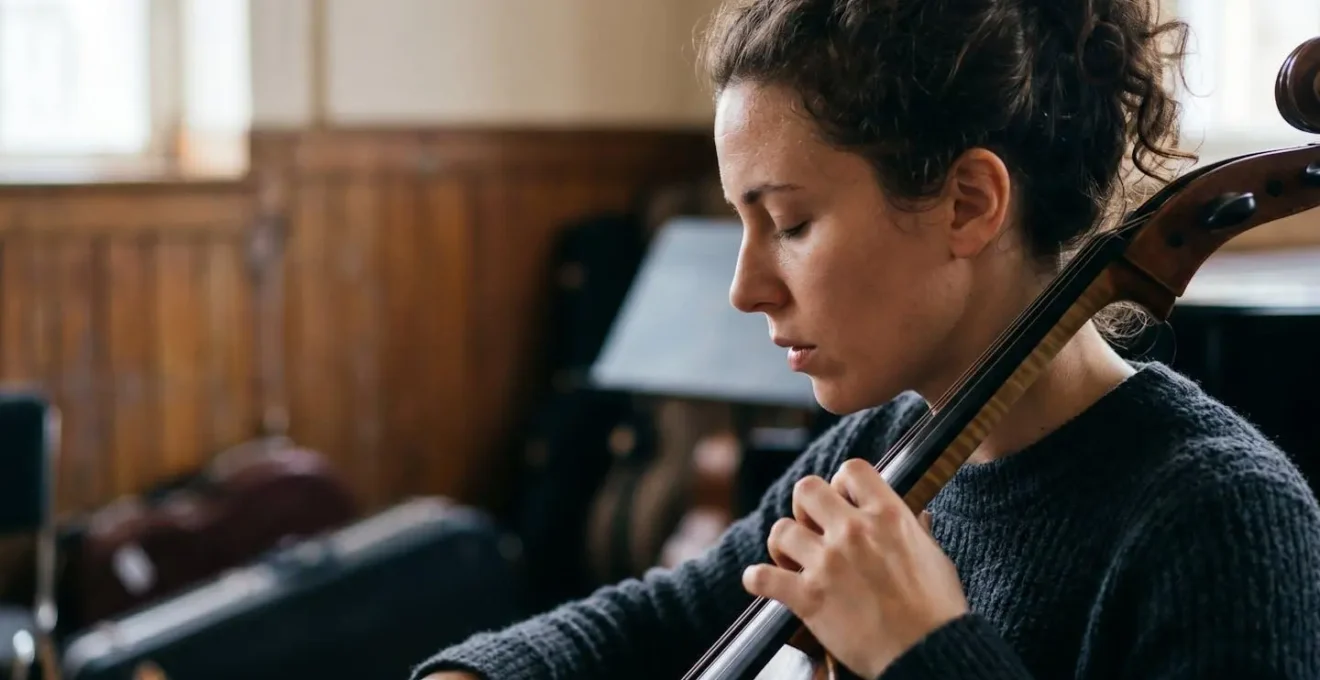
Conquering the shaking bow is a battle fought on two fronts: deep, automated preparation that makes your technique bulletproof, and real-time physiological control that keeps your nervous system in a state of focused calm. It’s the ultimate test of a musician’s control, not just over their instrument, but over themselves.
Why Feeling the Burn is Actually destroying Your Technique
In athletics, the mantra « no pain, no gain » is common. For a musician, applying this mindset is a direct path to career-ending injury. The « burn » you feel after a long, intense practice session is not a sign of productive work; it is a warning sign of excessive muscular tension and physical strain. Pushing through this sensation does not build strength. Instead, it ingrains tension into your motor patterns, reduces fluidity, and can ultimately lead to debilitating playing-related musculoskeletal disorders (PRMDs).
The pursuit of virtuosity requires immense physical control, but this control is about precision and efficiency, not brute force. When you practice with tension, you are teaching your muscles to work against each other. For example, a pianist forcefully striking the keys may be co-activating both the flexor muscles to press the key and the extensor muscles to stabilize the hand. This creates a braking effect, requiring even more force to accomplish the task and leading to rapid fatigue and potential injury. The goal is to play with a sense of relaxed weight, allowing gravity to do much of the work.
Even more sinister is the neurological consequence. As neuroscience research warns, the very process of intense skill acquisition can, in some cases, lead to the emergence of neurological disorders like focal dystonia. This condition involves a loss of voluntary motor control in highly practiced movements. While the causes are complex, it is widely believed to be related to the blurring of sensory maps in the brain due to excessive, repetitive, and often tense practice.
Long-term musical training endows fine and complex motor control… However, at the expense of the skill acquisition, neurological disorders represented by focal dystonia can emerge.
– Frontiers Research Topic, Frontiers in Neuroscience – Sensory-motor control and learning of musical performance
The solution is to become hyper-aware of your body. Practice must be punctuated by frequent, short breaks to release any build-up of tension. Use a mirror to watch for physical signs of strain: raised shoulders, a tight jaw, or a locked wrist. If you feel pain or a « burn, » you must stop immediately. It is not a challenge to be overcome; it is a signal that your technique is inefficient and potentially harmful. True strength in music is the strength of control and relaxation, not of muscular force.
Isolating the Problem: Don’t Play the Whole Song for One Mistake
Every advanced musician knows they should isolate problematic passages. This is not a revelatory concept. However, the way most musicians isolate is inefficient. They play the difficult two bars over and over, hoping that repetition will solve the problem. This is a blunt instrument. True diagnostic practice, or micro-isolation, goes much deeper. It is not about repeating the mistake; it is about dissecting the mistake until its root cause—a single, flawed physical or mental event—is exposed.
When you make a mistake, do not immediately play the passage again. Stop. Analyze what happened. Was it a specific finger that was late? A string crossing that was clumsy? A shift that was insecure? A rhythmic misinterpretation? Zoom in on the problem until it is as small as possible. If the issue is a single note in a fast run, don’t practice the whole run. Practice only the two notes on either side of the mistake. Practice the movement *to* the note. Then practice the movement *from* the note. Deconstruct the event into its component parts and master each one individually before reassembling them.
Once you have isolated the mechanical problem, the key is not just to repeat the correct movement, but to build a robust motor program around it through variability. This is a crucial concept that separates amateur practice from professional training.
Case Study: The Power of Variable Practice
The common approach of repeating a passage identically aims for narrow precision. However, a pilot study on piano students based on Schmidt’s schema theory revealed a more effective method. It showed that practicing with systematic variations builds a more resilient motor program. Instead of just repeating a difficult passage, practicing with varied rhythms (e.g., in dotted rhythms), dynamics, and articulations creates a flexible schema in the brain. This robust motor program is far less likely to collapse under the pressure of performance than one built on simple, unvaried repetition.
By combining forensic micro-isolation with the creative tool of variable practice, you move from merely fixing mistakes to building a technique that is fundamentally more adaptable and reliable. You are not just patching holes; you are re-weaving the very fabric of your motor control.
Key takeaways
- True mastery is a function of neurological efficiency, not just accumulated hours. Your primary goal is to practice smarter, not longer.
- Technique is built on motor economy and proprioceptive awareness. Focus on minimal movement and the physical sensation of playing to develop speed and tone.
- Endurance and performance under pressure are trainable skills. They require a combination of over-preparation, strategic rest, and conscious physiological control.
How to structure daily instrumental practice for maximum progress in minimal time?
A practice session without a clear structure is like a ship without a rudder: there is a lot of activity, but no guaranteed destination. For the advanced musician, the goal is maximum progress in minimum time, and this can only be achieved through a disciplined, strategic daily approach. A well-structured session is not a rigid list of tasks, but a balanced system designed to warm up the body, challenge the mind, solve specific problems, and consolidate learning. It respects the principles of motor learning and neurobiology we have discussed.
A truly effective daily structure should contain several key components. First, a brief warm-up focused on gentle movements and long tones to activate the proprioceptive system and prepare the muscles without causing fatigue. Second, a technical block dedicated to pure mechanics, using exercises that target specific aspects of motor economy and micro-isolation. This is where you work on your scales, arpeggios, and etudes, but with a diagnostic, not repetitive, mindset. Third, a repertoire block, where you apply these technical skills to your pieces. Here, the focus is on problem-solving, using the techniques of micro-isolation and variable practice on difficult passages.
Crucially, the structure must also incorporate the science of memory. Learning is not complete when the practice session ends. As research on distributed practice in musicians shows, sleep-based consolidation significantly improves the accuracy of newly learned skills. This means that two 45-minute sessions separated by several hours (or a night’s sleep) are far more effective than one 90-minute session. Your practice schedule should be built around this principle, breaking up your work to allow your brain time to process and solidify motor patterns. The final component is a brief cool-down and a period of mental review, cementing the day’s goals and identifying targets for tomorrow.
Action Plan: Auditing Your Practice Structure
- Identify Practice Goals: List the top 3 technical and musical challenges you are currently facing in your repertoire. Be specific (e.g., « cleanliness of string crossing in bar 32 of the Chaconne, » not just « improve Bach »).
- Collect Your Routine: For one week, log your actual practice activities and their duration. Inventory what you are currently doing: what exercises, which pieces, in what order?
- Assess for Coherence: Confront your logged activities with your stated goals. How much of your practice time is directly targeting your top 3 challenges? Is your warm-up preparing you for the technical block, or is it just unfocused noodling?
- Evaluate Efficiency & Intensity: Review each activity. Are you using micro-isolation and variable practice, or just rote repetition? Are you pushing your cognitive-motor limits in short bursts, or just playing at a comfortable level? Identify where your practice is passive versus actively diagnostic.
- Design a New Structure: Based on your audit, design a new daily plan. Allocate specific, timed blocks for warm-up, diagnostic technical work, targeted repertoire problem-solving, and full run-throughs. Schedule breaks and consider splitting long sessions to maximize memory consolidation.
This structured, analytical, and biologically-informed approach is what separates the professional from the amateur. It transforms practice from a chore into a highly efficient process of skill acquisition.
Your journey to virtuosity begins now. Stop counting the hours and start making the hours count. Adopt the mindset of a scientist, the discipline of an athlete, and the sensitivity of an artist. By applying these principles, you will not only break through your current plateau but also build a sustainable, intelligent, and deeply rewarding relationship with your instrument and your craft.
Frequently Asked Questions on Mastering an Instrument
How do musicians practice efficiently?
Efficient practice for advanced musicians forgoes long, repetitive sessions in favor of a structured, diagnostic approach. It involves warming up with a focus on proprioception, isolating specific technical problems down to a single movement (micro-isolation), using variable practice (changing rhythms, dynamics) to build robust motor programs, and scheduling practice in distributed blocks to leverage sleep-based memory consolidation. The goal is to solve problems, not just log hours.
What is the fastest way to learn a difficult piece of music?
The fastest way is not to play it from beginning to end. It involves a strategic deconstruction: first, analyze the piece’s structure, harmony, and technical demands away from the instrument. Then, use micro-isolation to master the most difficult passages individually before you even attempt to link them. Practice these sections with variability to make them resilient under pressure. Finally, assemble the piece section by section, ensuring smooth transitions. This method front-loads the problem-solving, preventing the reinforcement of mistakes.
How do I stop my hands from shaking when I play an instrument?
Hand shaking is typically a physical manifestation of performance anxiety (adrenaline). The solution is twofold. First, achieve a level of « over-preparation » where the technical passages are so deeply ingrained in your procedural memory that they can run on autopilot, reducing cognitive load. Second, you must actively manage your physiology. Practice slow, diaphragmatic breathing to activate your body’s calming response. This is a physical skill that must be drilled until it can be deployed unconsciously during a performance.