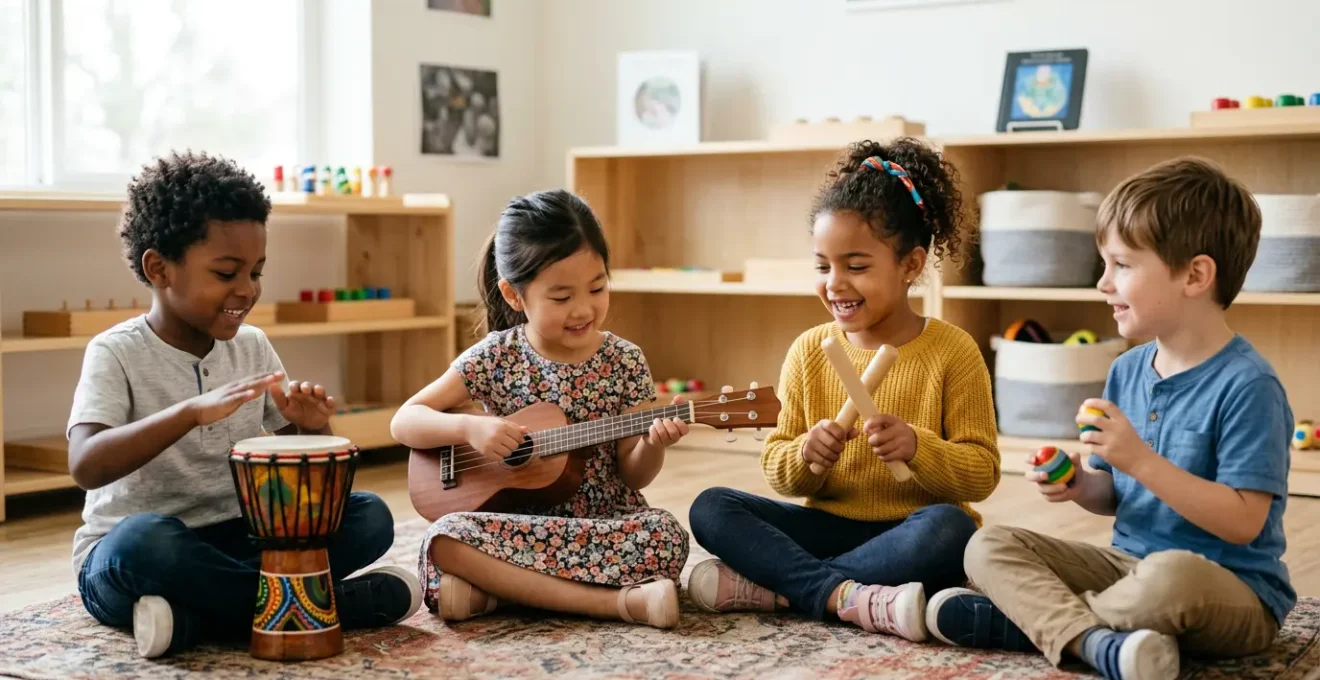
Contrary to popular belief, the greatest benefit of early music education isn’t creating a mini-Mozart, but systematically building a better brain.
- Active musical play directly wires the neural circuits for language, empathy, and physical coordination.
- Specific musical activities act as targeted « brain exercises » for skills like patience, reading readiness, and emotional regulation.
Recommendation: Shift your goal from musical performance to playful, daily musical engagement to give your child a profound developmental advantage.
As a parent of a toddler, you’re constantly navigating a world of developmental choices. Should they be in sports? Art class? What about music? The image of a tiny child mastering the violin is both impressive and intimidating. It immediately brings up the question of « talent. » What if my child isn’t a natural? What if they hate the structured practice? This pressure often leads parents to either dismiss music education entirely or push too hard, killing the joy.
But what if we’ve been framing the entire question incorrectly? The prevailing notion is that music is a specialized skill reserved for the talented few. We think about outcomes—concerts, recitals, virtuosity. However, a growing body of neuroscientific research reveals a more profound truth. For a young, developing brain, music isn’t primarily about performance; it’s about process. It’s a rich, multi-sensory and playful environment that acts as a powerful catalyst for fundamental cognitive and emotional wiring.
This article reframes early music education completely. We will move away from the myth of « talent » and dive into the science of « toolkit. » You’ll discover how music isn’t a single activity, but a collection of powerful, playful exercises that build your child’s brain. We will explore how simple, joyful musical interactions can become the building blocks for language, social skills, emotional regulation, and even physical balance—no prodigy status required.
This guide breaks down the specific ways music acts as a developmental superfood for your child’s brain. Below, we explore the science behind each playful activity, offering a clear roadmap from clapping games to enhanced cognitive function.
Summary: Music for Toddlers: A Guide to Brain Development, Not Just Talent
- Listening vs Doing: Why Active Participation Beats Background Music
- Clapping Syllables: How Music Helps with Reading and Speech
- Taking Turns: Learning Patience Through Drum Circles
- The Lullaby Effect: Using Song to Calm Anxiety and Tantrums
- Dancing to the Beat: Proprioception and Balance Exercises
- Which Method Fits Your Child’s Personality Best?
- Small Hands: Why 4 Strings Are Easier Than 6 for a 6-Year-Old
- How to introduce music pedagogy to children without killing the fun?
Listening vs Doing: Why Active Participation Beats Background Music
The myth of the « Mozart effect »—the idea that passively listening to classical music makes a child smarter—has been widely debunked. While a pleasant musical background is nice, the real magic happens when a child actively participates. When your toddler bangs on a pot, shakes a rattle in time, or tries to sing along with you, their brain lights up like a fireworks display. This isn’t just an analogy; it’s a neurological fact.
The difference between passive listening and active music-making is profound. Research using functional near-infrared spectroscopy has shown that active participation recruits the motor cortex, prefrontal cortex, and cerebellum—significantly more brain regions than passive listening, which primarily activates the auditory cortex. In simple terms, listening is like watching a sport, but active music-making is playing the game. It involves prediction, timing, fine and gross motor control, and sensory integration all at once. It’s a full-body, full-brain workout.
As Angelo Molino of the Athena Music & Wellness Therapy Academy notes, the scientific evidence is clear. Based on advanced brain imaging techniques, he explains the crucial distinction:
Based on fMRI and PET scan studies, active music participation engages more parts of the brain than does music listening alone.
– Angelo Molino, What kind of Music Therapy? Passive and Active Treatments Applications
So, the takeaway is simple and empowering for parents: turn off the background playlist and pick up a shaker. Singing a song together, even if you’re off-key, is infinitely more valuable for your child’s brain development than listening to a perfect recording. It’s the engagement, not the exposure, that forges new neural connections.
Clapping Syllables: How Music Helps with Reading and Speech
Have you ever found yourself clapping along to a song, breaking down the words into rhythmic beats? This simple, intuitive game is one of the most powerful tools for building a pre-reader’s brain. The ability to hear, identify, and manipulate the sound structure of language—known as phonological awareness—is the single biggest predictor of future reading success. Music, with its inherent structure of rhythm and meter, is a perfect, playful trainer for this crucial skill.
When a child claps out the syllables in their name (e.g., « A-man-da, » three claps) or sings a nursery rhyme, they are physically and audibly segmenting sounds. This process builds a strong bridge in the brain between the auditory system and the motor system, reinforcing the understanding that words are made of smaller parts (syllables, phonemes). This isn’t just theory; it’s backed by rigorous science. A randomized controlled trial published in PLOS One found that after 30 weeks of rhythmic training, children with dyslexia showed significant improvements in both reading accuracy and phonological awareness. The rhythm provided a scaffold to help their brains organize linguistic sounds.
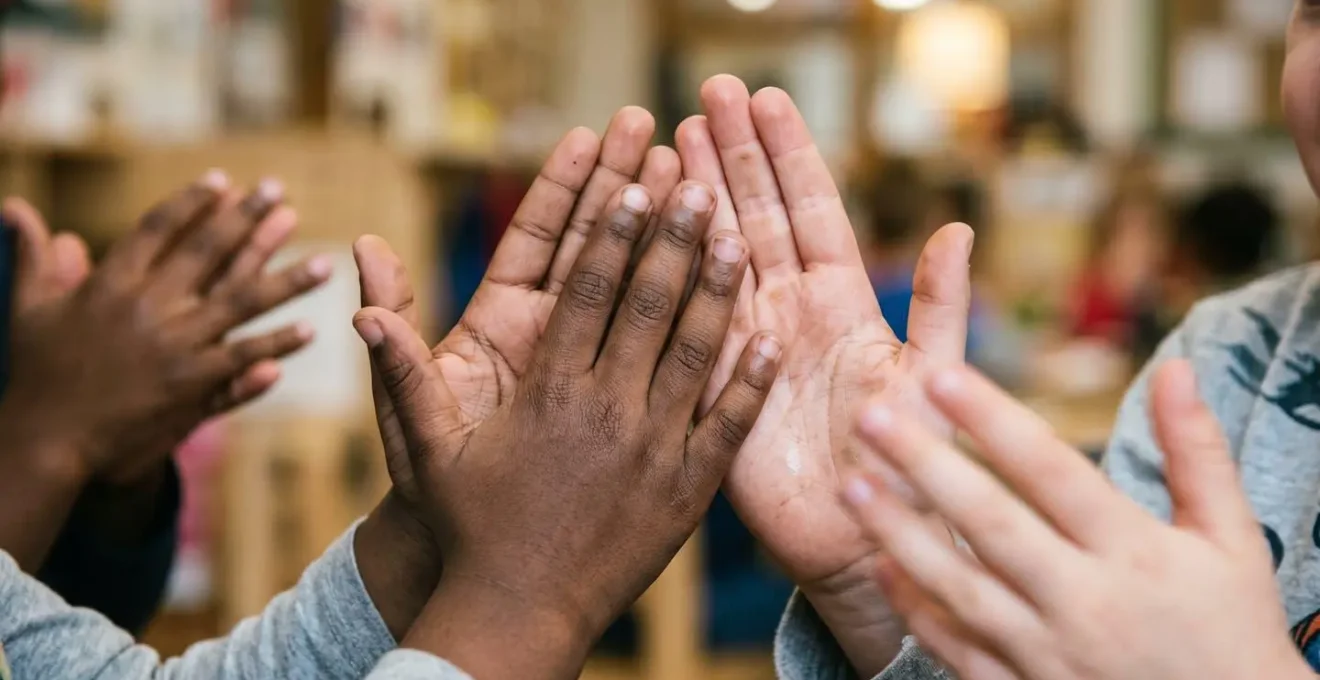
This image captures the essence of this connection. The physical act of clapping transforms an abstract linguistic concept (a syllable) into a concrete, felt experience. For a young child, this multi-sensory learning is far more effective than a worksheet. It’s learning that happens through joy and movement, wiring the brain for literacy without ever feeling like a « lesson. » So, the next time you sing « Pat-a-Cake, » know that you’re not just playing a game; you’re laying the foundational neural pathways for your child to become a confident reader.
Taking Turns: Learning Patience Through Drum Circles
A drum circle with a group of toddlers might sound like chaos. And for a moment, it probably is! But within that joyful noise lies a profound social-emotional lesson: the art of cooperation. Music, especially in a group setting, is not just about making sound; it’s about listening to others, finding a shared pulse, and learning when to play and when to be silent. It’s a laboratory for developing crucial social skills like patience, turn-taking, and empathy.
When a facilitator asks a child to play a beat and then gestures for the next child to respond, they are practicing « serve and return » communication in a non-verbal, highly engaging way. They learn to wait for their turn, to listen to their friend’s contribution, and to add their own part to create a collective whole. The neuroscience behind this is fascinating. Neuroscience research demonstrates that playing in time with others releases endorphins and oxytocin, the very same neurochemicals responsible for feelings of pleasure and social bonding. It biochemically reinforces cooperation.
Case Study: The Brain Science of Musical Teamwork
A key social skill is « Theory of Mind »—the ability to understand that others have different thoughts and intentions. Research using fNIRS neuroimaging to study musicians playing together found that this activity is a direct workout for this skill. The study revealed that the social context of group music-making activates brain regions associated with social cognition. Musicians must constantly anticipate and react to what their partners will play next, providing direct, real-time practice in understanding another person’s perspective. A drum circle, in its simplest form, is a toddler’s first experience with this complex neural exercise.
Ultimately, a drum circle teaches a fundamental lesson of community: sometimes your role is to be the star, and sometimes your role is to be the supportive audience. Learning to switch between these roles with grace is a skill that will serve a child far beyond the music room, laying the groundwork for empathetic and cooperative relationships for the rest of their life.
The Lullaby Effect: Using Song to Calm Anxiety and Tantrums
Every parent has experienced the helplessness of a full-blown toddler tantrum. Their little body is awash in the stress hormone cortisol, and their prefrontal cortex—the brain’s « control center »—is completely offline. In these moments, logical explanations are useless. But a song? A song can be a lifeline. The « Lullaby Effect » is not folklore; it’s a powerful tool for socio-emotional co-regulation, grounded in the principles of neuroscience.
When you hold a distressed child and begin to sing a slow, simple song, several things happen. First, the steady rhythm of the music provides an external, predictable pattern that their chaotic internal system can latch onto. This process, called rhythmic entrainment, helps to slow their heart rate and breathing. Second, the sound of your calm, familiar voice acts as a direct auditory signal of safety. It bypasses the non-functioning « thinking brain » and speaks directly to the emotional, primal brain.
This isn’t about the lyrics or the musical quality; it’s about the shared physical and auditory experience. You are lending your child your calm. By modeling a slow, regulated state through song, you are providing a biological scaffold that helps their own nervous system return to baseline. You are, quite literally, helping them re-wire their own emotional response patterns in real time. Over time, these moments of co-regulation build a child’s capacity for self-regulation. They internalize the rhythm of calm, creating a neural blueprint they can access later on their own. This is a foundational aspect of mental wellness, and as researchers Chin & Rickard confirmed, the purposeful use of music can elevate wellbeing and relieve mental distress.
Dancing to the Beat: Proprioception and Balance Exercises
Watch a toddler dance. You’ll see uninhibited joy, but from a developmental perspective, you’re also watching a highly complex neurological task in action. Dancing to a beat is a full-brain exercise that powerfully connects the auditory system with the motor system, building crucial skills like proprioception, balance, and coordination.
Proprioception is often called the « sixth sense. » It’s the brain’s awareness of where the body is in space. When a child tries to stomp their feet to a heavy drum beat or float their arms to a soft melody, they are constantly sending and receiving feedback between their muscles, joints, and brain. They are experimenting with cause and effect: « If I shift my weight this way, I can balance on one foot. If the music gets faster, I need to move my legs faster to keep up. » This is embodied cognition at its finest—the brain learning through the body’s movement.
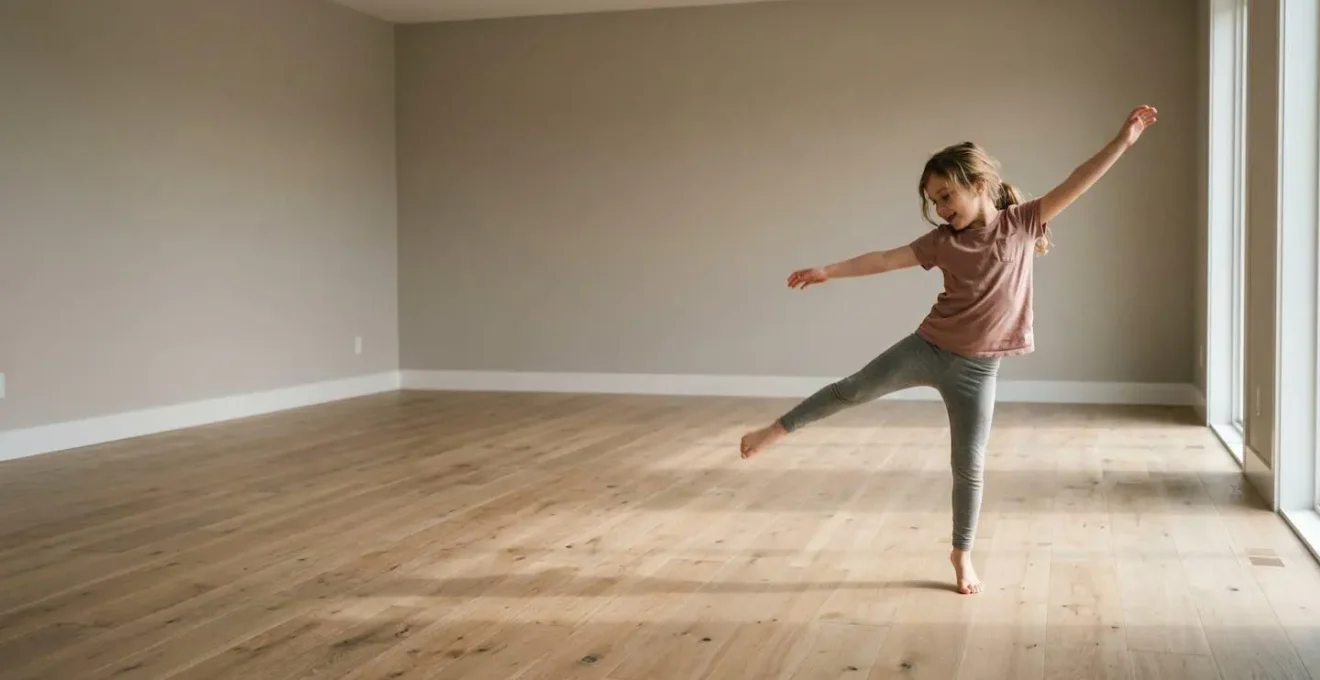
This process of syncing movement to sound has profound implications that go beyond the dance floor. A landmark five-year USC longitudinal study revealed that within two years of music training, children’s auditory systems matured faster than their peers. The researchers noted this accelerated development could benefit not just language and reading, but motor coordination as well. When the brain gets better and faster at processing sound, it also gets better at sending timed signals to the muscles. Dancing isn’t just a physical activity; it’s a way of sharpening the brain’s internal metronome, a skill essential for everything from catching a ball to handwriting.
Which Method Fits Your Child’s Personality Best?
Once you see music as a developmental toolkit, the next question is which set of tools is right for your child? There isn’t one « best » way to introduce music; the most effective approach is one that aligns with your child’s natural learning style and personality. Four major pedagogies dominate early childhood music education, each with a unique philosophy and focus. Understanding them can help you make an informed choice that fosters love for music, rather than frustration.
Is your child a careful imitator who thrives on one-on-one attention? The Suzuki method, with its emphasis on learning by ear and high parental involvement, might be a perfect fit. Do they love to sing and have a more analytical mind? The Kodály method, which uses folk songs to build music literacy from the ground up, could be ideal. For the child who can’t stop moving and loves group activities, the Orff or Dalcroze methods are brilliant. The Orff approach uses improvisation and ensemble work with child-sized instruments, while Dalcroze (or « Eurhythmics ») teaches musical concepts almost entirely through physical movement.
The following table, based on common pedagogical principles, offers a quick guide to help you match a method to your child’s temperament. This information can be a great starting point for conversations with local music schools and teachers.
| Method | Best for Learning Style | Parental Involvement | Key Philosophy |
|---|---|---|---|
| Suzuki | Structured imitators, one-on-one learners | High (Suzuki triangle – parent as home teacher) | Learning by ear, early start, repetition |
| Kodály | Analytical learners, group-oriented | Low to Moderate (classroom-focused) | Folk music foundation, music literacy through singing |
| Orff | Physical/kinesthetic learners, social learners | Low to Moderate (classroom-focused) | Movement, improvisation, ensemble work |
| Dalcroze | Kinesthetic learners, movement-oriented | Moderate (can involve parent-child classes) | Eurhythmics – learning through physical movement |
The goal is not to create a professional musician but to find an environment where your child feels successful, joyful, and engaged. Choosing a method that complements their personality is the first step in ensuring that their musical journey is a positive and enriching one.
Small Hands: Why 4 Strings Are Easier Than 6 for a 6-Year-Old
The image of a child with a guitar is iconic, but for small hands and developing motor skills, it can be a recipe for frustration. The width of the neck, the tension of the steel strings, and the number of strings to manage can be overwhelming. This is where ergonomics—designing for comfort and efficiency—becomes a crucial part of pedagogy. Choosing the right first instrument is less about ambition (« a guitar is a ‘real’ instrument ») and more about setting the child up for an early win.
An instrument like a ukulele, with its four soft nylon strings and small body, is often a much better starting point. A child can often learn to press down a string and strum a pleasant-sounding chord in a single session. This immediate, positive feedback is incredibly motivating. It builds a sense of « I can do this! » which is far more valuable than struggling with a physically demanding instrument. The goal at this stage is not mastery of a specific instrument, but building confidence and a positive association with music-making. Percussion instruments, recorders, or small keyboards like a glockenspiel also offer this quick path to successful sound production.
When selecting that very first instrument, whether at home or in a class, focus on fit and function over prestige. The right instrument feels like a natural extension of the child’s body, not an obstacle to be overcome. It should invite play and exploration, not demand dexterity they don’t yet possess.
Your Checklist: Choosing an Ergonomic First Instrument
- Scale Length: Check that the instrument is size-appropriate. Look for shorter necks and smaller bodies, like quarter-size guitars or soprano ukuleles, that match your child’s arm length.
- String Material & Tension: Feel the strings. Nylon strings require much less finger pressure than steel, reducing fatigue and making it easier to produce a clean sound.
- Fret Spacing: Observe the spacing between frets. Instruments designed for children have wider spacing relative to finger size, reducing the frustration of pressing the wrong note.
- Ease of Sound Production: Prioritize instruments that make a pleasant sound quickly. A ukulele, recorder, or small percussion instrument can build confidence faster than a complex one.
- Alignment with Goals: Match the instrument to your developmental objective. Choose percussion for rhythm and social skills, or a melodic instrument like a keyboard for understanding pitch.
Key takeaways
- Active music-making, not passive listening, is a full-brain workout that wires key cognitive regions.
- Rhythmic games like clapping directly build phonological awareness, the foundation for reading and speech.
- Group music provides a playful and biochemically-reinforced training ground for essential social skills like turn-taking and empathy.
How to introduce music pedagogy to children without killing the fun?
We’ve explored the neuroscience of brain development, compared pedagogical methods, and even discussed the ergonomics of a child’s first ukulele. After all this analysis, the most important lesson is simple: keep it joyful. The profound developmental benefits of music are a direct byproduct of engagement, and genuine engagement is only possible when an activity is fun. The moment music feels like a chore, the magic is lost.
This means your role as a parent is not to be a music teacher, but a play partner. It’s about weaving music into the fabric of your daily life. It’s a dance party in the kitchen while making dinner. It’s singing silly songs on the way to daycare. It’s making up a rhythm on a park bench. As Giuliana Conti, Director of Education and Equity at Music Workshop, states, this integration is where the real power lies: « When music is more regularly incorporated as part of children’s everyday lives, it can move the needle in their learning and development. » The consistency of these small, joyful moments is what drives lasting change.
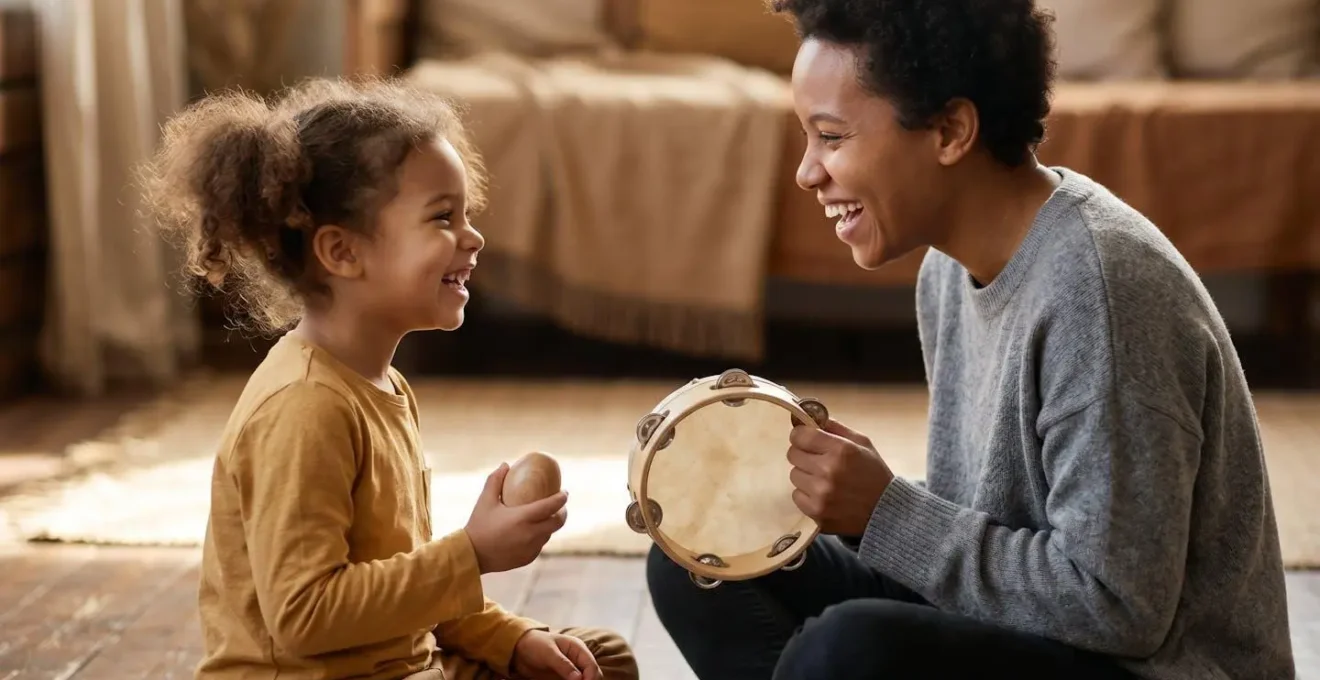
And these changes are not just behavioral; they are physical. You are literally changing the structure of your child’s brain. Groundbreaking neuroimaging research found that musical training over only 15 months in early childhood leads to measurable structural brain changes in motor areas and the corpus callosum—the bridge that connects the two brain hemispheres. This is the ultimate validation: your playful songs and silly dances are building a more connected, efficient, and resilient brain.
Ultimately, the goal isn’t the recital. It’s the relationship. The connection you build with your child through a shared song, the confidence they gain from mastering a simple rhythm, and the joy they feel in expressive movement—these are the true rewards. The brain development is the incredible, scientifically-proven bonus.
Start today. Put on a favorite song and have a two-minute dance party. Tap out the rhythm of the traffic lights. Your role is simply to open the door to musical play; your child’s developing brain will do the rest.