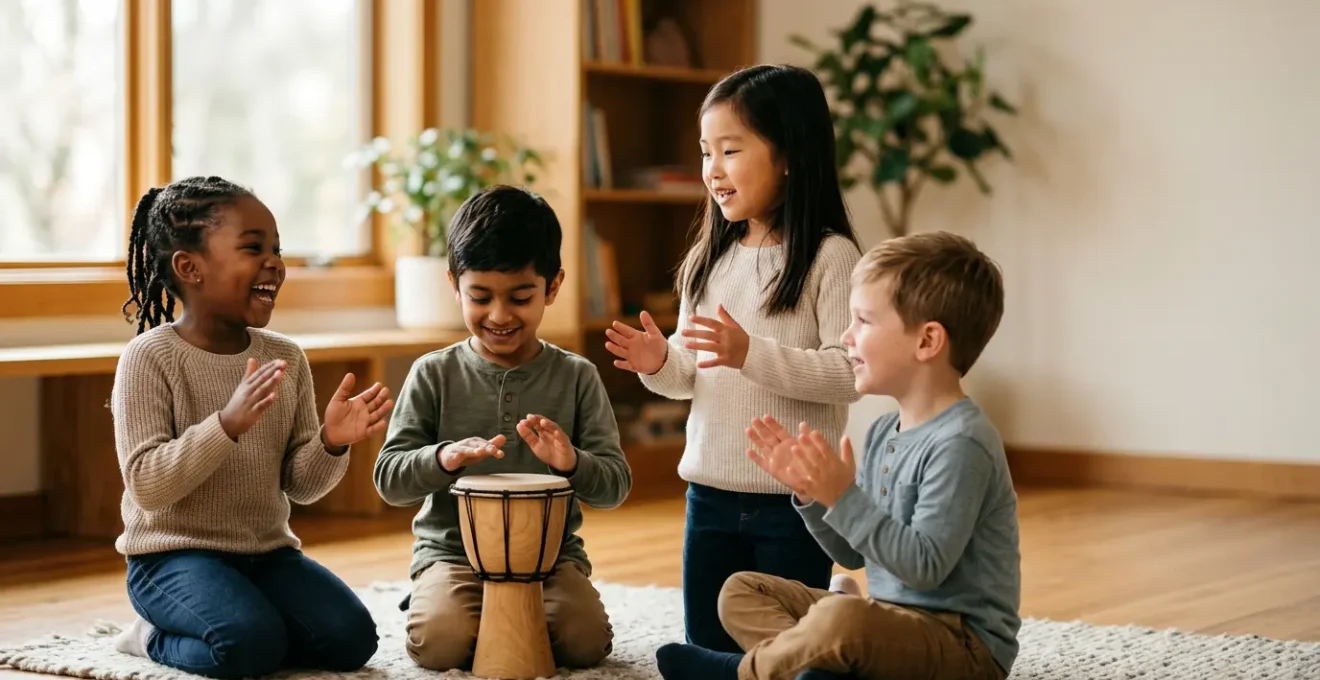
The secret to fun music lessons isn’t adding rewards or games; it’s designing a learning system where fun is the natural result of a child’s intrinsic drive to play and discover.
- Match the teaching method to your child’s unique personality and learning style for immediate engagement.
- Prioritize the « sound-first principle »—learning music like a language, by hearing and imitating before reading symbols.
Recommendation: Shift your role from a supervisor to a « practice partner » to build a collaborative and encouraging environment that fosters a genuine love for music.
For many parents and teachers, the phrase « it’s time to practice » can trigger a familiar battle of wills. You want to share the beautiful world of music, but your child just sees a chore. The common advice is to sprinkle in some fun: use sticker charts, offer rewards, or find colorful apps. While well-intentioned, these are often just temporary fixes that treat fun as an external ingredient you have to keep adding to the mix. They don’t change the fundamental feeling that the lesson is work to be endured.
But what if the entire approach was flipped on its head? What if, instead of trying to *make* music lessons fun, you could build a pedagogical architecture where fun is the inevitable outcome? The key isn’t to be an entertainer who distracts a child from the work of learning. The key is to become a game designer who builds a learning system that taps directly into a child’s natural instincts: the drive to play, the thrill of discovery, and the satisfaction of mastery.
This guide moves beyond superficial tips to explore the core mechanics of playful pedagogy. We will deconstruct how to choose the right « game engine » for your child’s personality, why learning sound before symbol is a non-negotiable rule, and how to transform your role from a referee into a valued co-op player. By the end, you will have a blueprint for creating an environment where practice is no longer a battle, but a game your child can’t wait to play.
To help you navigate this new approach, this article is structured around key strategies for building your own « learning game system. » Explore the sections below to find the tools and insights you need to reignite your child’s musical curiosity.
Summary: A New Playbook for Music Education
- Which Method Fits Your Child’s Personality Best?
- Flashcard Games: Turning Note Reading into a Race
- Why Sound Before Symbol Is the Natural Way to Learn Music
- The Practice Partner: Why Parents Must Sit in on Lessons
- 5-Minute Activities: Keeping the Lesson Moving for ADHD Kids
- Music Monopoly: Designing Your Own Board Game to Learn Symbols
- Clapping Syllables: How Music Helps with Reading and Speech
- The best educational music games to reinforce learning at home
Which Method Fits Your Child’s Personality Best?
The first step in designing any effective game is to understand your player. In music education, this means recognizing that there is no one-size-fits-all method. A child who loves to move and dance will feel stifled by a purely theoretical approach, while a quiet observer may thrive with a method based on listening and imitation. Choosing the right pedagogical foundation is like picking the right game genre; it ensures the core mechanics align with your child’s innate learning style, making engagement feel natural rather than forced.
Fortunately, decades of music education research have produced several distinct, powerful methodologies. A comprehensive 2024 comparative analysis of five major music teaching methods highlights how each one targets different talents. By understanding these, you can custom-tailor a « learning game system » for your child. The key is to observe: does your child learn best by singing, moving, building, or listening?
The table below breaks down these proven methods, helping you identify a starting point that will resonate most deeply with your child’s personality.
| Method | Core Principle | Ideal for the Child Who… |
|---|---|---|
| Kodály | Singing & Folk Songs | Loves to sing and has strong aural (listening) skills. |
| Suzuki | Listening & Imitation | Learns well by observing and copying others (like learning a language). |
| Dalcroze | Movement & Rhythm (Eurhythmics) | Is a kinesthetic learner who needs to move their body to understand concepts. |
| Orff | Speech, Rhythm & Improvisation | Is creative, expressive, and enjoys playing with words and patterns. |
| Gordon (MLT) | Audiation (Thinking Music) | Is introspective and enjoys understanding the « why » behind the music. |
Remember, these methods aren’t mutually exclusive. Many of the best educators create a hybrid approach, borrowing elements from each to create a rich and varied musical experience. The goal is to start with what feels most like play to your child and build from there.
Flashcard Games: Turning Note Reading into a Race
Note reading is often the first major hurdle where the « fun » in music lessons comes to a screeching halt. Traditional drills can feel like tedious homework, quickly draining a child’s enthusiasm. However, by applying a simple game design principle, you can transform this chore into an exciting challenge. The secret is to reframe the task: it’s no longer about memorization, but about speed, competition, and victory.
This is where flashcards become a powerful tool in your learning game system. Instead of simply flipping through them, turn it into a race. How many notes can you name in 60 seconds? Can you beat your previous score? Can you name the note faster than your parent or teacher? Suddenly, the focus shifts from the pressure of being « right » to the thrill of the game. This taps into a child’s competitive spirit and provides instant, measurable feedback—a core component of any addictive game.
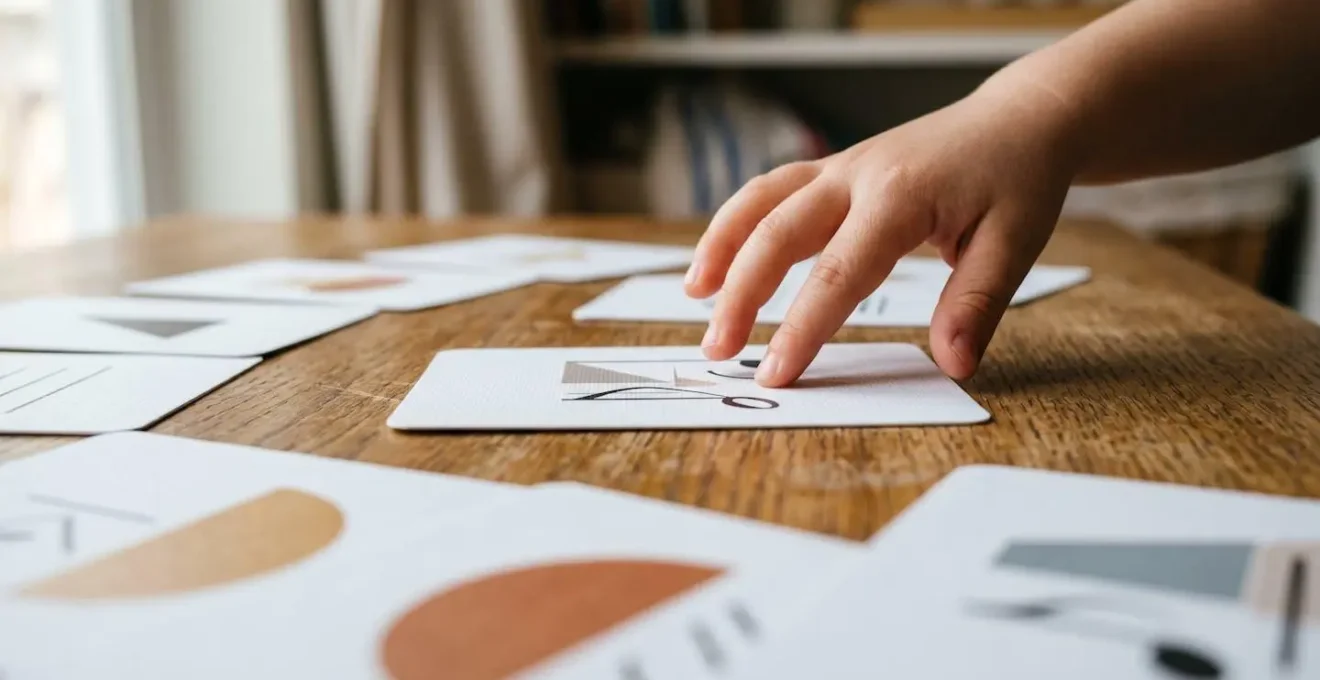
As one music educator noted in an article for Treble Training, the solution to disinterest is simple: « we turned the note-reading exercise into a game. » This isn’t just a trick; it’s a fundamental shift in pedagogy. The game provides the creative space and enjoyment needed for information to be absorbed effortlessly. You can add layers to the game, like sorting cards by clef, arranging them to spell words (like C-A-B-B-A-G-E), or using them in a « memory » match game to find pairs of identical notes.
By gamifying drills, you’re not avoiding the necessary work of learning notation; you’re simply packaging it in a way that aligns with a child’s natural desire to play. The learning becomes a happy byproduct of the fun.
Why Sound Before Symbol Is the Natural Way to Learn Music
Imagine teaching a toddler to read and write before they can speak. It seems absurd, yet this is often how music is taught: children are presented with complex symbols on a page (notes on a staff) before they have a rich internal library of musical sounds. This backward approach is a primary reason why so many kids feel music is abstract and difficult. The most successful pedagogical systems are built on a simple, powerful rule: sound before symbol.
This principle argues that musical fluency should be developed just like language fluency. We listen, we babble, we imitate words, we form sentences, and only then do we learn the alphabet and grammar rules that represent those sounds. In music, this means a child should first learn to sing in tune, feel a steady beat, and hear the difference between high and low pitches. This process, known as « audiation » or the ability to hear and comprehend music in one’s mind, creates the essential foundation upon which all theoretical knowledge can be built. This isn’t a new idea; the sound-before-sight-before-theory learning sequence dates back to the 1830s, recognized by pedagogues as the most intuitive path to musicianship.
The emphasis is on developing students’ aural skills, which will serve them well in any field of music. Regardless of which musical pathway students end up on outside of class, the ear training as the foundation of the sound-to-sight approach will be useful.
– Victoria Boler, Sound Before Sight in Elementary General Music
When a child can already sing a melody or clap a rhythm, the written note is no longer a meaningless dot on a line. It becomes the symbol for a sound they already know and understand. The theory suddenly « clicks » because it’s naming a concept they have already experienced. Prioritizing aural skills first makes learning notation feel like a fun decoding game rather than a frustrating exercise in abstract memorization.
The Practice Partner: Why Parents Must Sit in on Lessons
For many young children, being left alone to practice an instrument can feel isolating and overwhelming. They may not remember the teacher’s instructions, struggle with a tricky passage, and quickly become frustrated. This is where the parent’s role transforms from a supervisor (« Did you practice? ») to a « practice partner. » Being an active participant, especially in the early stages, is one of the most significant factors in a child’s musical journey and a core mechanic of a successful home learning system.
This doesn’t mean you need to be a musical expert. Your role is to be an encouraging presence, a note-taker during lessons, and a cheerleader during home practice. By sitting in on lessons, you learn the language the teacher uses, understand the week’s goals, and can gently guide your child when they get stuck. As music teacher Brendan of Piano Power advises, « By checking in regularly with an instructor, parents can learn very basic ways to support at home with technique, understanding notes on a staff, [and] shaping a practice routine that works for their family. » Your involvement turns practice from a solitary struggle into a collaborative team effort.
The impact of this partnership is profound. Research consistently shows that a parent’s attitude and involvement are directly linked to a child’s success. According to a comprehensive study on parental involvement, a parent’s positive attitude toward music can significantly influence a child’s perseverance with an instrument. When a child sees that you value their effort and are willing to be part of the process, it validates their work and strengthens their intrinsic motivation. You become their partner in the game, celebrating small wins and helping them tackle the « boss levels » together.
5-Minute Activities: Keeping the Lesson Moving for ADHD Kids
For children with short attention spans, especially those with ADHD, a traditional 30-minute lesson structured around a single activity can feel like an eternity. The key to keeping these active learners engaged is not to force them to focus for longer, but to build a lesson plan that embraces their need for variety and movement. The solution lies in a rapid succession of « mini-games »—short, 5-minute activities that target different skills and senses.
A lesson structured this way might start with a high-energy rhythm game, move to a 5-minute session on the instrument, switch to a quick theory game on the floor, and end with a creative movement activity. This « activity-switching » approach keeps the novelty high and prevents the child from becoming bored or overwhelmed. It works with their natural brain chemistry instead of against it. The goal is to create a dynamic learning environment where the pace is always moving, and a new, exciting challenge is always just around the corner.
Incorporating multi-sensory strategies is crucial. Children, particularly those with ADHD, retain information far more effectively when they can see, hear, and do. Here are some fast, fun, and effective strategies to keep lessons dynamic:
- Begin with rhythm: Start lessons with clapping games, stomping feet, or using rhythm sticks. This warms up the body and mind while teaching core concepts like tempo and beat.
- Incorporate movement: Don’t just sit! Encourage dancing, swaying, or marching to the music to help internalize musical ideas and burn off excess energy.
- Use visual aids: Children learn better when they can manipulate things. Use colorful, laminated flashcards, magnetic notes on a whiteboard, or even Lego bricks to represent rhythms.
- Rotate activity types: Cycle quickly between different modes of learning—such as listening, playing, moving, and writing—to keep the brain engaged from multiple angles.
- Turn drills into physical games: Instead of just playing scales, turn it into a challenge like « Can you play this scale while balancing on one foot? » or « Let’s play this passage as quietly as a mouse, then as loud as a lion! »
Music Monopoly: Designing Your Own Board Game to Learn Symbols
What if, instead of just playing games to learn music, you and your child designed the game itself? This meta-activity is the ultimate expression of playful pedagogy, transforming learners into creators. Designing a custom board game, like a « Music Monopoly, » is a powerfully engaging way to review and reinforce theoretical concepts like symbols, terms, and rhythms. It shifts the dynamic entirely: the child is no longer a passive recipient of information but an active architect of their own learning world.
The process itself is a rich learning experience. Start with a large piece of poster board and draw a path of squares, just like in a classic board game. Then, together, decide what each square means. A square might require you to:
- Draw a « Chance » card with a question like, « What does forte mean? » or « Draw a quarter rest. »
- Clap the rhythm written on a card.
- Go to « Solfege Jail » until you can sing a major scale.
- Land on a « Treble Clef Tollbooth » and identify a note on a flashcard.
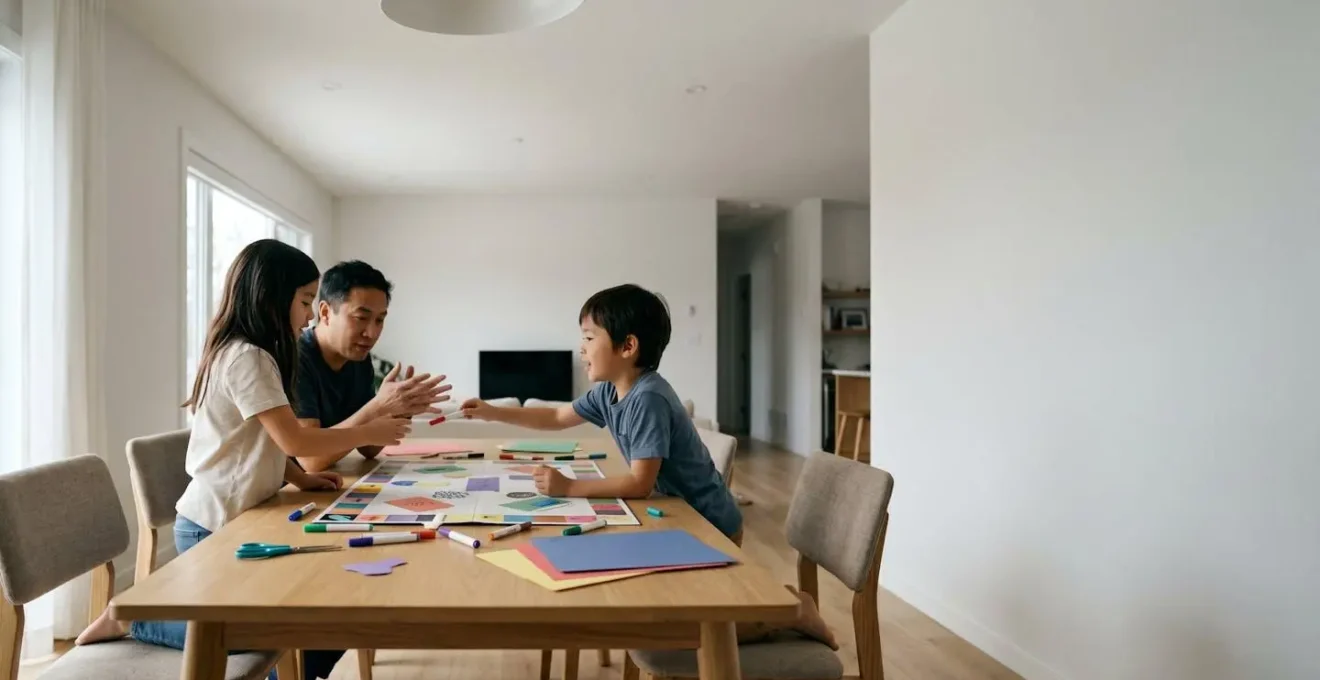
The beauty of this approach is its infinite customizability. The game can grow with the child. In the beginning, the squares might focus on basic note names. Later, you can add concepts like key signatures, intervals, and chords. The child takes ownership of the rules and the content, which makes studying for the « game » feel intrinsically motivated. You are no longer quizzing them; you are building a shared universe of knowledge together, piece by piece.
This collaborative creation process solidifies concepts far more deeply than passive review. It combines creativity, logic, and musical knowledge into a single, memorable project that you can return to again and again.
Clapping Syllables: How Music Helps with Reading and Speech
One of the most exciting aspects of a well-designed music learning system is that its benefits ripple out far beyond musical proficiency. The skills developed through music—rhythm, pitch discrimination, and auditory sequencing—are the very same skills required for language and reading development. When a child learns to clap the syllables in a word (e.g., « e-le-phant »), they are practicing rhythmic subdivision, a core musical concept that directly translates to phonological awareness, a key predictor of reading success.
This connection is not just anecdotal; it is backed by extensive research. The cognitive pathways forged by music education create a powerful advantage in academic settings. For instance, a landmark College Entrance Exam Board Service study found that in 1996, students who sang or played a musical instrument scored 51 points higher on the verbal portion of the SAT and 39 points higher on the math portion compared to their non-musical peers. This happens because music training enhances the brain’s ability to process patterns, sequences, and nuances in sound—skills that are critical for both mathematical reasoning and language comprehension.
Music education has been shown to relieve stress, increase efficiency, cut learning time, reduce errors, and integrate both sides of the brain for more efficient learning – benefits that extend far beyond musical skill development into overall academic performance and cognitive development.
– Music Education Research, 123homeschool4me.com
Activities like clapping syllables, singing songs with complex rhymes, or distinguishing between different instrument sounds are not just « fun » music games. They are powerful brain-training exercises that build a stronger, more efficient cognitive framework. Understanding this « crossover effect » can be highly motivating for both parent and child, framing music practice not as an isolated hobby, but as a secret weapon for becoming a better learner all around.
Key Takeaways
- Stop « adding » fun to lessons; design a learning system where fun is the natural result of play, discovery, and mastery.
- The « sound before symbol » principle is the most intuitive and effective path to musical literacy, mirroring how we learn language.
- Transform the parent’s role from a practice supervisor to an engaged « practice partner » to build motivation and collaboration.
The best educational music games to reinforce learning at home
The music learning « game » shouldn’t end when the lesson is over. The most profound learning happens when musical concepts are woven into the fabric of everyday life. Reinforcing learning at home doesn’t require expensive software or structured practice sessions. It can be achieved through simple, « unplugged » games that use the home environment as a rich musical playground. This extends the learning system beyond the instrument and makes musical thinking a natural part of a child’s day.
These games encourage active listening, creativity, and the application of musical concepts in a low-pressure, playful context. Storytelling, in particular, is a wonderfully effective tool. As the team at Prodigies Music notes, « Kids just adore stories and letting their imagination run wild! Storytelling doesn’t just spark their creativity; it makes learning music loads of fun. » By asking a child to create a « soundtrack » for a story using their voice, body percussion, or simple instruments, you are nurturing their creativity and their understanding of how music conveys emotion and narrative.
Here are some of the best educational music games you can play at home to reinforce learning:
- Sound Scavenger Hunt: Challenge children to find objects around the house that make high, low, long, or short sounds. This is a brilliant, hands-on way to explore timbre and pitch.
- The Kitchen Orchestra: Use pots, pans, wooden spoons, and containers to explore different percussive sounds and create rhythmic patterns together.
- Storytelling with Instruments: Read a favorite story and have your child invent musical sounds or choose instruments that match the emotions or actions of the characters.
- Body Percussion Ensemble: Each family member creates a simple beat using clapping, stomping, snapping, or patting. Then, try to layer them together to create a complex polyrhythm.
- Active Listening Games: Play a piece of music and ask questions like, « Does this music sound happy or sad? » « Is it fast or slow? » « Can you name an instrument you hear? » This develops critical listening skills without a screen in sight.
Your Action Plan: Auditing Your Home Music ‘Playground’
- Points of contact: List all the times and places music can be part of your day (car rides, mealtimes, bedtime stories). Are you just passively listening, or actively engaging?
- Collecte: Inventory your « instruments. » Do you have rhythm sticks, a keyboard, or even just pots and pans? List everything that can make a sound.
- Coherence: Does your home environment support the « sound before symbol » principle? Is there more focus on listening and singing than on reading notes?
- Memorability/emotion: Identify one musical game you played this week. Was it a generic app, or a unique, collaborative experience like a sound scavenger hunt?
- Plan d’intégration: Choose one « unplugged » game from the list above and schedule a 10-minute « playtime » this week to try it out as a family.
By shifting your mindset from « teacher » to « game designer » and « play partner, » you can unlock your child’s innate curiosity and transform music education from a source of friction into a joyful journey of discovery. Start by choosing one small game or principle from this guide and watch the fun unfold naturally.