In summary:
- The most effective music education comes from active participation, not passive listening.
- Both digital apps and offline games are powerful tools when they deconstruct and teach a specific musical concept like rhythm, phrasing, or notation.
- Simple, often free, activities like « Musical Statues » or a « Sound Walk » build foundational listening skills that are crucial for musical development.
- Choosing a starter instrument should consider the child’s personality and learning style, not just age or tradition.
As parents, we’re navigating a constant flood of « educational » apps and screen-time guilt. We’re told music is a « superfood for the brain, » so we might put on some classical music in the background and hope for the best. But let’s be honest: does passive listening really work? We see apps that promise to teach piano in a week, and we’re rightfully skeptical. The market is saturated with games that are more « game » than « education, » leaving us wondering what actually moves the needle.
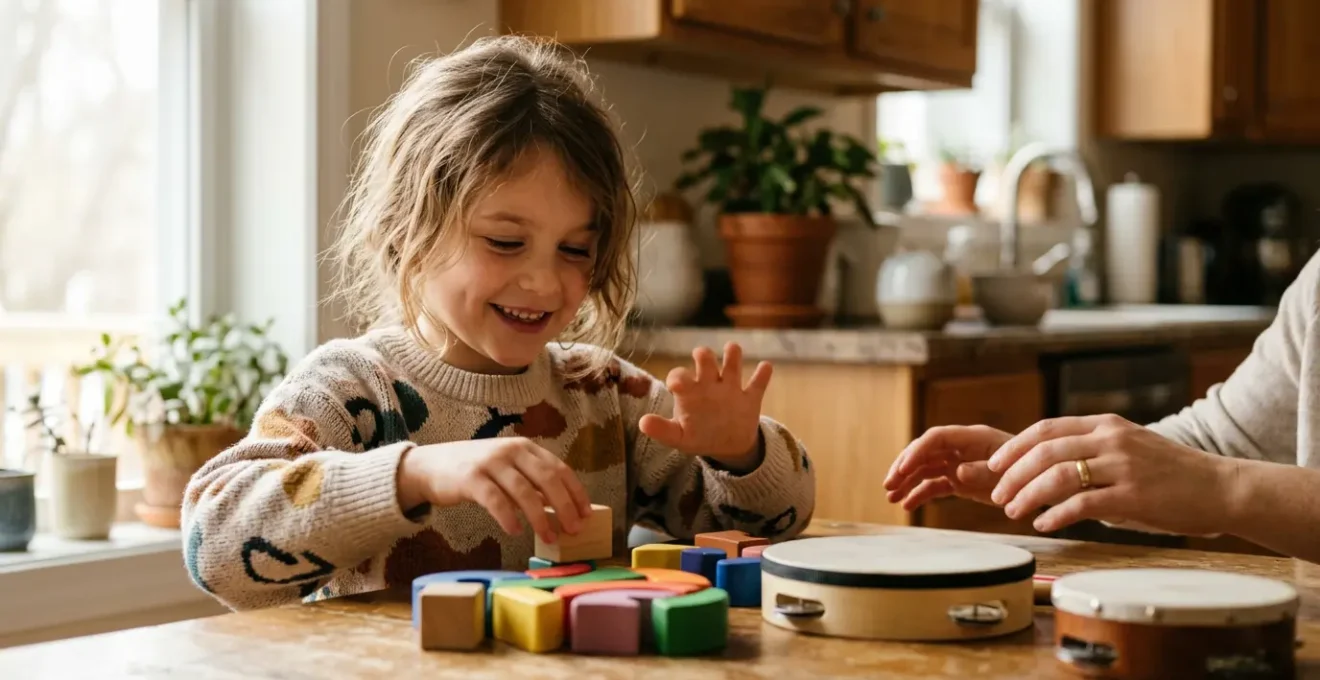
The truth is, the real magic happens when a game—digital or not—isolates a core musical concept and turns it into a playable, engaging challenge. It’s the difference between hearing a rhythm and physically tapping it out, between seeing a note on a page and understanding its value in a game of « Monopoly. » It’s about shifting from passive consumption to active participation. This is where true musical literacy begins to form, not from a background playlist, but from hands-on, focused play.
This guide will cut through the noise. We’ll dissect which types of games are genuinely effective and why. We’ll explore high-quality digital tools that respect a child’s intelligence, low-tech DIY games that build creativity, and how to finally choose that perfect first instrument. It’s time to stop guessing and start playing with purpose.
This article provides a comprehensive overview of a variety of games and methods to make music learning fun and effective. Explore the sections below to find the perfect activities for your child’s age and learning style.
Summary: The Best Educational Music Games to Reinforce Learning at Home
- Tablet Learning: Can Apps Really Teach Rhythm?
- Musical Statues with a Twist: Teaching Phrasing and Cadence
- Chrome Music Lab: Experimenting with Sound Waves and Loops
- Music Monopoly: Designing Your Own Board Game to Learn Symbols
- The Sound Walk: Finding Pitch and Rhythm in Nature
- Listening vs Doing: Why Active Participation Beats Background Music
- Why Is It Always the Recorder? Pros and Cons of the Plastic Flute
- How to choose the perfect starter instrument for your child’s age and size?
Tablet Learning: Can Apps Really Teach Rhythm?
The skepticism is valid. Can tapping on glass truly translate to the physical, whole-body experience of rhythm? The surprising answer is yes, and science is beginning to back it up. In fact, one recent study confirmed that digital rhythm training improved reading fluency in third-grade children, demonstrating a powerful link between rhythmic competency and other cognitive skills. The key is finding apps that focus on « active participation » rather than just passive entertainment.
Good rhythm apps don’t just play a beat; they demand a response. They often use call-and-response mechanics, visual cues, and immediate feedback to help a child internalize concepts like tempo, note duration, and rests. They deconstruct the complexity of written music into simple, game-like actions. While they can’t replace a human teacher, they are excellent tools for building foundational rhythmic literacy and providing daily practice in a format kids already love. The best ones serve as a bridge, making abstract musical ideas tangible.
Here are a few discerning choices that focus on pedagogical value:
- Rhythmic Village: By far the most complete rhythm-reading game, it teaches a huge variety of rhythms through echo games and aural differentiation.
- Rhythm Swing: Perfect for absolute beginners, it uses a simple bouncing ball to teach basic rhythmic values in an intuitive way.
- A Basic Metronome App (like Tempo): Don’t underestimate this free tool. Developing a sense of a steady beat is the single most important rhythmic skill, and a simple metronome is the purest way to practice it.
- Perfect Ear: An all-in-one powerhouse for iOS and Android, this app covers rhythm training alongside ear training and music theory, growing with your child.
Your 5-Step Audit for Any Music App
- Identify the Core Loop: What is the main action the child repeats? Is it active (tapping, dragging, creating) or passive (watching, listening)? Prioritize active engagement.
- Check for Scaffolding: Does the app get progressively harder? A good app introduces one concept at a time and builds upon it, preventing frustration.
- Assess the Feedback System: How does the app respond to a mistake? Is it encouraging and corrective, or just a « wrong » buzzer? Look for constructive feedback.
- Listen for Sound Quality: Are the instrument sounds realistic and pleasant, or are they cheesy and synthetic? Quality sound trains a quality ear.
- Find the « Off » Switch: Can you disable distracting points, badges, and animations? The best educational apps focus on the learning, not on creating a dopamine loop.
Musical Statues with a Twist: Teaching Phrasing and Cadence
We all know the classic party game: dance when the music plays, freeze when it stops. It seems like simple fun, but from a pedagogical standpoint, it’s a brilliant first lesson in music theory. The game isn’t just about moving and stopping; it’s a physical embodiment of sound versus silence. As an ed-tech reviewer, I can tell you this no-tech game is one of the most effective you can play. It develops a child’s auditory discrimination—the ability to listen carefully and respond to change—which is a foundational skill for any musician.
But we can take it a step further. Instead of just hitting « stop » randomly, try pausing the music at the end of a musical phrase. A phrase in music is like a sentence in language; it has a beginning, a middle, and an end, often culminating in a « cadence, » which feels like a musical comma or period. By stopping the music at these natural resting points, you’re subconsciously teaching your child to feel the structure and « grammar » of music. They’ll start to anticipate the pauses, internalizing the flow and release that defines musicality. This version of the game engages the whole body in learning to identify phrasing, a concept that can be difficult to explain but is easy to feel.
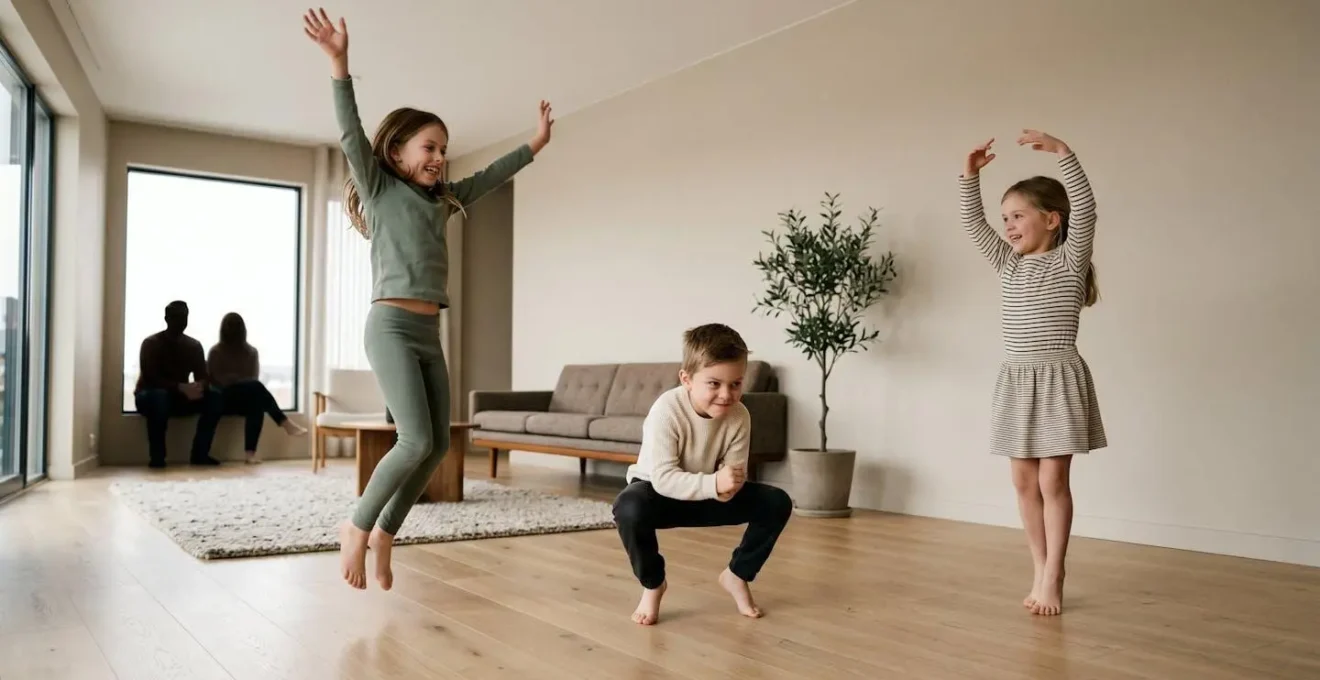
The act of freezing also develops crucial physical skills. Holding a pose, especially a silly one, requires significant body control, balance, and core strength. For toddlers and young children, Musical Statues is a perfect whole-body activity that combines physical development with deep listening, making it an ideal entry point into the world of music.
Chrome Music Lab: Experimenting with Sound Waves and Loops
If there’s one digital tool I recommend to every parent, it’s the Chrome Music Lab. It’s free, web-based (no downloads needed), and masterfully designed. It’s less of a « game » and more of a « playground for sound. » Each of its « experiments » isolates a single musical concept and makes it visual, tactile, and immediately understandable. It perfectly embodies the principle of learning through joyful experimentation, without the pressure of points or levels.
The beauty of Music Lab is its ability to make abstract concepts visible. For instance:
- The Spectrogram experiment lets you see the shape of sound. When you play a flute, you see a clear, high sine wave. When you sing, you can see the complex overtones and harmonics that make up your unique voice. It’s a mind-blowing introduction to the physics of sound and timbre.
- Song Maker is a simple and intuitive sequencer. Kids can click to create melodies and rhythms, instantly hearing their creation. It’s a fantastic first step into composition, teaching the relationship between pitch (how high/low a note is on the grid) and duration.
- Kandinsky lets you draw shapes and lines that are then translated into music. A circle becomes a single note, a squiggly line becomes a melodic run. It brilliantly connects visual art with musical expression.
This tool isn’t about teaching formal notation. Instead, its purpose is to build intuition. It empowers children to ask « what if? » What if I make this note higher? What if I layer this drum beat with a bird song? It’s a pressure-free environment for exploring the building blocks of music, like pitch, rhythm, and harmony, laying a foundation of curiosity that is essential for long-term learning.
Music Monopoly: Designing Your Own Board Game to Learn Symbols
One of the biggest hurdles in formal music education is the sheer volume of symbols. From clefs and key signatures to rests and dynamic markings, musical notation is a language in itself. While flashcards are a classic tool, we can make learning these symbols far more engaging by borrowing mechanics from games our kids already love, like Monopoly. Creating your own DIY music theory board game is a powerful project that reinforces learning through creativity.
Imagine a game board where each space represents a musical challenge. Landing on « Treble Clef Terrace » might require you to draw the symbol correctly. A « Rhythm Challenge » card could ask you to clap the rhythm of a quarter note followed by two eighth notes. The « Jail » could be renamed the « Practice Room, » where you can’t leave until you correctly identify three different musical symbols. The possibilities are endless and can be tailored to exactly what your child is currently learning.
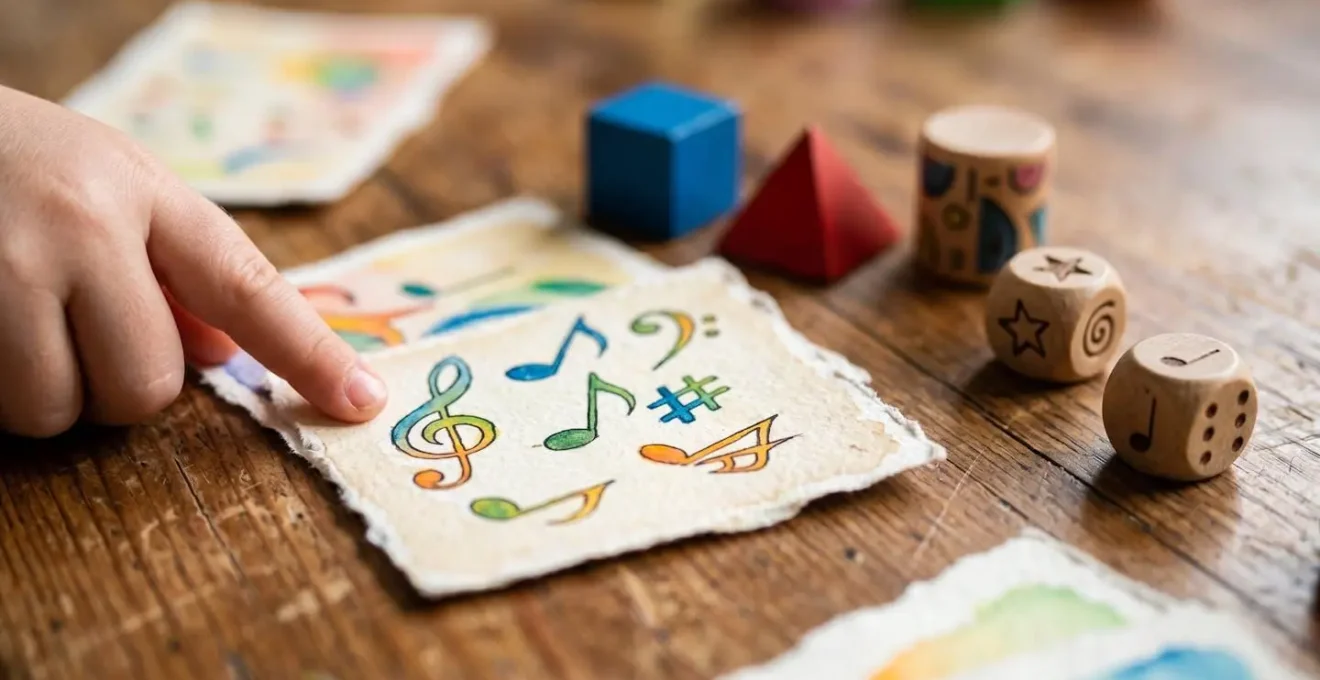
The educational value here is threefold. First, the act of creating the game itself is a learning experience. Your child will be writing, drawing, and thinking about these symbols in a creative context. Second, the game formalizes practice into a fun, family activity. Instead of a chore, it becomes a challenge to win. Finally, it provides a tangible way to track progress. You can start with just a few symbols (like quarter notes and half notes) and gradually add more complex cards for concepts like articulation (staccato, legato) or dynamics (piano, forte) as their knowledge grows.
The Sound Walk: Finding Pitch and Rhythm in Nature
In our quest for the best educational apps, we often overlook the most sophisticated sound processor available: the human ear. And the best place to train it is the world outside our door. A « Sound Walk » is a simple but profound activity where the goal is to just listen. It’s a form of auditory mindfulness that teaches children to pay attention to the rich sonic tapestry of their environment—something that is easily drowned out by our noisy, visually-driven world.
The game is simple: walk in a park, your backyard, or even a quiet street, and be silent for five minutes. The goal is to notice as many different sounds as possible. What do you hear? A distant siren? The crunch of leaves underfoot? The rhythmic chirp of a cricket? This exercise in deep listening is the first step. The next step is to analyze and categorize these sounds, which introduces fundamental musical concepts. A high-pitched bird song teaches pitch. The steady drip of water from a faucet teaches rhythm. The rumble of a truck versus the rustle of wind teaches timbre and texture.
You can make this even more structured and creative with a few simple steps:
- Record and Remix: Use a smartphone to record the sounds you hear. Later, use a free app like BandLab to loop and layer these sounds, creating a « found sound » composition.
- Create a Sound Map: Give your child a piece of paper and have them draw what they hear. This isn’t about realistic drawing, but about creating a graphic notation. A high, wavy line could represent the bird, while big, blocky shapes could be distant traffic.
- Categorize the Sounds: Introduce scientific terms in a playful way. Discuss the difference between Biophony (sounds from animals), Geophony (sounds from the earth, like wind or rain), and Anthrophony (sounds made by humans).
A sound walk costs nothing, but its educational return is immense. It trains the ear, builds focus, and connects the abstract concepts of music to the tangible, vibrant world around us.
Listening vs Doing: Why Active Participation Beats Background Music
The « Mozart Effect »—the idea that playing classical music for a child makes them smarter—is one of the most persistent myths in parenting. While exposing children to great music is wonderful, the real cognitive benefits don’t come from passive listening. They come from active participation. The difference is stark, and modern science confirms it. An extensive 2024 brain imaging review published in Brain Sciences revealed that activities like singing or playing an instrument engage a wide network of brain regions, including motor and sensory cortices. Passive listening, by contrast, activates a much more limited area.
Think of it like sports. You can learn the rules of basketball by watching games, but you’ll never become a good player until you pick up a ball, practice dribbling, and take shots. Music is the same. It is a full-body, full-brain activity. When a child taps a drum, they are coordinating their physical movements with an auditory goal. When they sing a song, they are controlling their breath and matching pitch. These actions create and strengthen neural pathways in a way that simply listening cannot.
Music is like superfood for a child’s brain! Music is a full-brain, full-body workout, and our brains literally grow stronger, denser, more connected when we do it.
– Kay Barker, Chief Education Officer of Musicologie
This is why the games in this article are so effective. Musical Statues, rhythm apps, and sound walks all demand active engagement. They transform the child from a passive consumer of sound into an active creator and interpreter of it. So, by all means, fill your home with beautiful music. But to truly unlock the brain-building benefits, make sure your child has ample opportunity to get their hands on an instrument, use their voice, and physically engage with the rhythm.
Why Is It Always the Recorder? Pros and Cons of the Plastic Flute
Ah, the recorder. The sound of a thousand elementary school concerts and, for many parents, a source of mild auditory pain. It’s often seen as a « toy » instrument, but its ubiquity in schools is no accident. From a pedagogical perspective, the recorder is a brilliantly designed starter instrument, especially for young children. Its primary advantage is the incredibly low barrier to entry for making a sound. According to Michael Lynn, a professor at the Oberlin College Conservatory, unlike a flute or saxophone that requires a specific lip formation (embouchure), a child just has to blow into the recorder’s mouthpiece.
This immediate success is hugely motivating. The recorder also excels at teaching the fundamentals of reading music. Because it plays only one note at a time, it’s perfect for learning to read a single melodic line, allowing kids to quickly master simple songs. Furthermore, its small size and finger-hole spacing are ideal for small hands, helping to develop the fine motor skills and hand-eye coordination necessary for more advanced instruments. It’s a masterclass in scaffolding—a tool that teaches foundational skills like breath control, finger dexterity, and music reading that are directly transferable to instruments like the flute, clarinet, or saxophone later on.
Of course, there are downsides. The tone of a cheap plastic recorder can be shrill, and it requires a gentle, controlled breath that many kids initially lack, leading to those infamous squeaks. It also has a limited range and dynamic capability. However, when viewed not as a final destination but as the first step on a musical journey, its value is undeniable. It’s an affordable, durable, and remarkably effective tool for building a child’s confidence and musical foundation.
Key takeaways
- Active, hands-on participation is the most critical factor for musical learning, far outweighing passive listening.
- Digital tools are highly effective for practice when they isolate specific skills like rhythm or pitch and provide immediate, constructive feedback.
- Don’t underestimate « no-tech » games; activities that train the ear and connect music to the physical world are foundational and free.
How to choose the perfect starter instrument for your child’s age and size?
After exploring games and building foundational skills, the next logical step is often a formal instrument. The recorder is a great start, but what comes next? The « best » starter instrument isn’t a one-size-fits-all answer; it’s a deeply personal choice that should be guided by your child’s physical attributes, and more importantly, their personality. Matching the instrument to the child’s innate temperament can be the difference between a frustrating chore and a lifelong passion.
For example, a child who loves structure and seeing clear, logical progress might thrive with the piano, where the layout of the keys is a visual map of music theory. A social, collaborative child might be drawn to percussion, where they can quickly join an ensemble and feel part of a team. The goal is to find an instrument that aligns with how your child interacts with the world. Forcing a quiet, introspective « builder » type to play the violin in front of an audience might be counterproductive, while that same scenario could be a dream come true for an extroverted « performer. »
Considering these personality archetypes can provide a useful framework for making a decision. The following table, based on insights from music educators, offers recommendations to help you find a great starting point for discussion with your child.
| Child Personality Type | Recommended Instrument | Why It Works | Typical Starting Age |
|---|---|---|---|
| The Builder (likes process, structure) | Piano/Keyboard | Visual layout, clear theory progression, structured learning path | 5-7 years |
| The Performer (extroverted, loves attention) | Violin/Voice | Solo opportunities, expressive potential, immediate audience connection | 6-8 years |
| The Engineer (likes systems, tinkering) | Guitar/Ukulele | Chord systems, technical exploration, DIY friendly | 7-10 years |
| The Team Player (collaborative, social) | Percussion/Recorder | Ensemble playing, rhythmic foundation, group dynamics | 6-9 years |
| The Explorer (curious, tactile) | Cello/Djembe | Physical resonance, tactile feedback, intuitive sound production | 7-10 years |
Now that you have the tools to evaluate games and a framework for choosing an instrument, the next step is to start exploring. Visit a music store, watch videos of different instruments being played, and most importantly, listen to your child’s curiosity. The journey begins with a single, playful step.